

'80s Home Finishes That Are Making A Major Comeback
Since farmhouse and airy spaces dominated the last decade, '80s design felt about as far away from "aesthetic" as possible. People craved white-washed spaces with modern finishes, so anything that came from the era of excess, lacquer, and chrome felt out of place and overly flashy. But the tides are beginning to turn, and as more and more people are leaning towards maximalism and homes with more personality and fun, '80s finishes are starting to come out of the woodwork.
Nature-inspired finishes like wood panels, honey oak, and brick floors blend seamlessly with the biophilic trends of 2026, adding earthy and cozy touches to rooms. Flashier finishes, such as glass blocks and mirror accent walls, let you lean into eclecticism and get creative with your space. There is truly something for everyone! Here are all of the '80s finishes that are making a major comeback this year.
Wooden paneling adds architectural flair
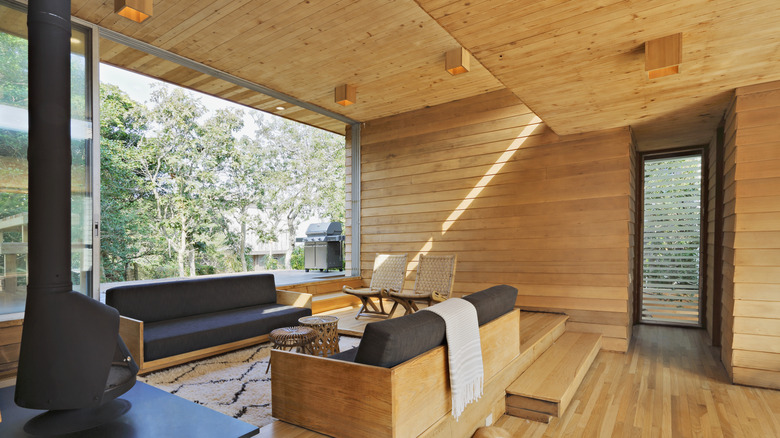
There was a time in the not-so-distant past when a completely paneled room would be synonymous with your grandparents' basement. You would half-expect to see a green felt poker table in the corner, along with some hammered aluminum beer signs on the wall. Those who bought an '80s-era home would either rip out the paneling or paint it white upon moving in, making the dark and moody room instantly more modern. But in 2026, painting over wood paneling would be considered a crime. The natural material fits in perfectly with biophilic interior design, which has been trending since 2021 as an answer to our need to be more closely connected to nature. Paneling makes a space feel cozier, more layered, and like it has architectural flair.
If you want to dabble with this finish in your own home, there are several different routes you can go. You can install tongue-and-groove paneling, which conveniently interlocks, making installation fast and relatively simple. These are the thin planks that have a shiplap-like vibe. You can also do large wood panels, which create a sleeker design since there will be fewer seams. For the panels, you can lean into the '80s aesthetic by choosing a knotty red oak which will add lots of texture and interest to the room. Or, if you prefer something more minimalist, try something like maple or quarter-sawn white oak, which has minimal knots and texture.
Fluted glass is reappearing in kitchens and dining rooms
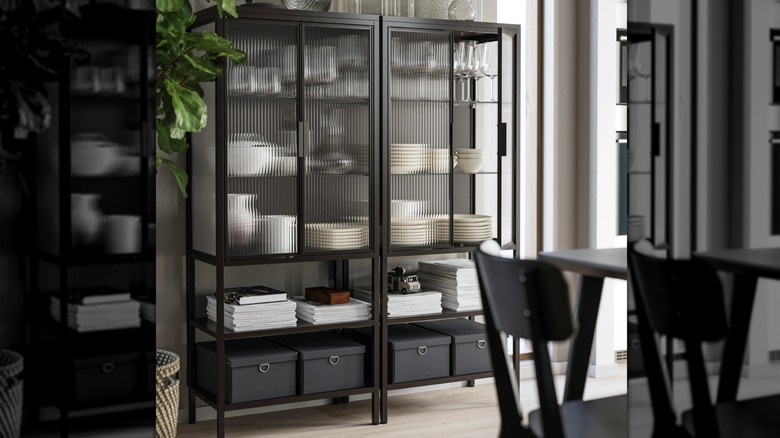
Fluted dressers, tiles, bathroom vanities, and walls had a major renaissance these last few years. Now, this '80s staple is showing up somewhere new in 2026: glass. The decade's love of maximalism and Art Deco designs made fluted finishes especially popular, but in 2026, you can expect to see more of it in kitchen cabinet glass and glass-door credenzas and hutches. "It's such a smart way to add texture and depth without closing things off. In this bar, it softens the look of the cabinet doors, so bottles and barware are hinted at but not fully on display," Linda Hayslett, co-founder of Serena & Lily, told House Beautiful. "I love using it in spots like this because it gives a little movement to the glass, almost like a ripple effect, and instantly elevates a storage piece into a design moment."
If you feel like your kitchen feels closed off or your living room has too many bulky pieces of furniture, add a breather with fluted glass. In a kitchen, you can do this by strategically swapping out a few upper cabinet doors with fluted glass doors made by a carpenter or millworker. Or you can dabble in the '80s finish by investing in a hutch or cabinet with the ripple effect. For example, IKEA's MOSSJON Glass Door Cabinet would look great in a dining room as a way to display your glass or servingware.
Formica countertops no longer feel austere
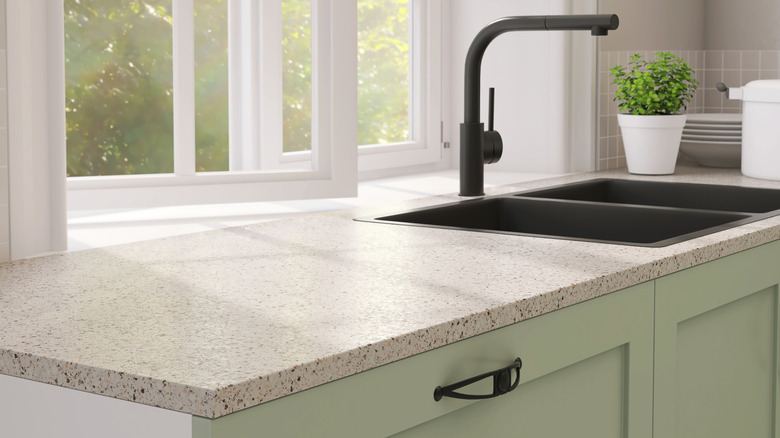
In the 1980s, Formica countertops shifted from the bright colors of the '70s in favor of neutral palettes and faux wood finishes, signaling a more timeless aesthetic. But nothing is truely timeless. Over time, laminate countertops have fallen out of favor, becoming synonymous with budget-conscious kitchens or countertops just waiting to be torn out and remodeled. But they're about to have a revival, and that's all thanks to the younger generations.
According to a 2024 Formica study, 86% of Gen Z respondents said they would consider laminate countertops. They're not only cost-effective — which is important for generations with less spending power — but they also offer way more personalization than, say, quartz. And Formica has come a long way from the 1980s designs seen in old ranch houses. Thanks to technological advancements, the image resolution is now ultra-sharp, meaning that marble and wood grain designs look pretty convincing. If you take a peek at Formica's 2024 Living Impressions Collection, you'll see convincing stone patterns. But if you don't want to go the faux route, they also have everything from bold colors like Canary Yellow (which is very Gen Z coded) to minimalist staples like warm beige and bright white.
Honey oak wood adds warmth to a space
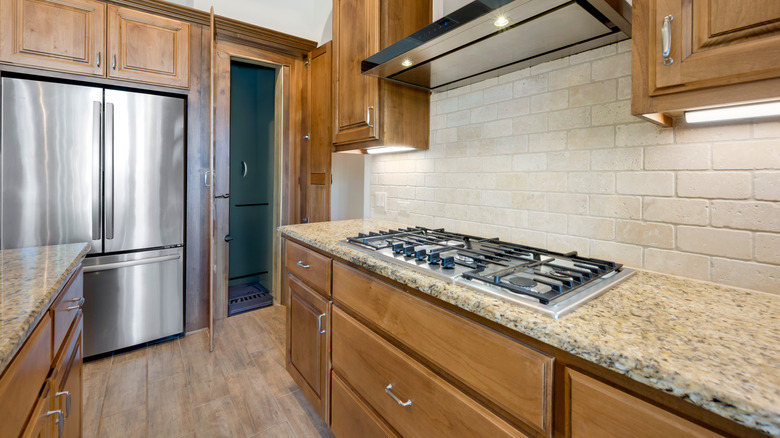
Anyone who has ever rented an apartment has likely encountered honey oak cabinets at one point or another. They were everywhere in the 1980s thanks to the cozy "country kitchen" that dominated that era, which was that decade's answer to "cottagecore". While their golden orange hue has prompted plenty of nose-wrinkling over the past 20 years, it's now having something of a revival. The look fell out of favor as folks started moving towards cooler-toned, all-white spaces, but as gray-washed finishes and stark white rooms are becoming passe, homeowners are once again craving the warmth that honey oak brings. "It's not necessarily a full-blown comeback, but I've definitely noticed a soft return — particularly in cabinetry, millwork details, and furniture," Cathleen Gruver, premium home builder of Gruver Cooley, told House Beautiful. "Clients aren't always asking for 'honey oak' by name, but they are gravitating toward natural wood tones that offer warmth and character."
The catch, though, is that it's appearing differently in 2026. Instead of leaning into a full-on "country" look, honey oak is being paired with clean lines and minimalist designs. For example, rather than appearing on raised panel or cathedral arched doors, the wood is used on flat panel or inset cabinets. It's also being used more sparingly. Rather than covering the whole house in honey oak, only one piece of furniture will be in the golden hue in a living room, or just the island will be made from it.
High gloss finishes
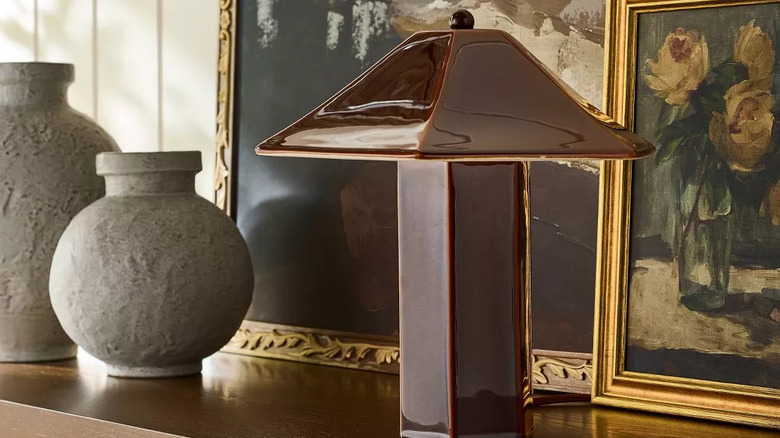
The 1980s were all about excess, and the rooms reflected that. They were packed with all sorts of competing textures, from leather to mirrors to velvet. High-gloss furniture and painted walls were a key part of that look, and they're now making a comeback. Lacquered furniture, in particular, has been trending the last few years. Just take a look at the oxblood Threshold Ceramic Table Lamp from Studio McGee, which went viral on TikTok and quickly sold out.
Lacquer is having a moment because it brings a high-impact touch to the room without feeling too risky or out-there. It's the beautiful furniture finish that's suspected to trend in 2026. "Lacquerware is a great way of achieving a brighter, mood-boosting look as it stands as a playful yet cohesive way to introduce more vibrant tones, without them seeming out of place," David and Sarah Ross, co-founders of home decor brand Addison Ross, told Homes & Gardens. "We've seen a growing appreciation for lacquer furniture and home decor, and we believe its resurgence this year is largely driven by a desire for vibrant, mood-enhancing interiors, in line with the 'dopamine decor' trend that often gains momentum around this time of year."
You can dip a toe into the resurging finish by getting a lacquer coffee table to anchor your living room, like the Lacquer Coffee Table With Dark Red Finish. Or you can get a statement tray as a shiny catchall to put on an existing coffee table, such as the Printworks Lacquered Tray. Or, if you're feeling especially bold, you can opt to cover your walls with high gloss paint. The sheen is no longer just for baseboards and trim –- go as shiny as possible to create a tactile, wow-factor effect anywhere from the living room to the foyer.
Tiled countertops add fun texture to a room
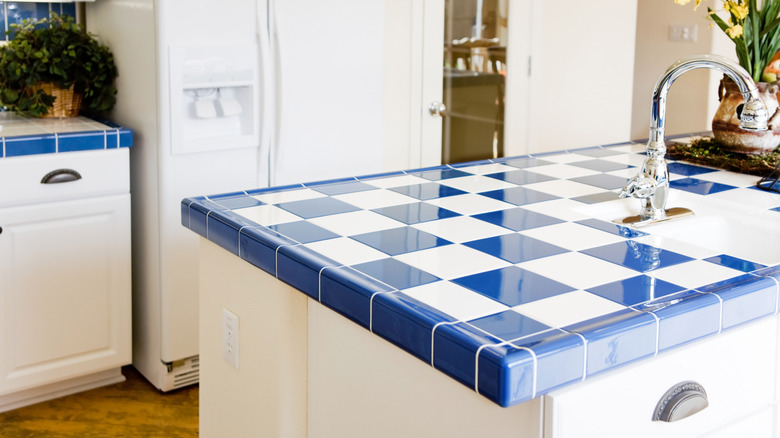
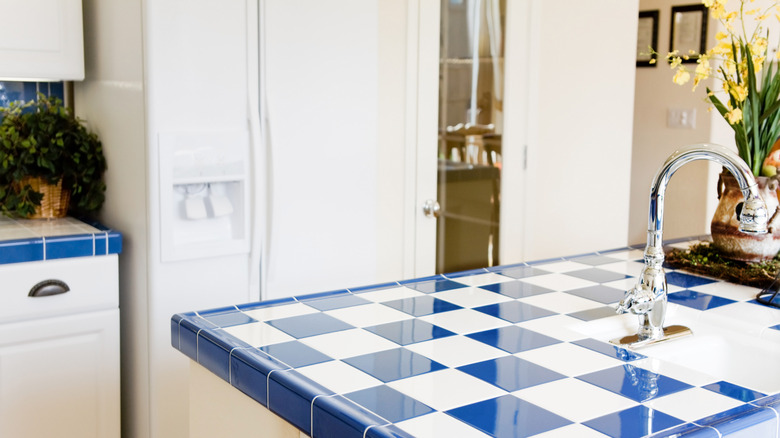
Tiled countertops were ubiquitous in the 1980s. Not only were they affordable and durable enough to withstand the daily wear and tear of cooking, but they also added a fun pop of interest to the room. And in a decade when more was more, deciding which bold tile-and-grout combo you wanted was paramount. However, they eventually fell out of fashion because they were hard to upkeep. Everything from wine to pasta sauce stained the porous grout, and it was notoriously difficult to remove crumbs from the criss-crossing lines, making kitchen cleanup arduous.
But after a decade of all-white kitchens and minimalist designs, homeowners are craving something with a little more creativity and charm. And colorful tiled countertops offer both. "Tiled countertops are having a moment because people are craving materials that feel authentic and crafted," Jordan Slocum and Barry Bordelon, founders of The Brownstone Boys, told Good Housekeeping. "They can highlight original details or bring new life to the space, adding texture, charm, and a bit of nostalgia, especially in kitchens or bathrooms where you want personality." However, the high-maintenance issue still stands, and because of that, designers recommend installing the counters in lower-traffic areas. For example, they can add charm to a guest bathroom vanity, some nostalgic interest to a laundry room counter, or a pop of creativity to a kitchen's butler pantry.
Glass blocks add light and drama
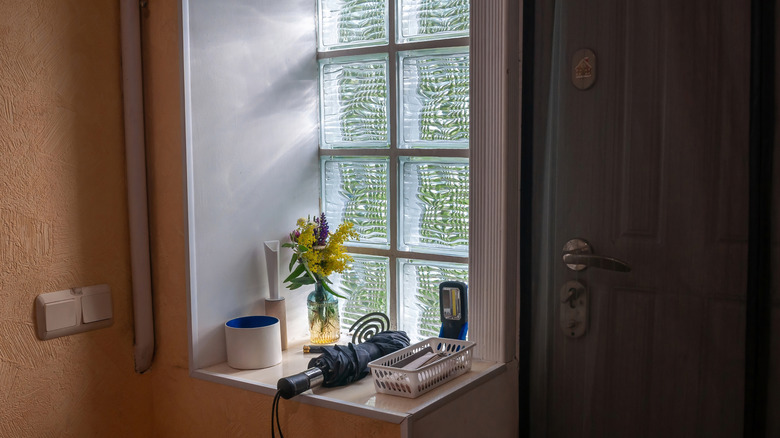
One of the most defining home finishes of the 1980s was glass blocks. They fit the luxurious look of the decade and were an interesting way to incorporate windows. Rather than simple sheets of glass, you could have thick, rippled blocks stacked on top of each other, creating texture and movement. Plus, they offered privacy without needing to add curtains or blinds to the mix.
However, these glass blocks are coming back a little differently this time around. They're completely different shapes and colors, making them feel fresher. "As we start seeing these old trends coming back around, we're also seeing them being reinvented," interior designer Jessica McCarthy of JAM Creative Studio told Domino. "In the '80s we saw a lot of cloudy, frosted, square glass blocks. Now we're seeing them in more rectangular shapes, in a thinner style of glass, and in different colors." They're also being used for more than just exterior windows. Designers are experimenting with them as shower walls, room separators, kitchen islands, and bars, among other uses. They're also great as furniture, especially when they're incorporated as the sides of bookcases or side tables. They're great for any place you want to add a playful touch.
Knotty pine brings in loads of texture
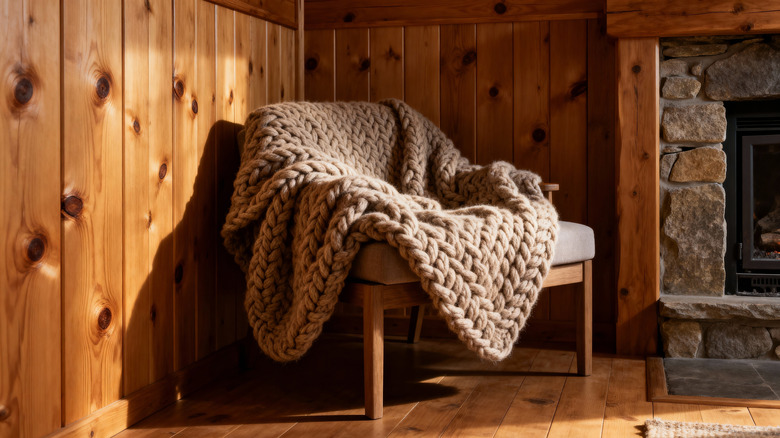
Similar to how honey oak is making a shocking comeback, so is knotty pine. For decades, the wood has turned off design enthusiasts because of its orangeish tinge and busy pattern. But it was for exactly those reasons that it was popular in the '80s. Not only did it fit in with the country look that was so popular, but it also added a rich dose of texture and pattern to a room. It's coming back into favor today for similar reasons. Not only does the earthy texture fit in with the biophilic trend, but it also aligns with other trends that went mainstream in the last few years, such as cottagecore or a return to heritage styles.
However, that doesn't mean entire rooms and ceilings will be covered in rustic paneling. Instead, it's being used in small doses. For example, rather than covering a whole living room in it, you would panel a small nook for a touch of texture. Or rather than getting an entire set of knotty pine furniture, you would just get one accent chair or a desk. And if the orange color doesn't match your space, you can also refinish it and give it a cooler-toned stain, making it feel a touch more modern.
Mirror statement walls add glamour
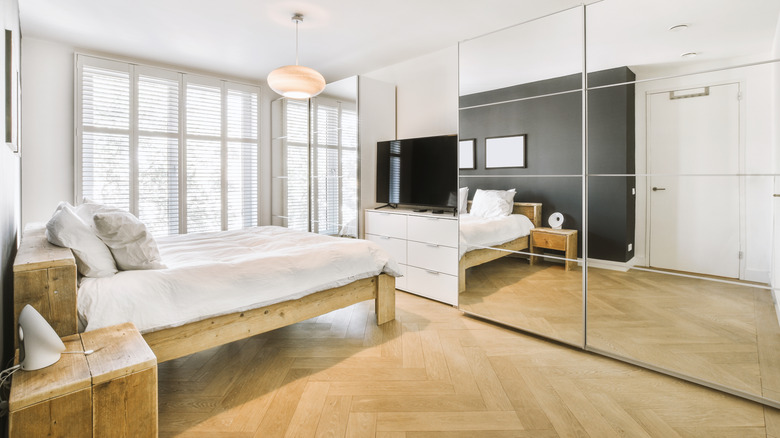
If you have a home built in the '80s, chances are you have (or took down) a mirrored wall in either the living or dining room. The decade was all about flash and glamour, and having an entire wall bouncing your reflection back at you helped emulate some of that glitz. Not only did it make the room feel twice as big and bounce light around the space, but it also created a maximalist effect, especially if you had other mirrored furniture in the space (like a credenza or hutch.) Today, mirror walls are having a moment for the same reason. As people experiment with their spaces and try to put together something more creative and maximalist, wall-spanning mirrors become the perfect accent walls. "We've seen, in the last few years, a surge in the need for glamor in general," Aurélien Raymond, co-founder of Paris' Studio Akademos, told LivingEtc. "Minimalism is gradually making way for maximalism and mirrors are a big part of this trend."
While you can copy/paste the '80s look and create an entire seamless wall of mirrors, the more updated way to try the finish is to create a grid.This is a feature wall idea Nate Berkus swears by, and for good reason. The end result is surprisingly chic. It involves creating a grid of mirrors across the entire wall, and patinaing them so they look antique. This makes it appear more like a heritage architectural feature (found somewhere like a Parisian apartment) rather than a purely '80s throwback.
Black leather feels metropolitan again
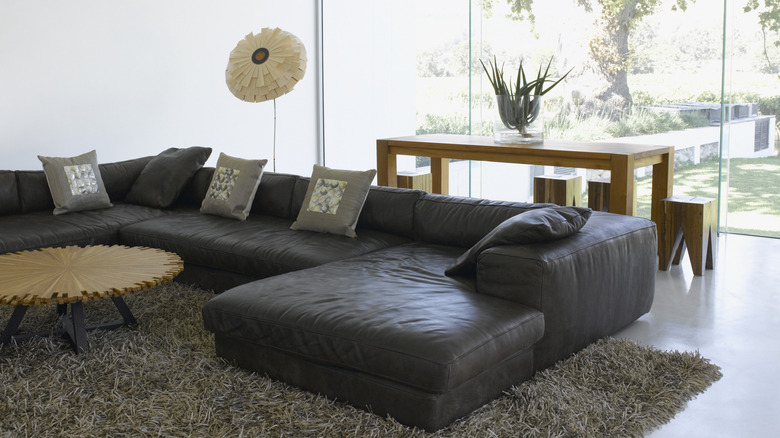
Black leather was a major finish in furniture and art in the 1980s, thanks to Italian designers. The iconic Memphis movement was invented in Milan, and with it came an explosion of lacquered finishes, neon colors, and lots of leather and chrome. One famous postmodern designer was Milo Baughman, who championed black leather and steel designs. They felt modern, fresh, and seamlessly blended with other natural materials on the rise at the time, such as bold marble, travertine, and terrazzo. It was a great layering piece, and for that reason, it's back in 2026.
It's easy to mix and match it with other trending natural materials, such as wood, marble, and steel. However, to avoid making your piece look dated or as if you picked it up as a placeholder from a garage sale, you need to use it with modern silhouettes. That means picking out black leather couches, love seats, and chairs that are curved, over-stuffed, and preferably with chrome accents. This will help make your space feel artsy and designer rather than dated or old-fashioned.
Brick floors add old-world charm
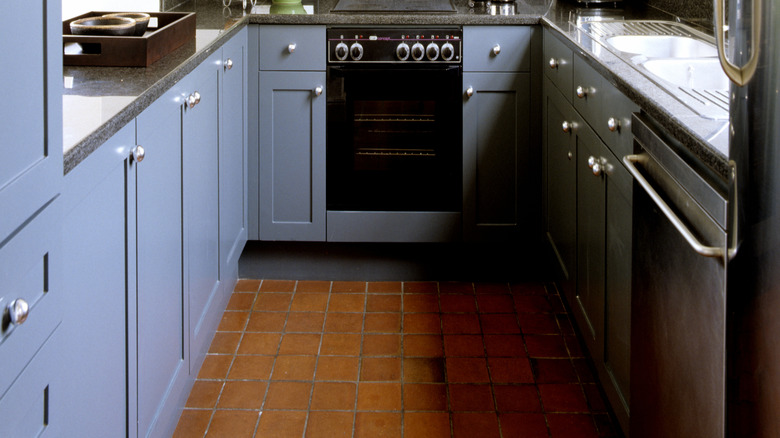
Brick flooring was a popular finish in the '80s that rolled over from the '70s. Inspired by the back-to-nature movement of the hippie era, design took on an earthier feel, investing in finishes like terra cotta and brick. That continued into the 1980s, but since brick could be pricey to install, most people opted for brick-print linoleum. It blended seamlessly with the "country kitchen" look of the decade, adding a charming, old world touch.
Nowadays, brick flooring is slowly making a comeback. As biophilic home design continues to reign supreme, people are looking for new ways to add an earthy touch to their homes. While wooden floors can easily fit the bill, brick floors are a little more unexpected and interesting. Plus, it can work with a bevy of different styles. "The beauty of it is that it can work across a range of styles, from rustic and farmhouse to industrial and Mediterranean. It's an especially effective way to add texture underfoot in otherwise minimalist or modern interiors," Grazzie Wilson, from tile brand Ca'Pietra, told LivingEtc. Right now, the trending look is to use a white-washed red color to keep the space feeling airy, often arranged in a herringbone or similarly old-world design.
Terra cotta tiles bring color and warmth
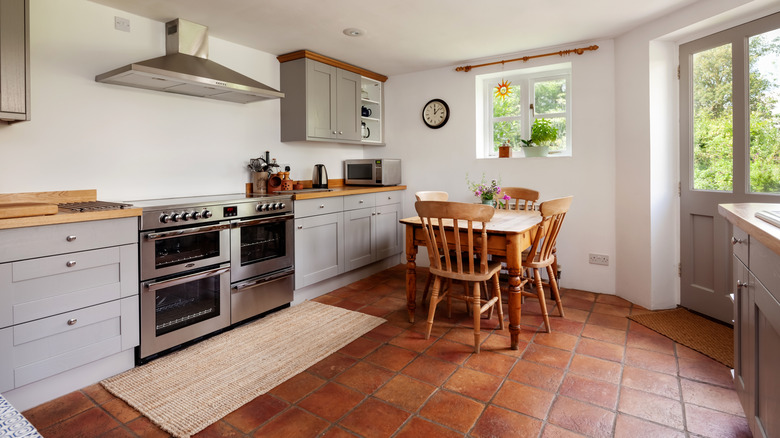
Another staple of the 1980s "country kitchen" was terra cotta tiles. They were wonderfully rustic and added a big dash of color and texture. They also echoed the look of European kitchens, adding a charming touch to the space. And seeing how the same trends are cycling now that they were in the 1980s, terra cotta tile has made a bit of a comeback. Rumblings of its resurgence began in 2021, when Architectural Digest featured Nina Dobrev's L.A. home and revealed that she chose reclaimed terra cotta for her kitchen. Since then, more and more designers have been using them everywhere from foyers to laundry rooms to kitchens, but the organic trend isn't the only thing pushing the revival. As more and more people are choosing to restore rather than gut their old houses, people are choosing more historic finishes, such as terra cotta.
Today, a dustier pink version is chosen over the red-orange hue of the '80s. For a more authentic, European look, follow in Nina Dobrev's footsteps and choose reclaimed tiles. These are already aged and weathered, making them look like they have been part of your space for decades. "The benefits of reclaimed terra cotta tiles center around the charm and patina that is impossible to replicate well," Christopher Gulson-Brooke, founder of reclaimed tile brand Maitland and Poate, told House & Garden. They are also already chipped and scratched with age, which will make you less precious about using them. If you have a pristine floor, a single chip will make it look damaged. But when the entire floor is marred and used, it just looks like it has some history.