

The Free Rooting Hormone Hiding In Your Backyard That Actually Works
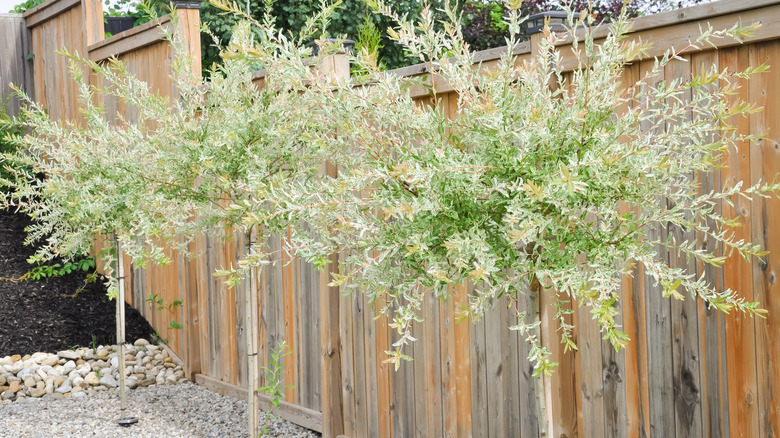
Propagating new plants by taking cuttings from your current favorites is always a fun endeavor — until they fail to root. So, to avoid such torment, some gardeners aid their cuttings with rooting hormones. Available in gel or powder form, root hormones increase auxin levels in new cuttings, stimulating faster root production. However, if you have a pretty willow (Salix spp.) tree standing in your yard and are tired of picking up its broken limbs before they colonize the area, you can create your own natural rooting hormone — for free. We're alluding to the magic of "willow water."
Long before commercial rooting hormones were a thing, Native Americans made use of willow water, or willow tea, to encourage root production. Turns out, willow stems and barks contain indolebutyric acid (the same compound found in synthetic offerings), which augments root growth and, by extension, the chances that the cuttings will grow out into lush plants. In addition, they contain salicylic acid, which indirectly promotes root development by defending the cuttings against rot-causing microbes.
How to make willow water
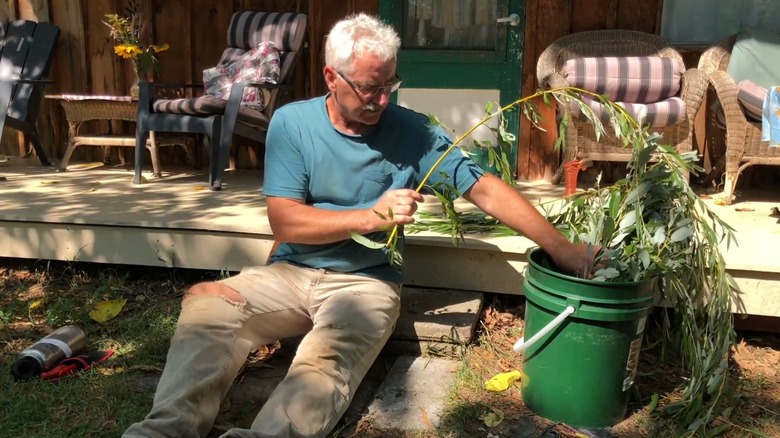
To create your own rooting hormone, get a few cuttings from your willow tree; any variety is fine. The best time to do this is in early spring, when the tender, new growth is still emerging and is largely leafless. Otherwise, you'll need to make additional efforts to strip the stems of their leaves. Besides, new growth — it appears green or yellow — has the highest concentration of auxins, and is likely to yield the most benefits when rooting cuttings.
To maximize seepage of auxins, cut any long stems into singular, 1-inch-long pieces. In some cases, you can make do with a single branch. Gather around 10 to 15 such pieces and leave them for the night in boiling water. Aim for a 4:1 ratio for this mix. If you don't want to leave them sitting in boiling water, you may use water at room temperature, but steep the willow stems for longer — around 48 to 72 hours until they turn yellow or brown and release a mild odor. Et voila, your rooting hormone is ready for use; you may add the twigs to your DIY compost pile.
Using willow water to improve plant propagation
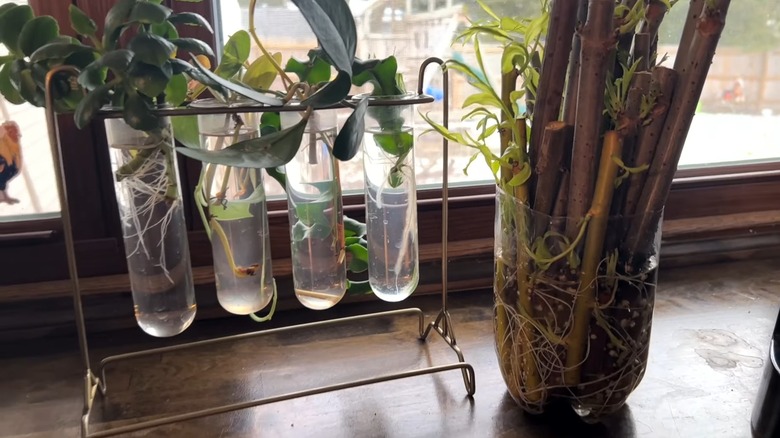
After preparing willow water, take cuttings from the plants you wish to clone, including bonsai. For the best results, use plants that grow well from softwood cuttings, as they don't require high amounts of supplemental auxins to root. You may also include semi-hardwood cuttings that are propagated in the fall and are established to benefit from hormone treatment. Avoid using it on hardwood cuttings, as they require auxins in a higher concentration, which willow water cannot provide.
You may steep the sourced cuttings directly in 4-inch deep willow water for a day after you've strained out the twigs. Later, pot them up or plant them in the garden, when they show white bumps (read "roots") at their base. But if keeping your cuttings in water for an extended duration is infeasible, water them with willow tea instead. Repeat this application once more until new roots emerge. Willow water remains viable for up to two months when refrigerated in an airtight jar, but try using a fresh batch whenever possible.