

The 'Super Termite' That Eats More Than Wood — What Homeowners Need To Know
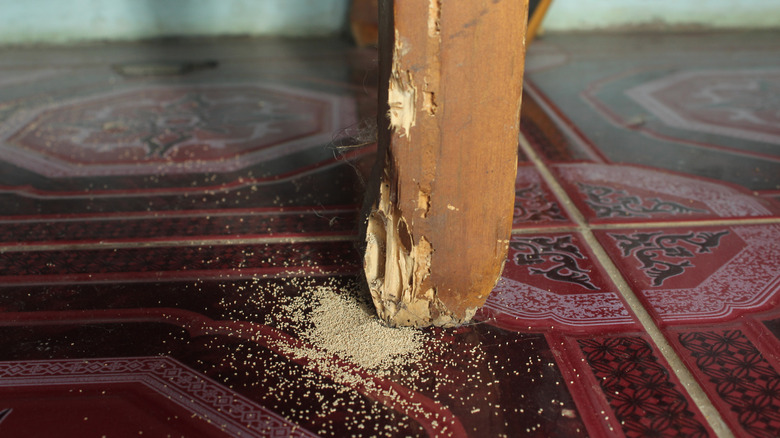
If you thought having termites in your home was bad, you're right. But there is a particularly destructive termite moving through the United States, wreaking havoc on people's homes. Formosan termites are currently found in Alabama, Florida, Georgia, Louisiana, Mississippi, North Carolina, South Carolina, Tennessee, and Texas. Also known as Formosan subterranean termite (FST), these insects came to the U.S. from Asia after World War II, hitching rides on pallets and wooden crates. Their scientific name is Coptotermes formosanus.
While termites are a problem for homeowners who find their houses infested, the super termites are recognized for the extreme damage they cause each year, according to Dr. Christopher Hayes, a pest management expert with N.C. State Extension, "Globally, these guys do a lot of damage, estimated to be more than $1 billion in damages a year," he told to Star News Online. Considering that there are at least 2,000 types of termites in the world, doing about $40 billion in damages each year — one single species doing at least $1 billion of that damage says a lot. And, while there are many ways to get rid of termites, it helps to know what kind of termite you're dealing with.
What super termites are dining on
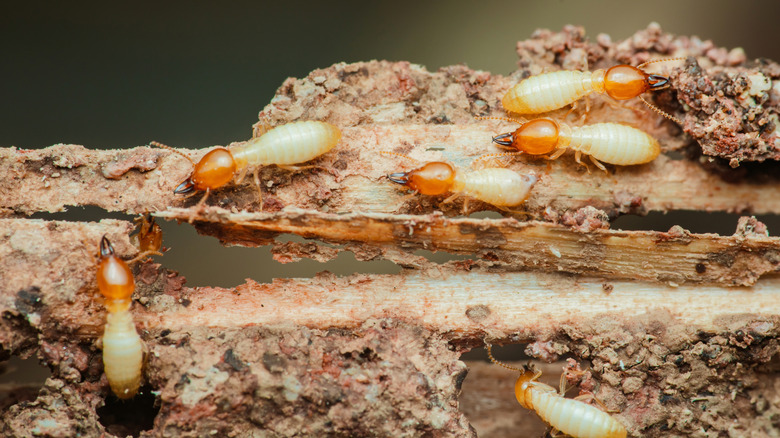
When most of us think of termites, we usually think of them eating the wooden beams of homes and garages or gnawing on trees in our yards. The voracious super termites don't stop there, though. These hungry termites are happy dining on everything from utility poles to boats. They also consume electrical cable insulation and wallpaper. In fact, they will eat anything with cellulose in it, including your books and carpet. They like living wood, as well, happily munching on shrubs and trees.
Speaking of wallpaper, if you're trying to detect whether or not you have termites in your home, you may see holes in your wallpaper or drywall. There will always be those surefire signs you have a termite infestation. Some signs of Formosan termites, aside from visible issues with your walls, include mud tubes, hollow-sounding spots, and bubbling. Mud tubes are their highways, where they'll travel from outside to the inside of your home for their feast. The bubbling in your walls may be due to moisture issues from sources other than termites, but they also bring moisture with them (those mud tubes help), and their colonies inside your walls can mimic the look of water leaks. If you find signs of termites, you're better off letting the pros exterminate for you.