

Bring Your Duvet Back To Life With This Must-Try Trick

An easy alternative to a standard comforter, duvets and duvet covers make it simple to switch out colors and patterns in the bedroom. All you have to do is remove the cover and tug a new one onto the duvet, and it's like you have a brand new comforter, but for half the price. Additionally, duvets, thanks to their cotton, down, or synthetic inserts, are typically more breathable, fluffy, and lightweight than regular comforters, making them a popular and affordable choice. However, after a few years, a duvet can get flat, lumpy, and less comfortable. Instead of purchasing a brand new one, you can easily extend the life of your duvet using this simple trick: sticking the duvet in the freezer.
While this may seem like a silly idea, there are actually numerous benefits to this trick. Not only does the sudden temperature shock of bringing the duvet from the freezer into a warm room help to redistribute the fibers, but the cold air can also help to eliminate any odors from the bedding. Plus, dust mites hate the cold, so this hack may help to remove any mites living in your duvet.
How to refresh your duvet using your freezer
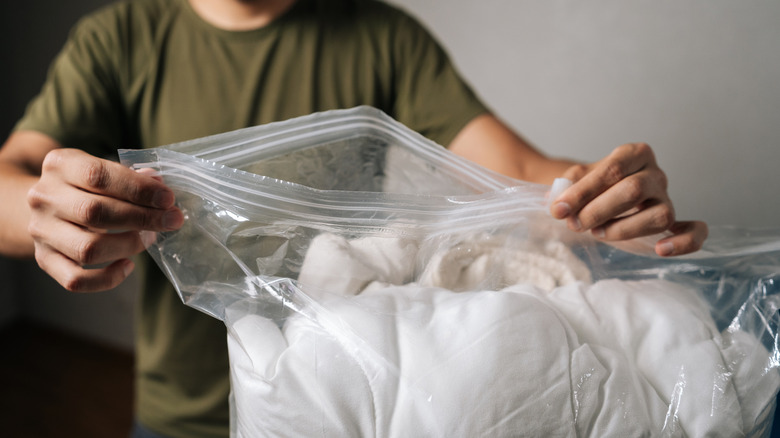
If your duvet has seen better days and has started to grow lumpy, you may want to try this helpful freezer trick to bring it back to life. After washing and fully drying your duvet, place it in a garbage bag, ensuring it's securely tied or sealed, and stick the bag into your freezer for at least 24 hours. Once the 24 hours are up, remove the duvet from the freezer, bring it into a warm room, and shake it for a few minutes to refresh the fill fibers. Shaking it will help redistribute the fibers, making it fluffier. In general, it's recommended to shake your duvet daily anyway.
If your freezer isn't big enough, or you don't have one, you can even use the great outdoors — provided the weather is cold, of course. Some duvet owners are going the extra mile by skipping the freezer entirely and sticking their duvet into the freezing air outside, which also helps to "air" their duvet cover. The latter is a common tactic in Nordic countries like Norway, Sweden, and Denmark. Before trying any of these tricks, it's always recommended to properly wash and dry your duvet first, which includes running it in a gentle, cold cycle and then drying it on a low heat setting. If your duvet has clumps and lumps, try adding a dryer ball into the dryer to encourage extra softness. To get your duvet looking extra crispy and clean, you can iron it to remove any wrinkles, allowing it to dry on a flat surface before placing it back on your bed.