

23 Clever DIYs To Hide The Eyesore Of Outdoor Electrical Boxes In Your Yard
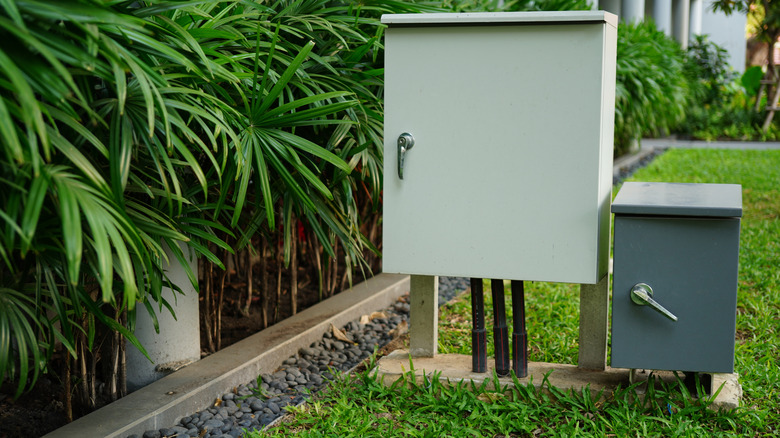
If you've ever noticed an attractive front yard garden, only to have your eye drawn immediately to the outdoor electrical box in the flower bed, you know what an ugly eyesore these essential features of our homes can be. Even a well-designed and professionally installed fixture can stick out like a sore thumb. From meter poles to subpanels and junction boxes, these 23 ideas can help hide unsightly outdoor electrical fixtures while helping achieve a clean, attractive look and increase your home's curb appeal.
Hiding the eyesore of outdoor electrical boxes in your yard can be tricky, and it's important to follow some clear safety dos and don'ts when you're working on DIY projects. You always want to ensure adequate access for all panels and outlets, so that even landscaping, fences, and trees do not interfere. Before doing anything that involves digging, call 811 to have underground utilities marked. And of course, you also want to maintain weatherproofing for all outdoor outlets and panels.
Despite the challenges of outdoor electrical eyesores, there are a lot of techniques you can use to get just the look you want in your front yard. With ideas like faux rock covers, raised planters, simple decorative panels, and more, the challenge of hiding an electrical blemish in your yard can turn into a unique design opportunity when viewed through an artistic lens.
Shrubs or bushes
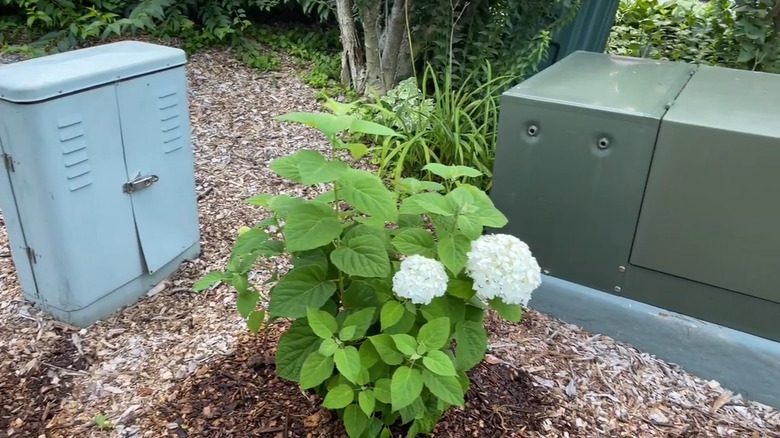
Shrubs are the obvious solution to making outdoor electrical outlets invisible in your yard, and one that many people use to hide unsightly views of all kinds. You can use almost any type of shrub to hide electrical eyesores in your yard, but dense evergreen shrubs like 'Blauer Heinz' boxwood (Buxus sempervirens) and 'Purple Daydream' dwarf loropetalum (Loropetalum chinense) are vibrant evergreens that make a good privacy hedge, adding color and visual interest to your garden. When planting, allow enough space for mature growth and position shrubs a few feet away from the fixtures.
Faux rock cover

Faux rock covers, which come in a variety of shapes, styles, and colors, are frequently used to hide electrical eyesores. To save money, you can make these "rocks" yourself from materials like cardboard, foam board, and cementitious coverings. For a lightweight artificial rock that's easy to move, consider using hypertufa, a concrete mixture often used in garden projects. When you make these yourself, you can add features like an engraved address or hollows for electrical outlets. Just be sure to allow for ventilation.
Wooden privacy screen
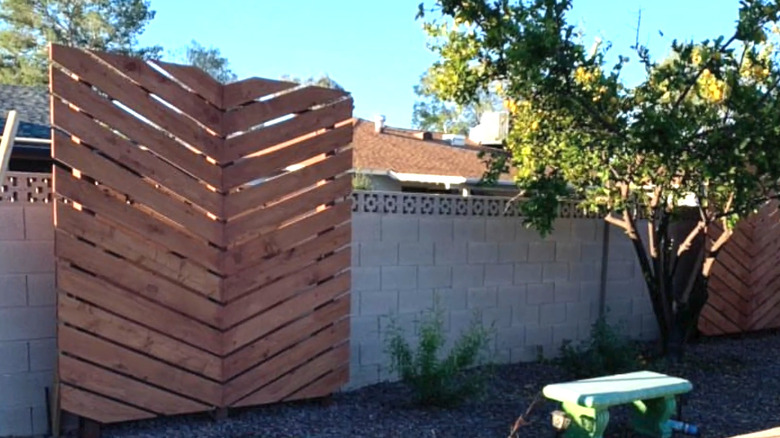
Say goodbye to the eyesore of outdoor electrical boxes with a wooden privacy screen. This is another common option, with a wide range of styles and designs available. A privacy screen can be purchased, but DIY versions made from salvaged materials like old pallet wood offer more flexibility and can save about $100. Either way, caution is important when digging to install a privacy screen, since the work is being done around electrical lines, and calling 811 before digging is recommended.
Planter box with privacy screen
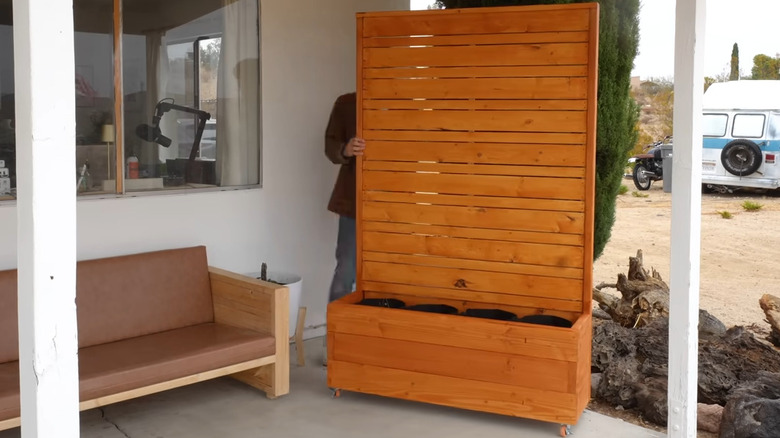
Along the same lines as the wooden privacy screen, you could position a planter with an attached privacy screen to hide fixtures like meter poles and electrical panels. Whether you build it or purchase one, if you put it on caster wheels, it will be easy to move when you need access. With a solid back, it hides your electrical fixture year-round. In the winter, you can decorate the planter box with holiday decorations.
Bench
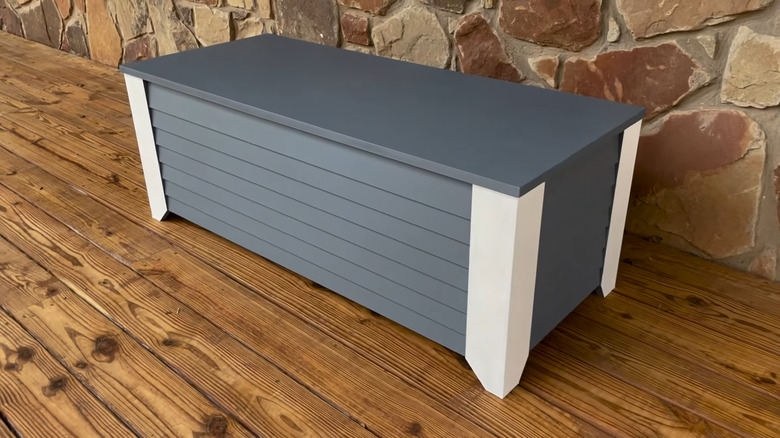
Versatile benches can fit into nearly any outdoor space and can also be used to camouflage electrical outlets. DIY a garden bench with a cover, and place it over a low electrical outlet to create more seating while still allowing access to your fixture. This approach works best for outlets near the ground, but pairing a bench with a privacy screen can create a decorative wall behind the seating and help disguise taller electrical posts. This setup fully conceals the outlet without blocking future access.
Mural
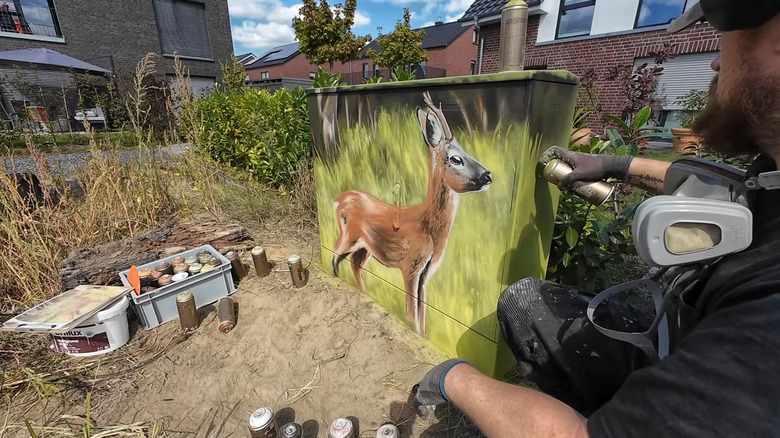
Sometimes, there's no practical way to hide an electrical fixture without blocking access or violating electrical codes. If that's the case, then murals can be a good way to hide objects in plain sight. Whether it's redirecting your attention or drawing your eye to a playful design, murals are often a matter of personal taste and the aesthetic of your yard. Choose a design that pops with bold colors or something that completely camouflages everything from the conduit to the covers — it's your choice. Design inspiration is easy to find, as electrical box art has become increasingly popular.
Wall art
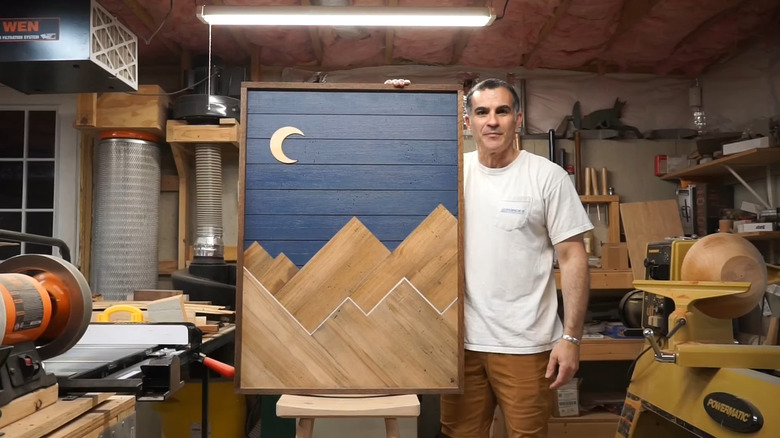
Sometimes, electrical panels end up on the outside of a house, and you may want to cover them just like you do when they're inside your home. One option is using removable wall art. The key to hiding electrical panels with wall art safely and without violating electrical codes is choosing lightweight pieces that can be removed without tools. Whether that's a hanging wood design that you DIY or something you purchase off of Etsy, there are a lot of choices when it comes to this design-friendly workaround.
Outdoor chalkboard
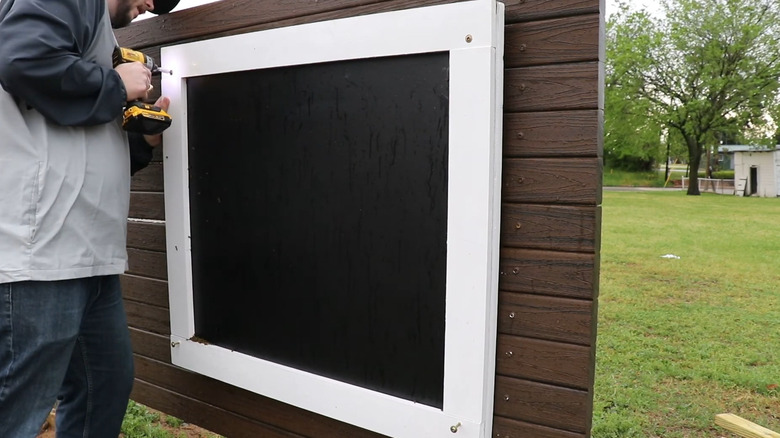
There are many versions of wooden privacy screens that can be more decorative or serve additional purposes, including an outdoor chalkboard panel used to hide electrical eyesores. Fun for the whole family, this DIY can be made with regular plywood that has been sanded and primed. Apply an exterior grade chalkboard paint, like the MAGNETIZE-IT Chalkboard Paint, which costs just under $20. Kids can doodle, family members can leave messages, or you can even use it to display an outdoor chore list.
Outdoor magnet board
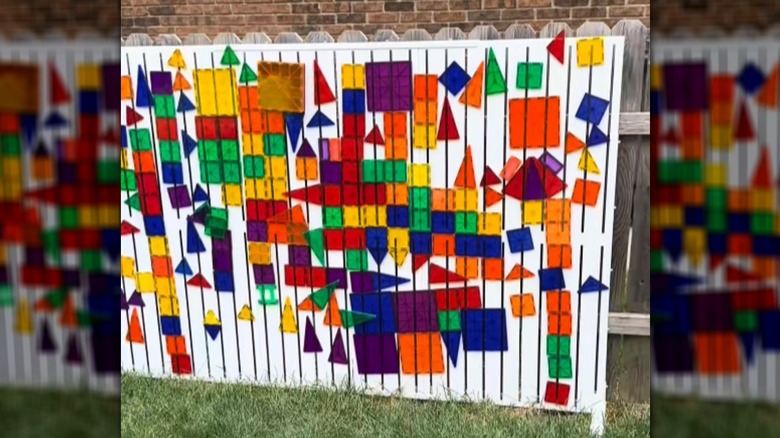
Another fun spin on using decorative panels to hide electrical eyesores is using magnet boards. You can use a specialty paint like MAGNETIZE-IT Magnetic Paint and Primer to make any surface hold magnets or build a DIY panel with metal sheets. In the right space, this could be a fun way to display anything from hubcap collections and metal wall art to Magna-Tiles and children's magnetic letters and numbers. Keep in mind that chalkboard and magnetic panels may need occasional repainting, especially when exposed to harsh outdoor elements.
Vertical garden
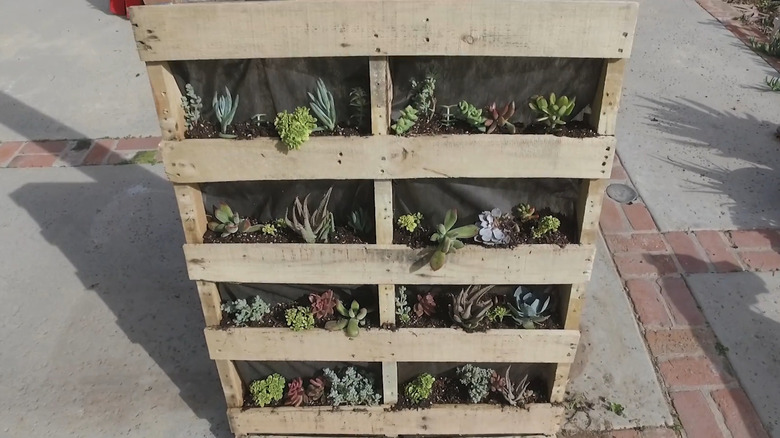
Vertical gardens, also known as green walls, offer numerous benefits. Whether it's a tall meter pole or a shorter junction box, a green wall can help obscure electrical eyesores of varying sizes. They are perfect for using up valuable vertical space and can even add a cooling layer between the hot sun and your house. Just make sure that if you use a vertical garden to hide an electrical eyesore, you don't block access or create safety issues related to watering.
Container garden

Dedicating a space to a container garden can be an enjoyable way to experience plants in pots. Not only that, but a large grouping of planted pots can be a good way to hide ugly eyesores, including electrical ones like small junction boxes, outdoor outlets, or cable and internet boxes. If you have a tall electrical eyesore, hanging baskets or pots with trellises can add height and help conceal the fixtures. In northern climates, winter-hardy plants and large containers that can remain in place year-round help maintain color and coverage through the colder months.
Ornamental grasses

You may be able to hide electrical eyesores in your yard with tall pampas-like ornamental grasses. One advantage of ornamental grasses is that they can be left in place through winter, providing movement, color, and visual texture as a year-round solution in many climates. For electrical eyesores close to ground level, choose varieties like prairie dropseed (Sporobulus heterolepis), which only gets a couple of feet tall. For taller electrical boxes or poles, try popular cultivars like 'Karl Foerster' feather reed grass (Calamagrostis x acutiflora), which reaches up to 5 feet.
Artificial hedge
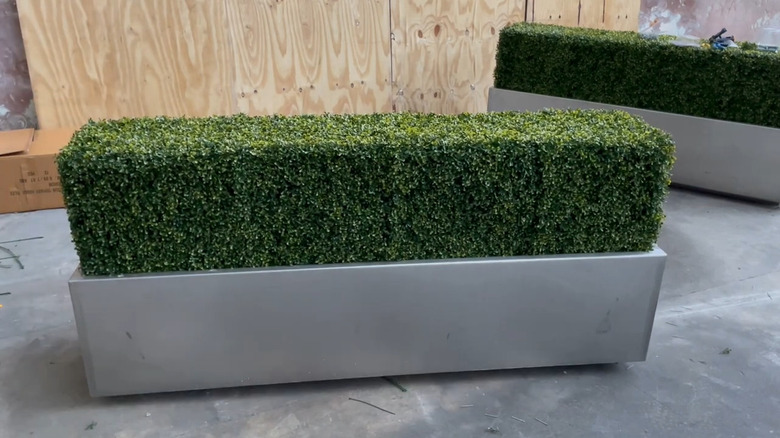
In problematic situations, where you need to cover up an ugly electrical box in your yard while still allowing access, faux shrub hedges can make good utility covers. Store-bought options come in a range of sizes, making them suitable for hiding many types of electrical boxes and panels. However, when you need a custom solution, you can also purchase faux shrub panels and DIY a fake hedge to hide electrical outlets. The benefit of a custom solution is that you can hide any size of electrical outlet while still providing access to the fixture.
Artificial boxwood screen
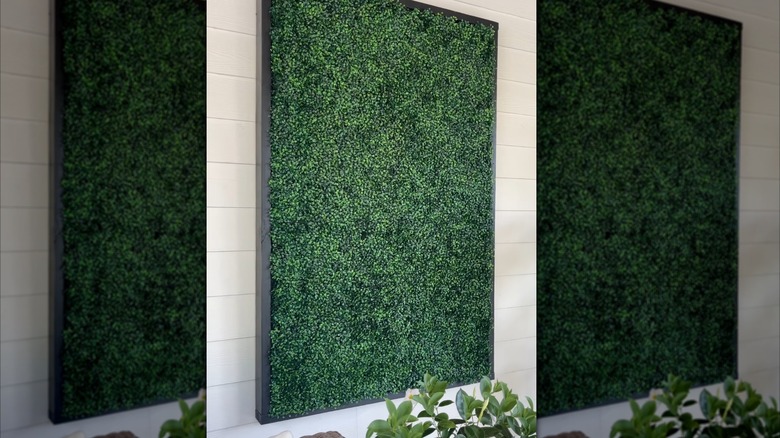
For a square garden design idea, use 20-inch-by-20-inch panels of artificial boxwood screen with other materials to hide electrical eyesores. These GorgeousHome Artificial Boxwood Hedge Panels are available for about $62 for a box of 12. They can be mixed with materials such as cedar fence boards, engineered wood siding, and decorative metal panels to create any kind of look you want for your yard. Or use them alone to create a decorative panel that can be mounted on a set of hinges to hide almost any kind of electrical eyesore while ensuring easy access.
Brick or stone features
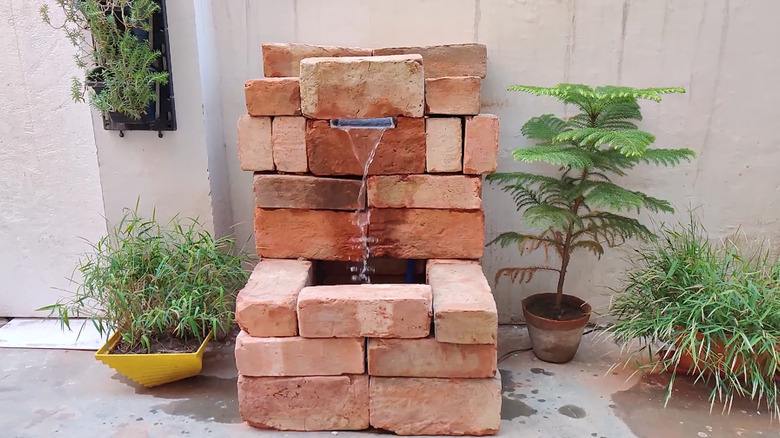
Brick and stone features don't have to serve any purpose in your yard other than decorative, but they can also be used to hide ugly electrical eyesores. Bricks and stones offer almost endless design possibilities, and features can be tied in with existing hardscaping elements in your yard, such as reclaimed brick herringbone pathways and flagstone patios. Whatever your outdoor aesthetic, bricks or stones can be used to make planters, seats, water fountains, or a ledge wall for a container garden while also hiding electrical outlets and ensuring safe access.
Lattice screen
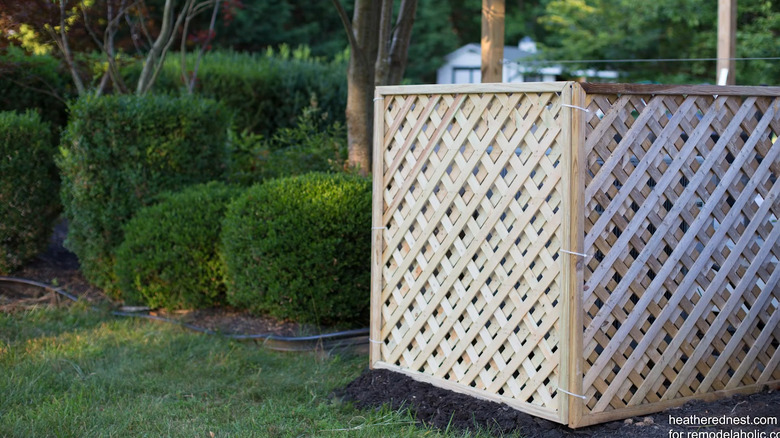
Although there are many privacy screens that you can use to hide ugly electrical outlets in your yard, we haven't yet pointed out lattice screens. While these are partially see-through, they make an excellent year-round trellis that can block views while still allowing air and light to pass through. Available in wood or vinyl, lattice panels are lightweight and easy to cut to size to fit a wide range of designs.
Folding panels
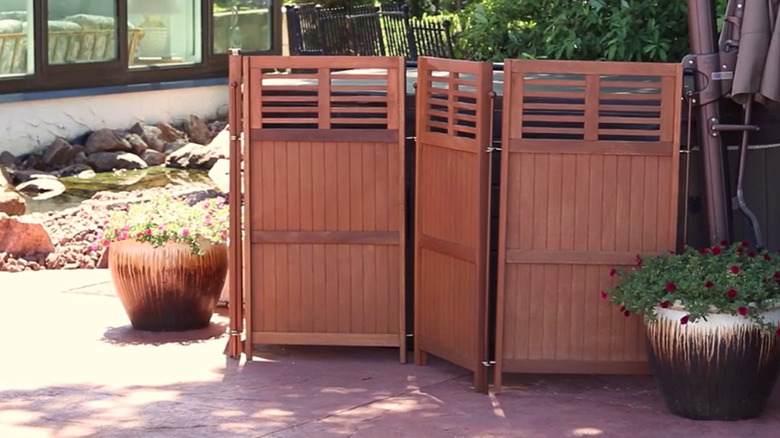
You can use bifold, trifold, and even four-door folding outdoor decorative panels to hide ugly eyesores in your yard. This is a quick and easy solution for hiding electrical outlets of all types because these folding panels come in all shapes, styles, heights, colors, and materials. When selecting a panel, prioritizing adequate height first makes it easier to focus on the overall design aesthetic. If you have some woodworking skills, DIYing your own set will allow you to customize it to fit exactly what you need.
Repurposed cabinet cover
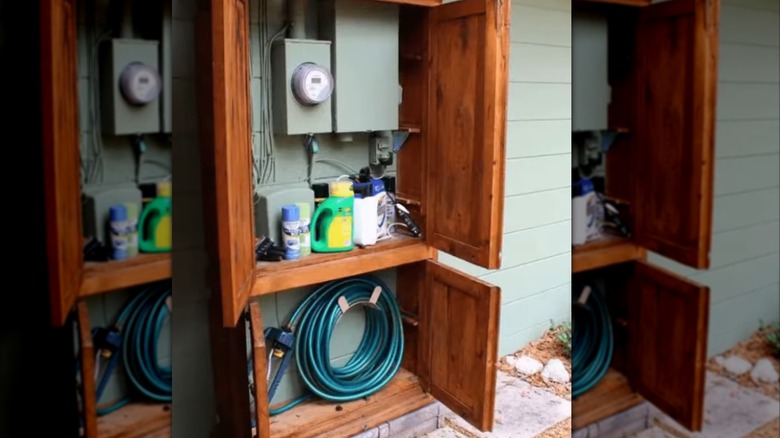
If you're looking for a great use for old kitchen cabinets, fit them over your outdoor electrical eyesores and paint them with an exterior-grade paint so they'll hold up under the elements. Whether used to camouflage meter poles set away from the house or to cover electrical fixtures on the side of a building, the cabinets can also double as storage for nearby landscaping tools like hoses, sprinklers, and gardening clippers. If you don't have any cabinets to upcycle, make some custom, inexpensive ones with salvaged wood.
Utility box vinyl wraps
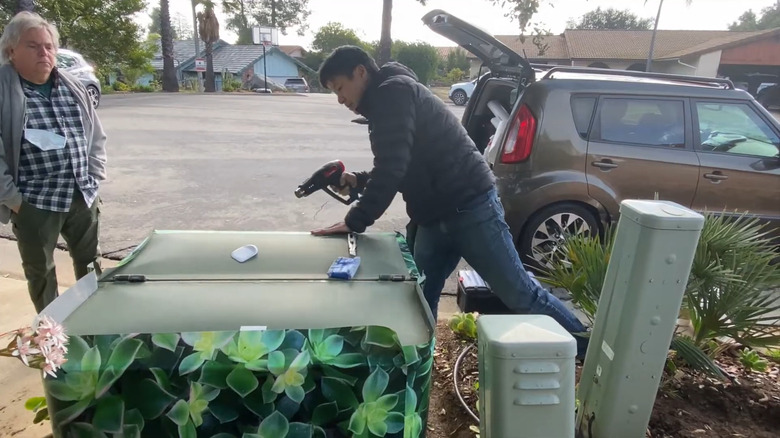
Vinyl wraps are used on everything these days, from vehicles and boats to countertops and toolboxes. You can even use them on electrical boxes to make them beautiful. Similar to murals, this approach doesn't fully conceal electrical boxes but can significantly reduce their visual impact. Of course, whenever you're making changes to a utility box, you always need to check and make sure it's okay. A call to your utility company will confirm if you're allowed to use something like utility vinyl wraps to improve the aesthetic of the electrical boxes in your yard.
Gabions
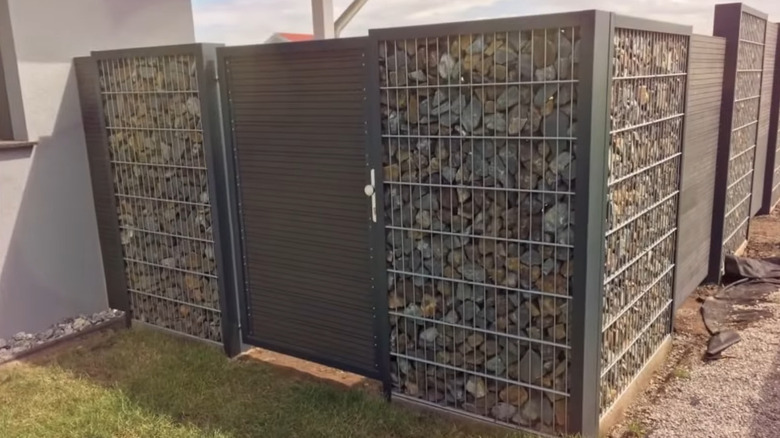
Known for their durability, gabions are a long-standing stone landscaping feature that requires little upkeep and are used to create everything from benches to retaining walls and fences. With their versatility, it shouldn't be hard to find creative ways to use them to hide unsightly electrical outlets. You can even fill gabion baskets with unusual fill materials like colorful glass bottles or Hiland Recycled Glass. If the gabion basket holes are too large for your material, adding a finer wire mesh can help hold everything securely in place.
Concrete and driftwood privacy screen
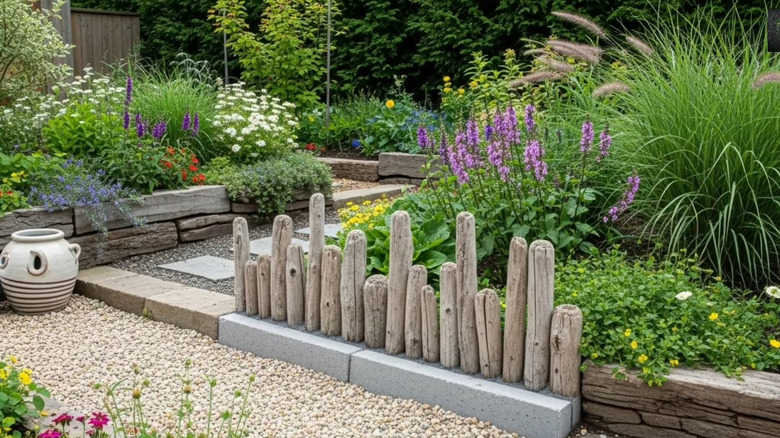
Materials and design ideas for privacy screens can often be combined to create decorative features that hide electrical eyesores. Pairing concrete and driftwood together is a perfect example of how you can use two dissimilar materials to create a privacy screen that brings a lakeside vibe to your outdoor space. This look can be achieved by setting upright pieces of driftwood into a short concrete curb or step. The height of the driftwood will determine how tall an eyesore you can hide with this affordable DIY.
Vintage window frame with mirror
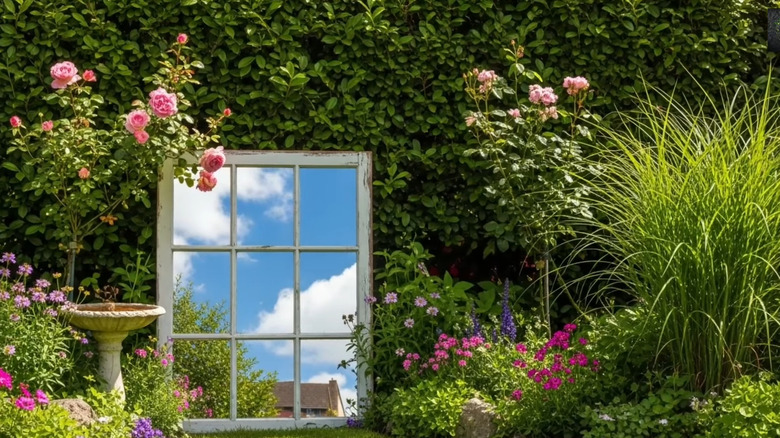
In garden design, mirrors can be used to make spaces seem bigger or to frame focal areas. They can be just as effective outdoors as they are in interior design, and when paired with a vintage window frame, these two materials provide a simple way to hide outdoor electrical outlets. You can lean a vintage window frame in a flower bed, install one with mirrors on a post, or put it on hinges to provide access to an electrical panel on a wall.
Decorative metal screens
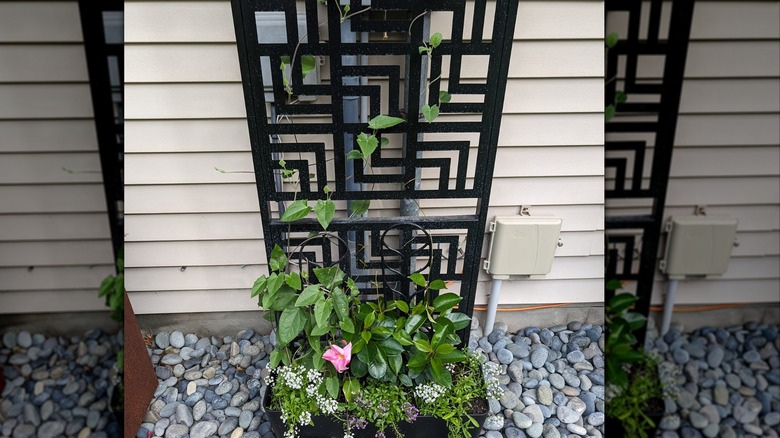
In recent years, decorative metal screens have become widely available, largely because technologies such as laser cutting have made them more cost-effective to produce. These screens are easy to find online and can be installed around an electrical box that's become an eyesore in your yard. As a type of privacy screen, these can be combined with other materials or ideas on this list, such as using ornamental grasses together with metal screens and gabion baskets to create a sleek, sophisticated look.