

13 Tips & Tricks For Picking The Perfect Kitchen Countertop And Backsplash Combo
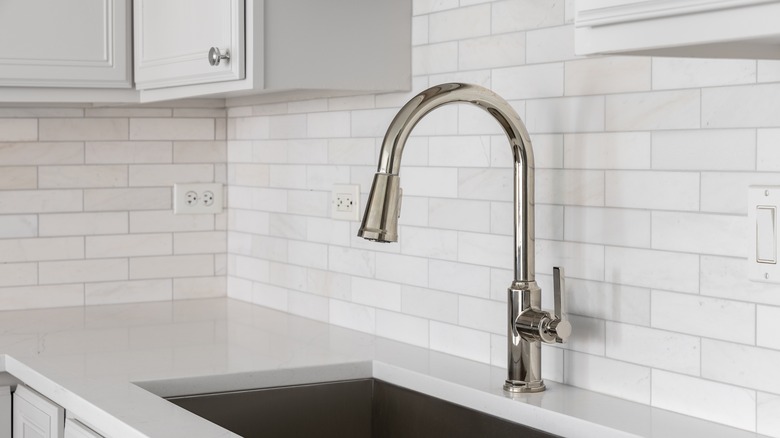
When you're trying to perfectly pair a kitchen backsplash and countertop, the choices can be overwhelming. Design "rules" are looser than they used to be, meaning even more possibilities. Where to begin? Start by determining the design style or theme you want to apply in your kitchen — farmhouse, cottage, rustic, industrial, and coastal are just some of your many choices. Chances are, you'll choose the same design style as the rest of your home. But truly committing to your style helps inform your backsplash and countertop choices.
An early step in choosing your backsplash/countertop combo is selecting your materials. According to designer predictions, the hottest current countertop material is quartzite, while natural stone is popular for backsplashes. An absolutely critical aspect of choosing your backsplash and countertop is to look at samples in tandem, so you can see how the countertop material looks with the backsplash finish. As you'll see in these upcoming tips and tricks, it's not essential to match materials, colors, patterns, and textures for the perfect backsplash and countertop combo, but they should harmonize.
Plan your color palette

A good starting place for choosing the perfect kitchen countertop and backsplash combo is to decide on your kitchen color palette. To keep it as simple as possible, limit the palette to three colors, following the "60-30-10 rule," in which 60% of the room is a predominant color, 30% is a complementary color, and 10% is a bold accent color. A significant question is whether your backsplash should be the same color as your countertops for a more cohesive look. A monochromatic countertop and backsplash create a uniform look but are certainly not your only option, as you'll see.
Select your countertop first and make it the focal point

Should you select your countertop or backsplash material first? No "rule" exists for the correct sequence, although it's more common to choose the countertop first. After all, countertops are the bigger-ticket item, covering more space in your kitchen. The element chosen first is likely to become more of a focal point than the other, so if you choose a dramatic countertop, you'll likely want a more subdued backsplash.
Let your backsplash be the star
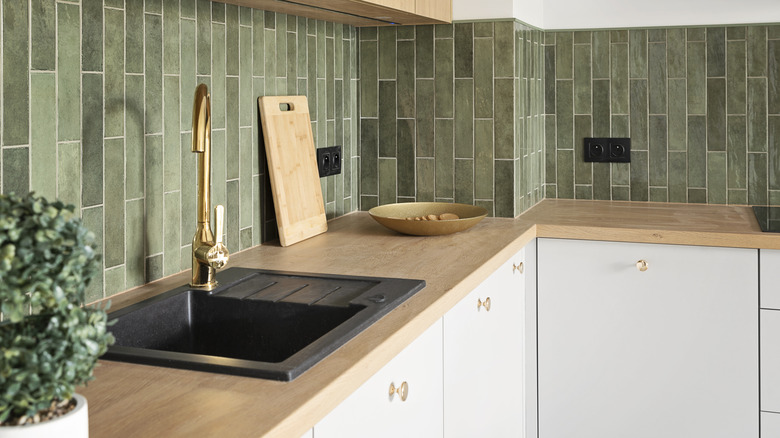
You can, of course, choose your backsplash material first and plan other elements, including your countertop, around it. Make your backsplash the focal point by choosing bold colors, elegant materials, or the unexpected drama of reflective surfaces, including with a mirrored backsplash. There are so many creative backsplash ideas for your kitchen, featuring geometric patterns, unique tiles, or natural stone. Just as the backsplash takes a backseat when the countertop is the star, your countertop should be toned down when you want your backsplash to shine.
Consider unexpected materials
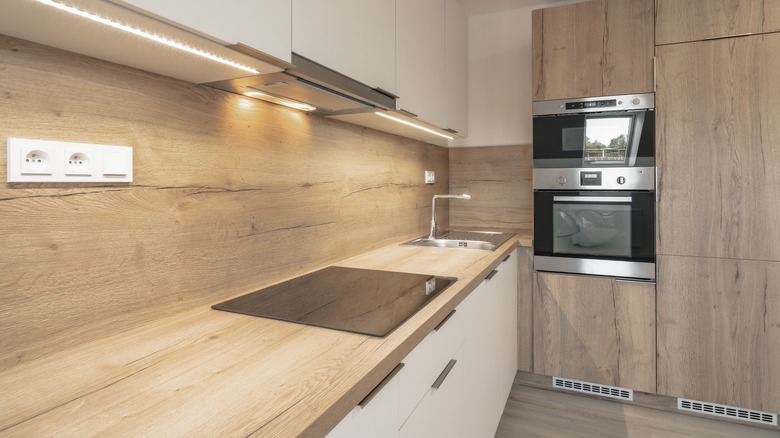
Consider using materials for your countertop-backsplash combo that are not same-old same old. Wood, particularly butcher block, is not unusual as a countertop but not often seen as a backsplash. It's a great choice for your kitchen when looking to add warmth and a rustic natural quality that brings the outdoors indoors. Other unusual materials include stainless steel, copper, concrete, recycled glass slab, zinc, bamboo, and poured epoxy. Wallpaper is another super affordable backsplash alternative for your kitchen, paired with a complementary countertop. Research the pros and cons of any out-of-the-ordinary material you're considering.
Get in on the countersplash trend
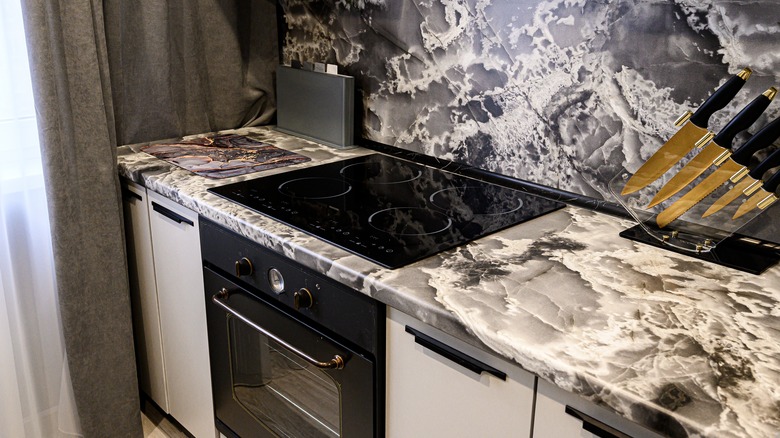
Have you heard about the chic backsplash trend that's bringing subtle sophistication to kitchens? Countertops and backsplashes are one continuous entity made of the same material and called a "countersplash." This configuration provides a seamless, elegant look. You may miss out on creatively pairing separate countertops and backsplashes, but for some, having one less decision to make may be freeing. You'll want to be aware of avoidable countersplash mistakes before your renovation, such as designs overwhelmed by busy patterns and countersplashes that look unfinished because they don't go all the way up the wall.
Choose high-contrast colors, such as black and white
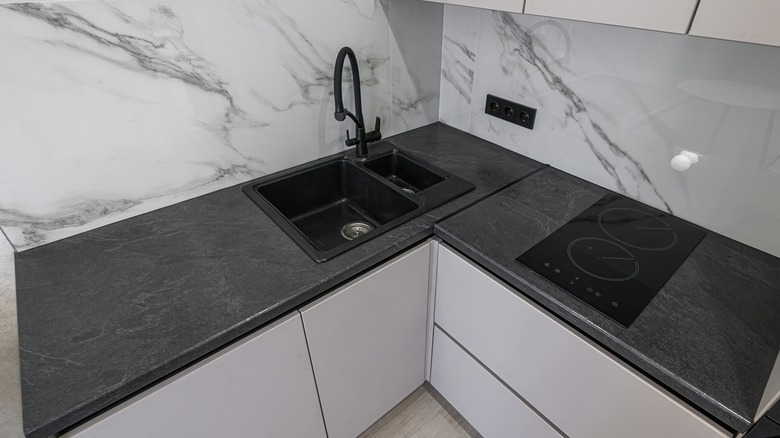
It's hard to beat a classic look — the clean, crisp look of white that seems to gleam even more when contrasted with black. A high-contrast pairing of countertop and backsplash brings balance and depth to the space. You don't have to go as far as a black and white kitchen to create this contrast. You can use a backsplash that is lighter than your countertop to add brightness and openness to your space — or a backsplash darker than your countertop for dramatic contrast that warms up your kitchen's feel.
Get colorful
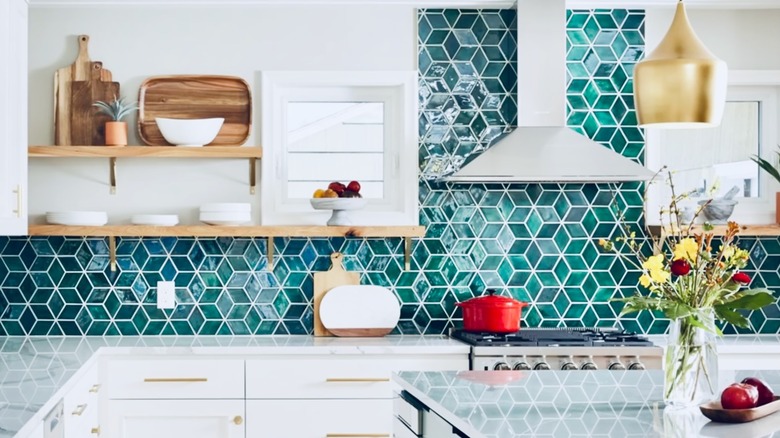
Don't be afraid to make a bold color statement with your countertop/backsplash combo, especially if bright colors are the norm in the rest of your house. In the 2025 NKBA Kitchen Trends Report (via Kitchen and Bath Design News), 71% of respondents preferred colorful kitchens that showcase personality over classic white kitchens. It's helpful to know a bit about the psychology of color when pursuing this choice — the energy and stimulation of warm colors such as red and orange, the calming nature of blue, the freshness of green, for example. Consider creating contrast, so your bold color choices pop even more.
Make the most of neutrals
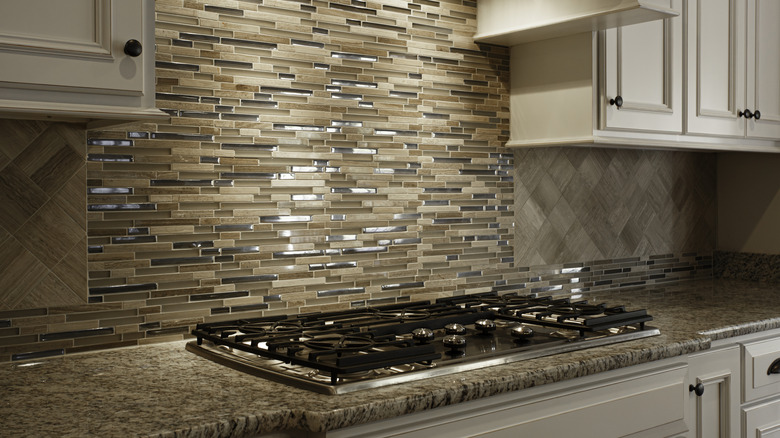
Neutral colors are always in style but don't have to look boring. Even if you're working with a narrow palette of earth tones, whites, grays, and beiges, you can add interest with patterns on the countertop or backsplash (or both) and an intriguing combination of materials. Since neutrals work so well with a range of colors, consider accessorizing your countertop or backsplash with pops of color — say, a small art piece hung on the backsplash or a colorful ceramic object on the countertop. Bonus: Neutral colors are good for resale value.
Try a pattern-on-pattern look
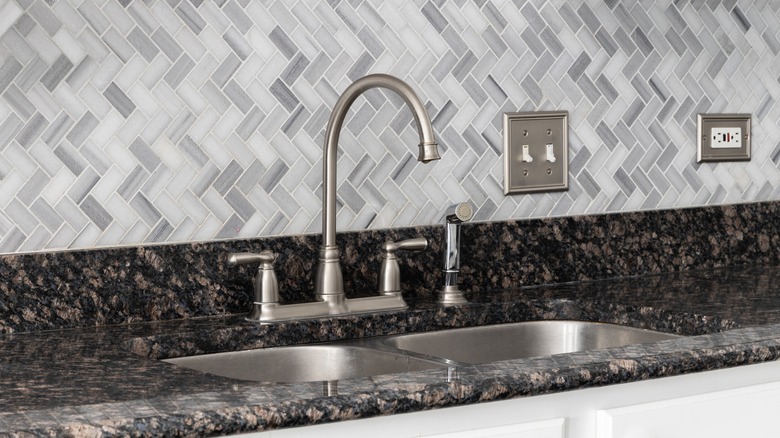
Using patterns in both your countertop and backsplash is a bold choice because it's easy to get it wrong. Keep patterns for each in similar color tones, and ensure that the pattern on one element is subtler than the pattern on the other. Avoid patterns that clash or overwhelm. Testing out the options is imperative in this scenario. You'll want to not only look at the backsplash and countertop materials next to each other, but ideally with physical samples in your kitchen.
Pair a textured backsplash with a complementary countertop
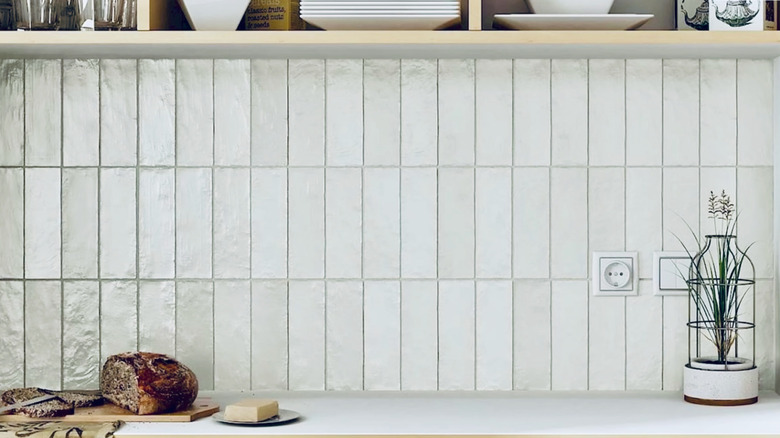
Texture in your backsplash/countertop combo adds dimension to your kitchen design. This approach highlights the backsplash, since any countertop texture other than smooth would likely be problematic for kitchen prep. One such kitchen countertop and backsplash pairing that creates texture and balance includes a smooth quartzite countertop with a backsplash of zellige tile, a glazed Morroccan tile that comes in myriad colors, reflects light, and has a unique textured look from tile to tile. Other backsplash textural material ideas include stone, plaster, and thin-glazed bricks.
Add cottage style to your kitchen with backsplash and countertop choices
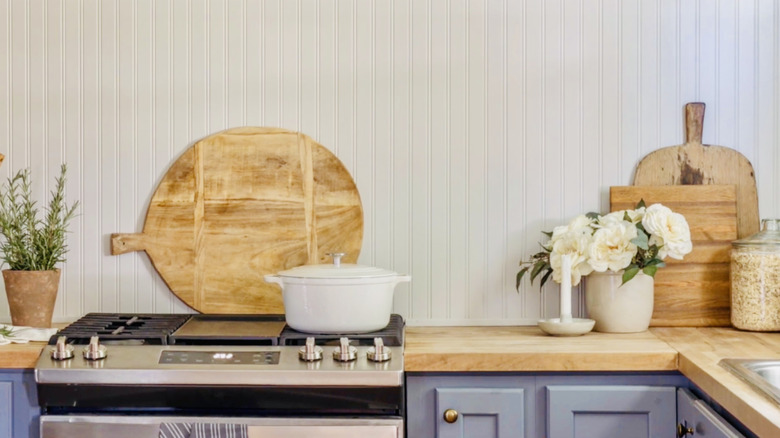
Simple finishes, such as a beadboard backsplash and natural wood countertop, are hallmarks of cottage style, with its notes of comfort, coziness, and nostalgia. Consider soft colors and muted tones for your backsplash and countertop combo, along with natural materials. Country-themed wallpaper as your backsplash would also pair nicely with a simple, butcher block countertop. Brick or ceramic tile backsplashes paired with countertops in natural materials evoke the inviting warmth of this casual style.
Create a mosaic art backsplash
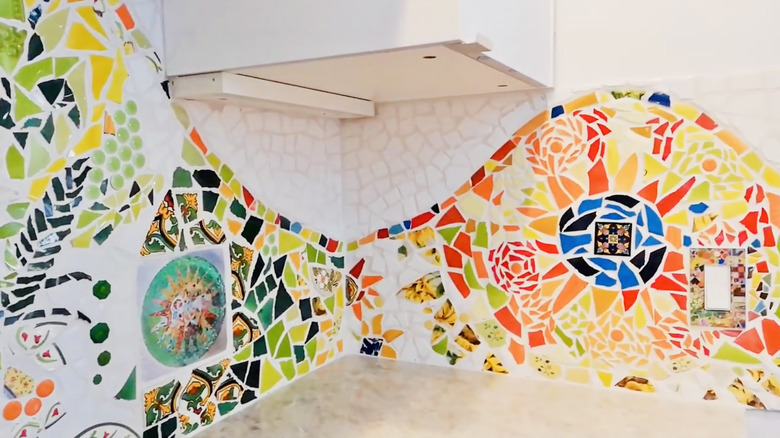
Whether DIY or commissioned from an artist, a colorful art mosaic as part or all of your backsplash makes a powerful statement. A mosaic art backsplash, as distinguished from a mosaic tile backsplash, may use tile, but it also may incorporate other materials, such as broken dishes, and typically creates an image, whether abstract or representational. These types of backsplashes are often used near a range hood. Because a mosaic art backsplash is a focal point, you'll want to pair it with a simple countertop of perhaps solid surface or quartz in a solid color.
Tile-on-tile backsplash with inset and coordinating countertop
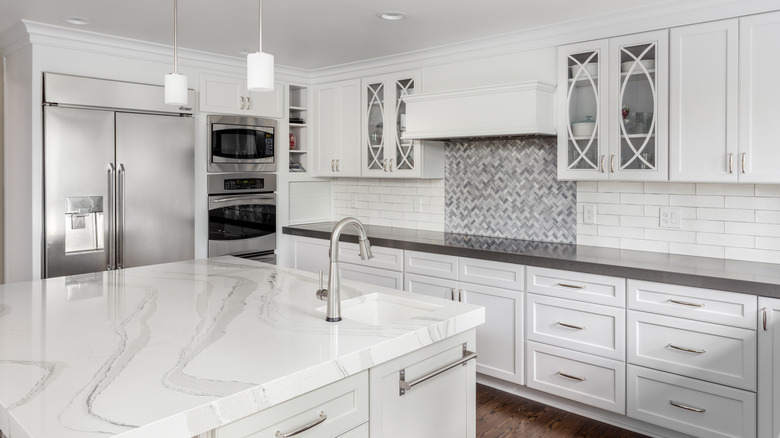
Consider a tile inset within a backsplash that uses a different kind of tile or tile of a different material from the main part of the backsplash if you want to take part in an up-and-coming kitchen backsplash trend that adds contrast. Insets add interest by breaking up an expanse of backsplash and creating a focal point. Pair a supporting-role countertop with your focal-point tile inset that unifies the materials with color or sheen (matte or glossy). Like art mosaics, these insets are often placed under the range hood.