

Jumping On The Delft Tiles Trend? Here's The Best Way To Use Them
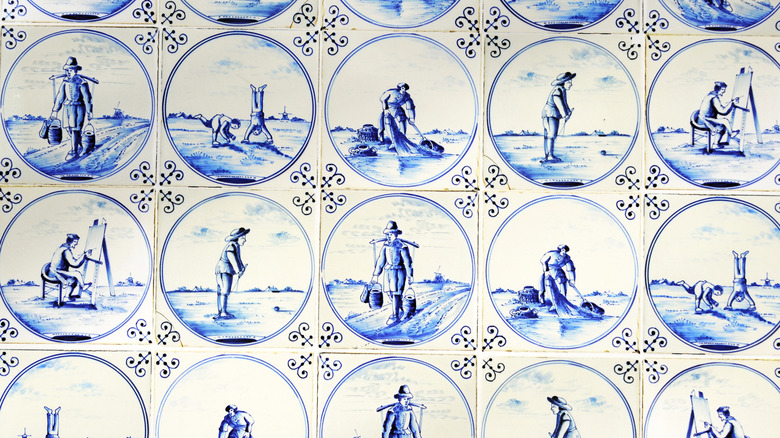
No ultimate cottagecore decorated home is complete without the iconic, cobalt-blue glazed country motifs of Delft tiles. Characterized by its signature hand-painted pastoral or nature scenes on a milky, glazed back group, these antique-inspired tiles are experiencing a massive resurgence in modern home design. Born in the 16th century in Italy and later popularized in Delft, Netherlands, modern interpretations of Delft tiles are popping up in interior decor as a charming nod to antique craftsmanship, but with modern needs in mind. In a world of cookie-cutter surfaces, Delft tiles' popularity today stems from the undone, unfitted home decor trends popping up on Pinterest everywhere, which prioritize unique artisanal elements over sterile minimalism.
While these tiles work beautifully in any space that could use a boost of handmade charm, like around fireplaces or in bathrooms, the kitchen backsplash is an ideal spot to install your Delft tile. Originally, Delft tiles were used in kitchens and other high-traffic spaces of a historic Dutch home, and their modern variations are just as equipped to handle some wear and tear. When installed with a lime-based mortar, these tiles are easy to wipe down and maintain. Just be sure to clean your tiles with a damp washcloth and gentle cleaner, and wipe dry to avoid excess moisture. Since water and humidity can actually leach salts out of the tile and cause the glaze to deteriorate, be sure to avoid installing Delft tiles where it'll be in constant contact with lots of water, like a shower, unless you plan on diligently wiping the water down with each use. Because of this caveat, the kitchen is the best place to install Delft tile, though in reality, there's no limit to where you can put it if you're diligent enough about maintenance.
How to style modern Delft tiles
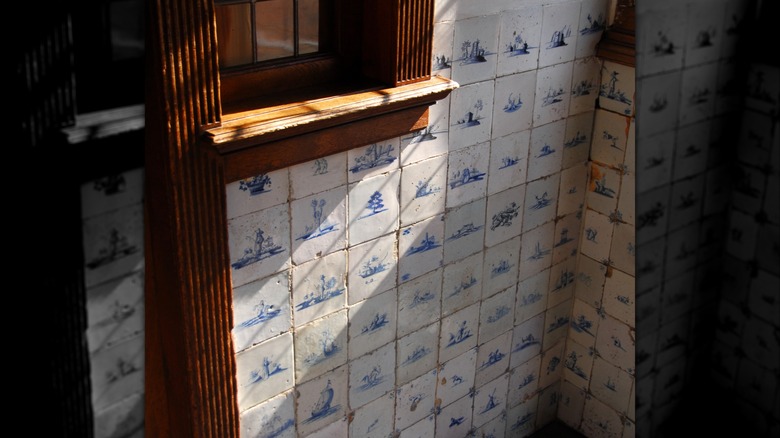
Despite being patterned and colored, these tiles can act as a surprising neutral. The blue and white palette pairs exceptionally well with natural wood accents, natural stone surfaces, brass hardware, and marble countertops, all elements that bridge the gap between antiqued aesthetics and contemporary luxe living. In particular, brass hardware is having a moment for its old world charm, much like Delft tile, further illustrating that the authentic, lived-in touches of eras past are appealing to those looking for a bit more soul in their design. Delft tiles also pair beautifully with bold jewel tones if you want to brighten up a space — think painted accent walls or boldly colored furniture. Of course, for classic cottagecore, stick to creams, laces, and pastels, all elements you'd see in an English or Dutch farm house.
For the most authentic look, Delft tiles should be installed with minimal, tight grout lines in a soft white or light gray, to create a seamless, almost mural effect that allows the art on the tile to take center stage, as well as lean into that lived-in yet luxurious look that these tiles provide. It's an element of slow design really resonating with modern homeowners. Delft tiles, when paired with those natural finishes mentioned above, highlight the beauty of everyday living. People are increasingly seeking authenticity over perfection, and the slight irregularities in hand-painted Delft tiles offer what machine-made tiles can't really capture.
Where to buy Delft tiles today
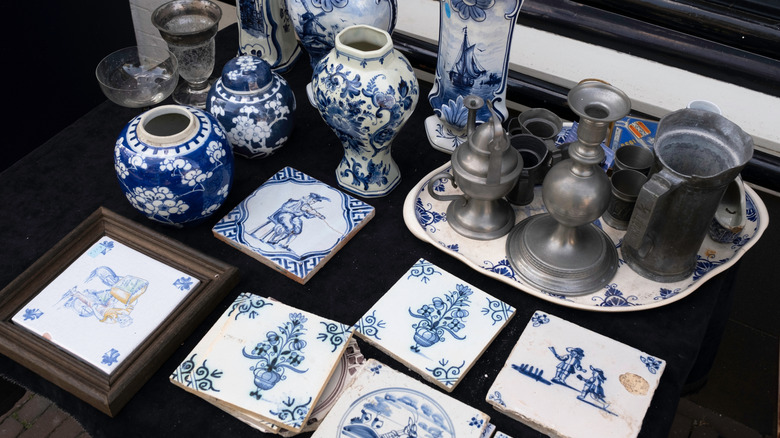
Getting that Delft tile look doesn't mean you have to hunt at thrift stores, flea markets, or estate sales for the real, vintage thing (unless you want to). Modern tile makers have embraced the techniques of Delftware and are reproducing the look in spirit of 16th century Europe. Petra Palumbo, for instance, designs pieces with that same old-world mystique, inclusive of wallpaper, homeware, and yes, Delft tiles, but meant to hold up to modern stress. With pieces featuring cheeky contemporary motifs like a six-pack of beer bottles and a dressing robe, these pieces embrace heritage as well as modern fun with different color choices. However, if you prefer a more traditional look, the retailer also has more classic patterns, like lavender bunches and even the classic Venus.
For a more authentic and true-to-form look, retailers like Regt Delft Tiles reproduce some of those historic pieces, from small landscapes to floral motifs. You can even add some variations to your reproduction pieces, like a crackled finish, to mimic the real deal in your cottagecore kitchen. However, if you really want to lean into the true experience of having historic Delft tiles in your kitchen, Regt Delft Tiles also sells real-life collectibles from historic productions. While an early 1600s tile featuring a horse will set you back over a $1,000, some authentic pieces can be purchased for under $300. Using real historic tiles is a great idea for those wanting a focal point in a backsplash or a wall, while authentic reproductions will make an impressive mural. However you choose to embrace the Delft tile trend, you'll fall in love with this charming addition.