

12 Winter Care Tips To Keep Hydrangeas Healthy And Ready To Bloom In Spring
Hydrangeas are often the "old reliables" of the landscape, and there's often a variety that's cold-hardy or heat-tolerant enough for any garden setting. The famous shrubs with the large, showy flowers and lush foliage prefer shade, but won't shrivel up and die if they get too much sun. They prefer plenty of water, but even when parched, will politely pick their leaves right back up after getting replenished. And to top it off, they may even flower a little better if they don't get plant food!
So does that mean you can neglect them during the winter when you're buttoning up the garden and getting on with other concerns? Well, technically, yes. Truth be told, the hard shrubs can probably survive the neglect relatively unscathed. But adequate winter care is actually one of those gardening tips and tricks for successful hydrangea blooms the following spring. So, taking the time to protect their roots and branches now can pay off handsomely in a few months.
Identify what species of hydrangea you have to tailor its winter care

How you protect your hydrangeas will depend somewhat on the type of species they are. That's especially true when it comes to pruning. But it also includes such considerations, like how cold-hardy each type is, and how soon they will need to be bundled up for the winter. Panicled hydrangeas, for example, are more cold-hardy and can probably be neglected a little later into the cold months before you give them winter protection. The famous mophead, or bigleaf hydrangea, is more delicate and should probably be bundled up as early as possible.
In terms of pruning considerations, the two main categories of hydrangeas are old-wood and new-wood varieties. The terms describe whether flower buds form on this year's or last year's growth. That distinction obviously impacts when to prune, among other considerations. If you've lost your hydrangea's identifying information, examine the shrub itself. Buds on dark, stiffer wood indicate that the hydrangea is an old-wood type. New-wood varieties wouldn't have any buds during the winter, because they form on the green, flexible stems that will emerge in a few months.
Consider relocating shrubs that previously had tough winters
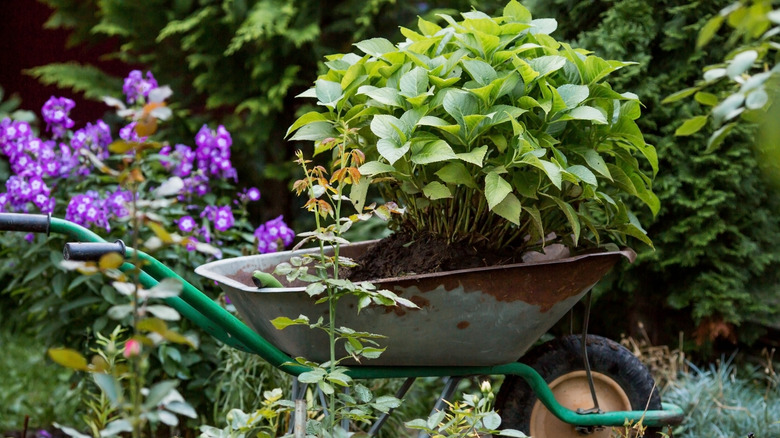
If you didn't get much in the way of blooms this past growing season, moving your hydrangea to a more protected space before the first freeze may help. Because hydrangeas that grow on old wood aren't as hardy as new wood types, their branches can be more susceptible to winterkill. Transplanting can give hydrangeas a better shot at getting through the winter. Late fall is often the best time to do this, but it can also be done during a mild early winter. Just make sure that all the leaves have dropped off the plant before you do so.
In general, the best place to plant hydrangeas are areas that will receive the right micro-climate for the growing season, but will also be more protected during the winter. Snow is less of an issue than cold and wind. What you're looking for is an area with a natural windbreak behind it, whether it's your home, an outbuilding, or a small group of trees. Just avoid moving the hydrangea to areas that collect frost pockets — generally, areas that are at the bottoms of slopes.
To transplant the shrub, dig a circular trench around it, then gently loosen the root ball. Try to bring up a substantial amount of soil around the roots. Move the shrub to the new location. The hole should be about twice the width and depth of the existing root system. Lower the hydrangea into its new location, backfill the soil, and water it well.
Keep the shrubs well-watered until freeze or deep snow
It can be difficult to know what watering schedule to follow when winter sets in, especially if you're following tips that might not be catered to your region. After all, some areas routinely get snow in October, while others may never even see a hard freeze. Fortunately, the rules for shrubs like hydrangea watering are fairly universal. Simply keep watering them until the ground freezes.
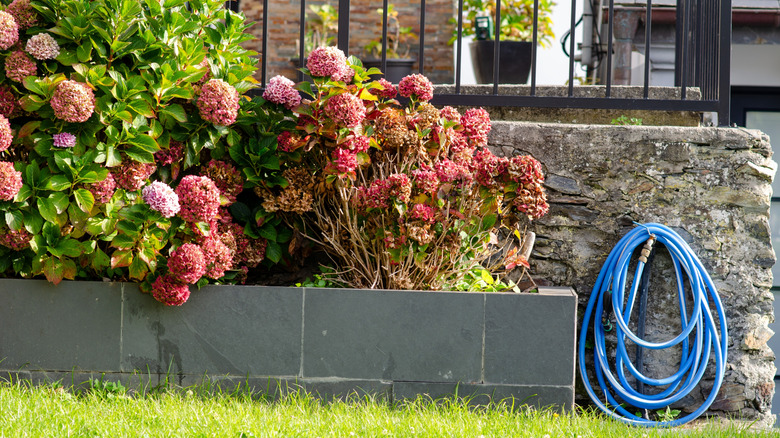
For many regions, that means that hydrangea shrubs should be well-watered throughout the fall and early winter. Give the shrubs a slow drink of around 5 gallons of water, about once a month. That translates into about an hour of a hose set to a trickle near each shrub. Alternatively, you can put a five-gallon jug or bucket with a small hole in it next to the shrub. Let the water slowly seep out until the vessel is empty. Keep this monthly routine up until the ground freezes or the area receives heavy snow.
What if you're in a more temperate climate, which rarely freezes or snows? In that case, simply continue with the watering program of about once a month. When temperatures warm, of course, you will need to water more frequently, all while congratulating yourself on keeping your hydrangeas happy through the cooler months.
Put down a thin compost layer for protection and future nutrients
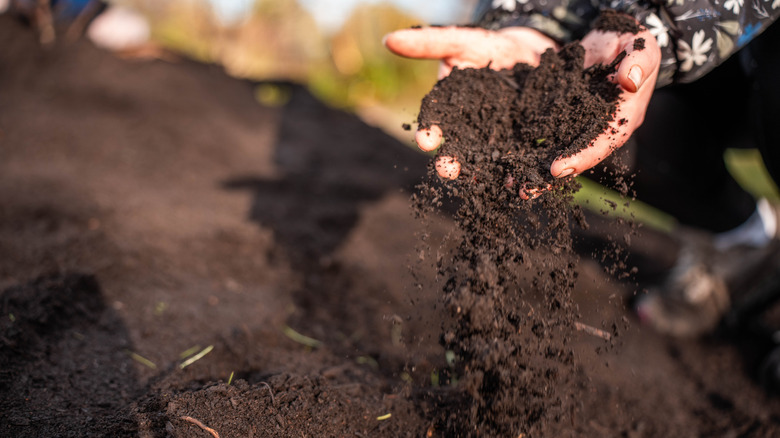
Compost does double-duty in the winter when it comes to hydrangea health. The organic decomposed matter acts as a layer of protection, insulating vulnerable plant roots from a season's worth of thawing and freezing. (That kind of roller coaster action has a way of heaving plants upward.) In addition, compost breaks down over the winter. Then, when spring thaws come, the hydrangeas start receiving nutrients exactly when they need them for new leaf and bloom production.
Compost should be added in late fall or early winter, but it can even go on after the ground freezes. Use your own compost or a trusted brand purchased from the garden center. The key is to apply it before setting down mulch, so that when the ground warms up, the compost can begin to leech nutrients directly into the soil. The compost layer should start a couple of inches from the woody stem at the base of the hydrangea. Spread it in a circle, ending just at the drip line, the area where the branches stop. Make the compost layer a couple of inches thick, especially if you're in a colder climate.
Skip other fertilizers to avoid forcing vulnerable winter growth
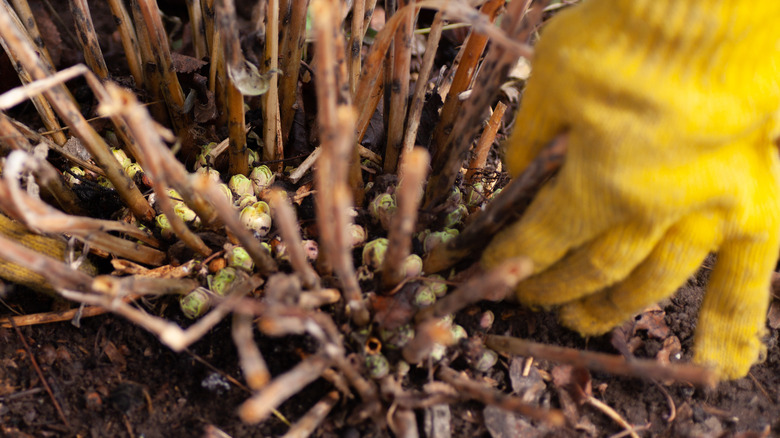
Our instinct when it comes to caring for our plants is to give them plenty of food, especially when they're about to go into hibernation. But for many plants, including hydrangeas, it's a case of needing to be cruel to be kind. Feeding plants during late fall or winter, though it might seem generous, can actually make them more vulnerable to the elements than if you did nothing at all. For most regions, July or August should be the last time that your hydrangeas see plant food until the following spring.
It can certainly be tempting to give stressed-looking shrubs one last meal before harsh weather sets in. But the problems they are facing could also be due to other factors, like water imbalance or pests, rather than from under-feeding. Just as importantly, hydrangeas need the chance to go dormant in the winter. In fact, chemical or even organic fertilizers other than compost will likely stimulate new growth as the cold weather rolls in. That premature growth makes those tender plant parts, and possibly the rest of the shrub, more vulnerable to winterkill. This can eliminate your chances of seeing flowers during the coming growing season, especially for hydrangea varieties that bud on old wood. Keep in mind, underfed hydrangeas may actually bloom better than overfed ones!
Mulch around hydrangea bases with leaves, straw, or hay
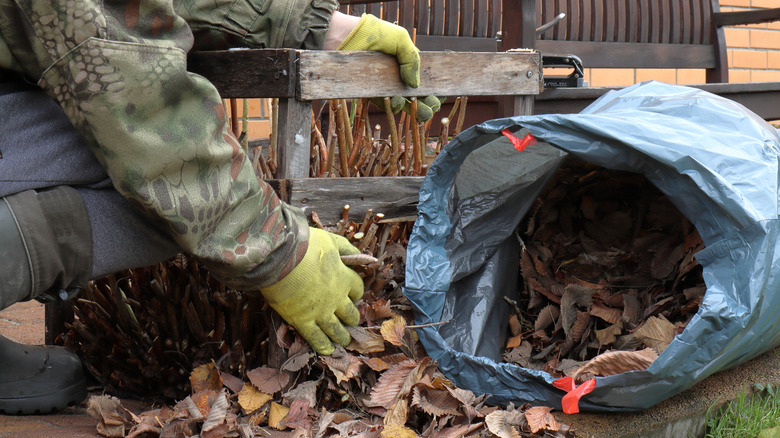
No matter what region you live in, winter 'tis the season for mulching. In warmer climates, it takes the job over from summer mulch, keeping weeds down while retaining moisture. In moderate to cold climates, mulch's job is even more important. Without protection, the roots and the base of the woody stems are particularly at risk. Although snow often acts as a protective layer, you can't always count on it to come at the right times (or in heavy enough amounts) to truly protect hydrangeas. But some ways of mulching to protect your hydrangeas during cooler weather are better than others.
To insulate the shrubs, mulch after the first freeze. Doing so too early can encourage foraging rodents to set up shop. So when the time is right, add a thick layer of light mulch to protect hydrangeas through the winter freezes. Good choices include hay, straw, or leaves. This type of mulch has a structure that can trap air and use it as an insulator, without overheating plants, which plastic or denser mulch types might.
Bundle up hydrangea shrubs to protect them from the cold
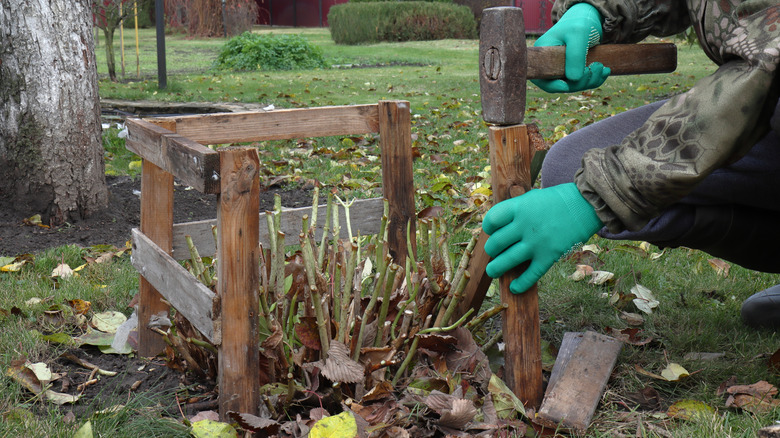
While mulch is an excellent insulator for the roots and crowns of hydrangeas, their tender branches can also be damaged during the cold weather. If you only experience intermittent cold snaps, throwing an old blanket or length of burlap over the shrub can stave off those temporary emergencies. But if you have consistently cold winters, enclosing your hydrangea in a "wrap" that provides 360 degrees of protection can provide continuous protection. It's extra work, but it can pay off in better flowering later, because damaged flower buds can't turn into those big, fluffy blooms we all prize.
Hydrangeas that bloom on old wood need the first protection from the elements, starting in early winter. New-wood types also need the protection, but you can wait a bit longer because they are more cold-hardy. Burlap wraps, or a cage filled with leaves, are the most common ways to provide above-ground insulation for hydrangeas. Set up a wooden cage, or a circular fence of chicken wire, around the hydrangea. Fill the area between the shrub and the cage with straw or leaves. To use eco-friendly burlap for plant protection, set stakes around the hydrangea, and staple the fabric to the stakes. As with a wood or wire cage, you can fill the cavity between the burlap and loose material if you wish. Alternatively, skip the stakes and wrap the shrub directly with burlap and twine, slipcover style.
Set up a windbreak if your hydrangea's in a vulnerable spot
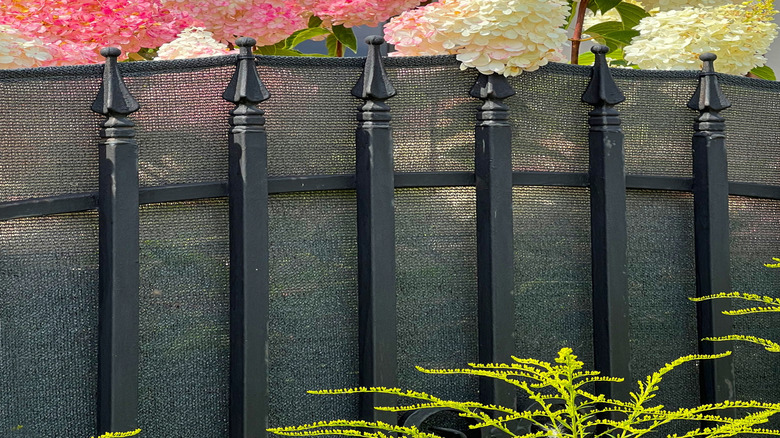
Wind is often the not-so-silent killer of perennial shrubs and trees, even the many cold-hardy varieties. Winter wind poses a triple threat. It obviously decreases the temperature, making even cold-hardy plants vulnerable. Wind also has a drying effect, negating all that careful watering you did before the first freeze. Finally, strong gusts can also break off branches. Granted, this might not kill the entire hydrangea shrub. But it can impact blooms next spring for hydrangeas that grow on old wood. Setting up a temporary windbreak will protect your garden from startling weather conditions like a storm with strong gusts.
If you're fortunate, the hydrangeas were already planted in front of protective structures that break the wind. This is often true of shrubs that are used as foundation plantings, ones in front of taller shrubs and trees, or those in front of a gentle slope. But if your bushes are in an area which regularly gets wind (or if unusually gusty weather is predicted), set up a windbreak on the southern, or most windy side, of the shrub. You can make an A-frame from old pallets or purchase one at the garden center. This precaution helps protect tender buds from winterkill, while also letting some insulating snow in. Alternatively, set up some bales of hay on one or more sides of the hydrangea, or build a quick wall with solid siding.
Move potted hydrangeas and give those stored indoors occasional water
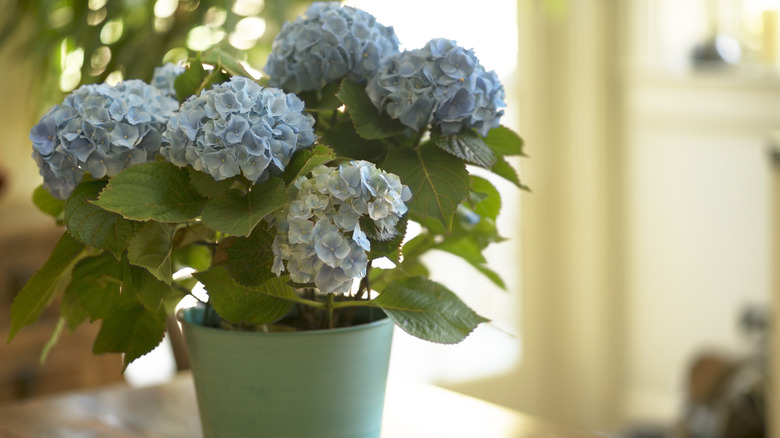
There are some crucial things to do with potted hydrangeas before the first frost. That's because potted hydrangeas' roots are more vulnerable than those of bedded ones. In addition, the listed hardiness zones for compact hydrangeas are geared to planted shrubs, rather than container-grown types. So, the same dwarf hydrangea that thrived happily on your exposed patio during the summer will probably be miserable now that it's winter.
Depending on the climate, the containers should be moved either to an unheated outbuilding or to a more sheltered spot outside. If you don't have room for interior storage, look for an outdoor location that's somewhat sheltered. Set it below a protruding house eave, for example, or under raised porch steps. You might also choose to dig a hole and partially bury the container. Alternatively, bring the potted hydrangea indoors to an unheated shed, basement, or garage. The ideal temperature range for overwintering these potted plants is between 35 and 50 degrees Fahrenheit. If choosing the indoor route, remember the plants will still need minimal watering about once a month, with about a cup of water. In general, it's better not to bring them into the climate-controlled house, because a lack of dormancy will discourage spring blooms.
Prune new wood-hydrangea types any time during the fall or winter
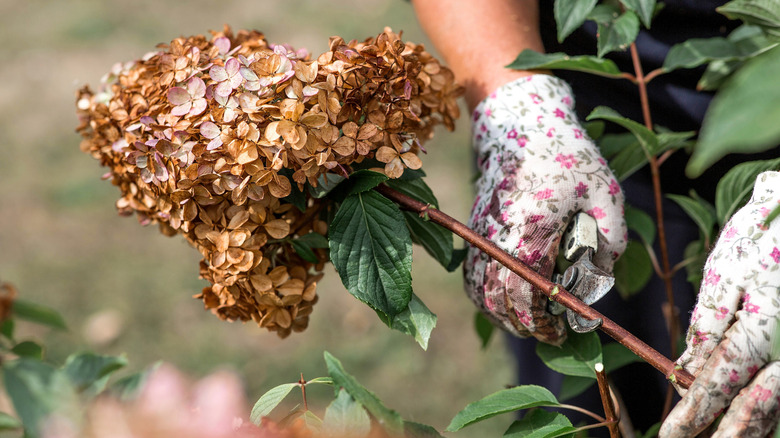
It's important to know whether your hydrangea shrub blooms on new wood or old wood. This distinction dictates when to prune so that you don't sacrifice next season's blooms, or even the overall health of the shrub itself. If a hydrangea is characterized as new wood, it means that the shrub's flowers grow on branches that emerge after winter. Because that growth won't exist until the spring, you won't hurt the shrubs by cutting back last year's growth this winter.
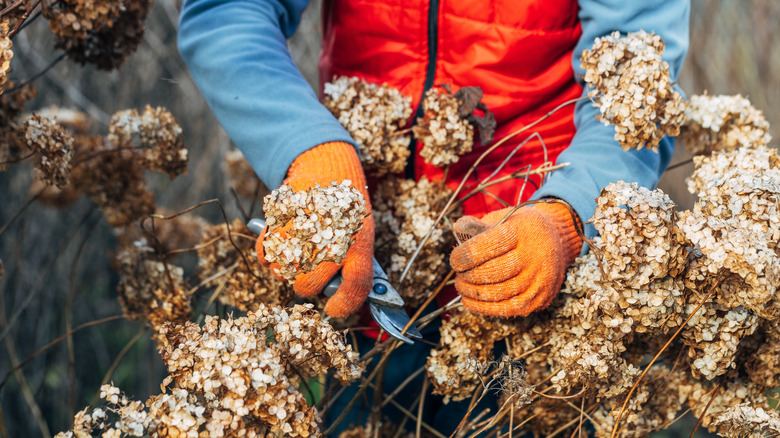
Hydrangea varieties that bloom on new wood include smooth hydrangeas and panicled hydrangeas (also known as peegees). Since you won't be clipping next year's buds, it's safe to prune them any time ahead of spring growth. If you live in snowy regions, however, get to them while you still have easy access. But just because the timing of pruning new-wood hydrangeas is the same for all varieties in this category, the recommended methods can vary from type to type. It's best to check a trusted source for the specific pruning techniques recommended for your specific variety. Smooth hydrangeas, for example, perform best if old growth is completely cut back to ground level before spring. Peegees tend to need some thinning during the winter or early spring, but only to remove unruly growth. On the other hand, some people like to keep the showy, dried blooms on for as much of the winter as they'll last.
Leave old-wood types alone if you haven't gotten to them yet
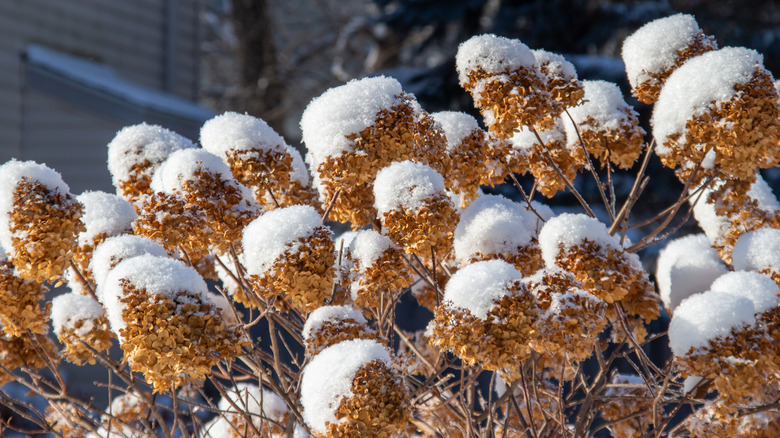
Do you dutifully cut back your hydrangea each winter and then wonder why that hasn't helped encourage bountiful blossoms? You might be mistakenly cutting back an old-wood variety. This type needs to be trimmed in July or August, rather than during the cold months. Buds for next year's growth form in late summer or early fall, depending on the variety. That's why if you prune in the winter, you run the risk of cutting away next year's buds before they ever get a chance to bloom.
Hydrangea types that bloom on old wood include big leaf, oak leaf, and climbing hydrangeas. If you need to cut them back, they're best pruned in the summer, right after blooming. If that chore got away from you this year, don't worry! There's no landscaping law that says hydrangeas (either the old-wood or the new-wood types) need to be cut back every year. While regular trimming can help keep the shrub to the shape you prefer, and even increase bloom size, hydrangeas can survive and even thrive without a strict pruning schedule. In fact, climbing types don't ever need pruning, unless they're overtaking their support structure.
Check on your hydrangeas throughout their winter nap
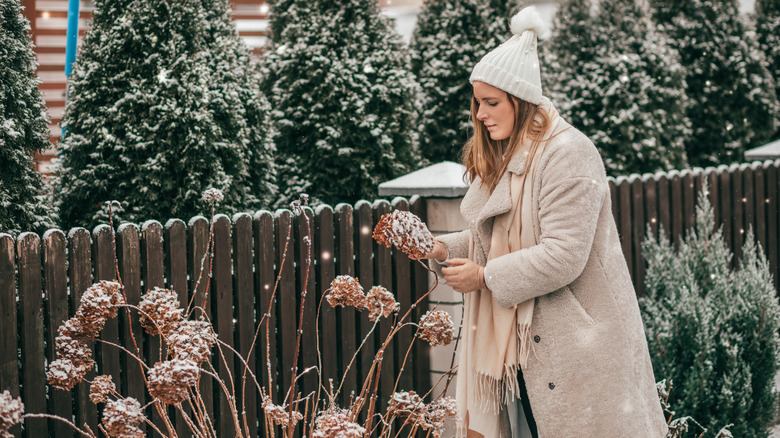
Even after you've tucked hydrangeas in for their hibernation, it's a good idea to make sure their winter slumber remains undisturbed. Mother Nature has a way of unraveling the best-laid plans of gardeners in every season, including the cold ones. In wintertime, that means that gusty winds and heavy snow can knock loose the protective measures you've set up for your hydrangeas. This can range from toppling carefully-balanced A-frames or blowing away straw. In addition, rodents and other wildlife can burrow into or trample aside protective mulch.
That doesn't mean you have to panic with every incoming storm. It just means that it's wise to regularly check on the shrubs and fix any minor damage. Re-wrap burlap that's come loose, or add more mulch to your wind-blown base. Secure windbreaks and cages, if necessary. And if you haven't already protected your plants, there's probably still time to erect cages or wraps. Even if there's too much snow to set any of these physical precautions in place, don't despair! The simple method of piling up extra snow around the entire shrub can help insulate it from harsh temperature dips and punishing winds.