

13 Garage Renovation Ideas To Maximize Both Function And Style
We may receive a commission on purchases made from links.
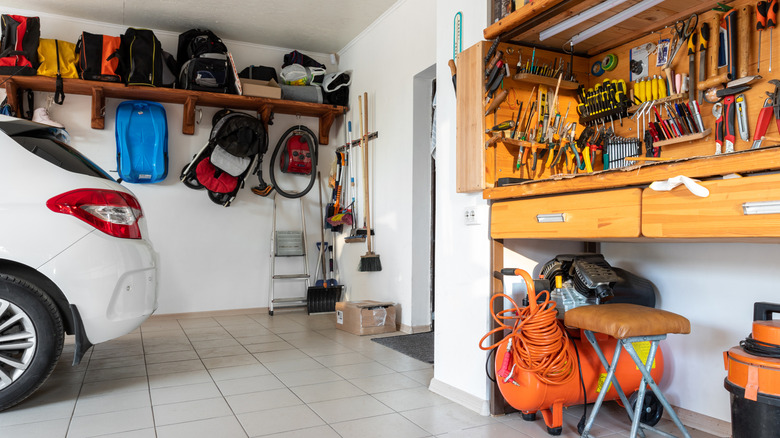
Lots of us treat the garage as a dumping ground. It's that easy spot where we can store stuff that doesn't have a permanent place. But a better plan is to turn the garage into a functional space and treat it like an actual part of your home. And it's not as difficult as you might think to reorganize your garage like a pro. To turn the garage into a space where you'll actually enjoy spending time, even in the colder months, you'll want to tackle the bones of it first. Insulation, lighting, flooring, and the walls all need thought and care if you want the garage to be more than a cold, dingy shed.
If your garage is attached to your home, it makes even more sense to think of it as an extra room. A well-insulated attached garage reduces energy loss because the temperature remains more consistent. In cold climates, for example, heat isn't escaping from the home through the adjoining garage wall. Getting these basics right creates a comfortable, usable space that you can then customize with your choice of zoning, storage, and finishes.
Finish the walls so the garage feels like a real room
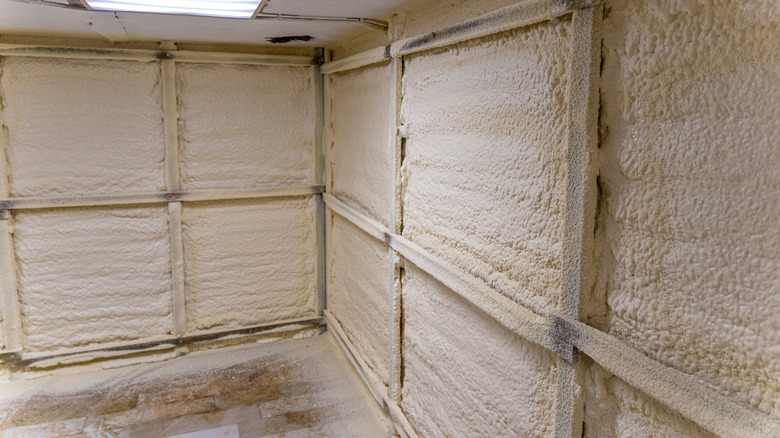
Start with the walls. They're the bones of the garage. You can add as many fancy storage systems and pretty lights as you want, but if the walls are still bare, uninsulated, and unfinished, the garage will never truly be an elevated space where you want to hang out. In an ideal world, insulating all the walls is the best move, as it stabilizes temperature and keeps the garage comfortable year-round.
At the very least, insulate the wall that connects the garage to the living space. Adding a continuous air and thermal barrier helps maintain indoor temperatures and reduce energy loss. In addition to reducing drafts, the insulating barrier also limits the entry of exhaust fumes, chemicals, and noise from the garage into the home. Hang fire-rated drywall on shared walls and, if the budget allows, on all walls. Finish with a pale, neutral paint that bounces light around and makes the space feel brighter and bigger. You may also want to install some simple baseboards to make the garage feel like a truly finished room and to protect the bottom of the drywall you've just hung.
Upgrade to a durable, design-forward floor coating
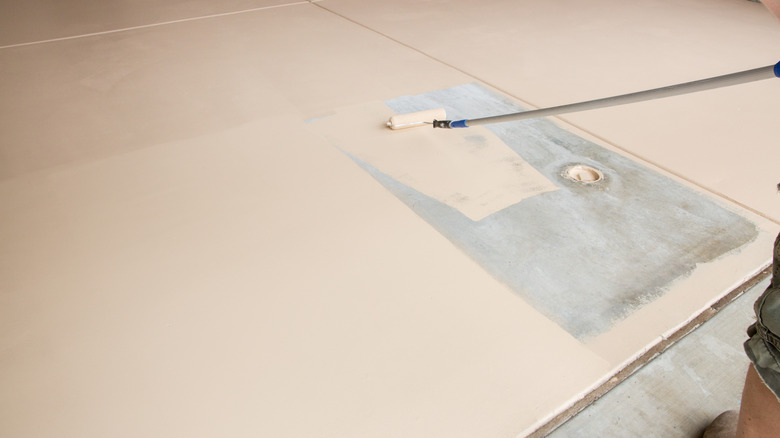
A uniform, finished floor is one of the best ways to elevate your garage and make it feel like a genuine part of your home. Bare, unfinished concrete is cold, stains easily, and just looks very basic. One of the best reasons for finishing the garage floor with a proper coating is that it hides all of the old oil spills and other stains, as well as the inevitable hairline cracks. Plus, something like a high-performance epoxy makes the floor easy to clean and resistant to spills and stains. Light-colored or slightly reflective flooring, as with the walls, makes the space feel brighter, larger, and more welcoming.
Garage floor paint is a budget option, but it doesn't cover cracks and blemishes long-term in the same way as other options, and it's not as resistant to new stains and spills. High-performance garage flooring options such as two-part epoxies, polyurea, and polyaspartic coatings are more expensive but far more durable. These garage flooring systems hide cracks and are easy to clean and stain-resistant. Once cured, they're also resistant to chips and dings from dropping heavy things on them, like fully loaded toolboxes. Unless you're very confident in your DIY skills and can handle degreasing, repairing cracks, grinding if the surface is too smooth, and determining whether the concrete slab is damp and requires specific treatment, hiring a professional is your best option. Even though it costs more than a DIY garage floor kit, you'll get a better, longer-lasting result.
Choose coordinated cabinets instead of open metal shelving
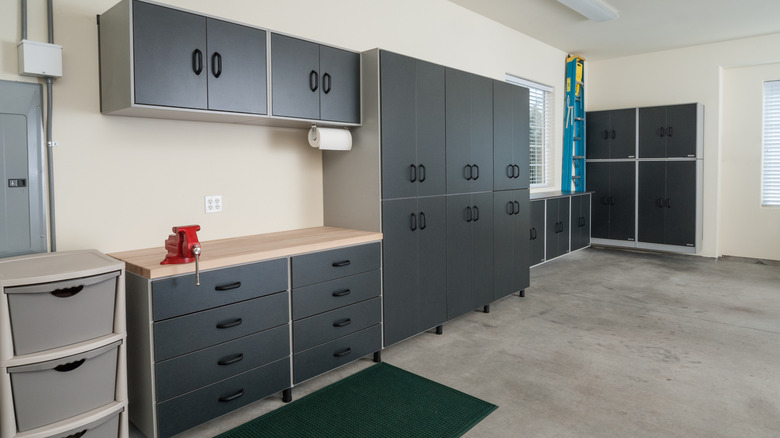
Most people think of garage storage and go straight to plain steel racks or shelving systems. And that's a valid choice, but it doesn't scream homely and intentional. Open shelving also never really ends up looking tidy, because everything is so exposed and it feels messy and busy. Coordinated cabinets hide the clutter and make the room look like a cohesive, functional, well-kept space. A row or wall of cabinets all of the same style and color gives you plenty of storage without looking like an afterthought.
Combining full-height and smaller cupboards and storage units lets you customize the space and accommodate things like brooms and garden tools. You could also combine a workbench or desk into the storage wall to make the space even more functional. Drawer units also let you store smaller items like craft supplies, spare batteries, and small parts. Adding storage that matches or at least echoes the kitchen or utility room ties the look of the garage to the rest of the house.
Use slatwall or rail systems to turn walls into flexible storage
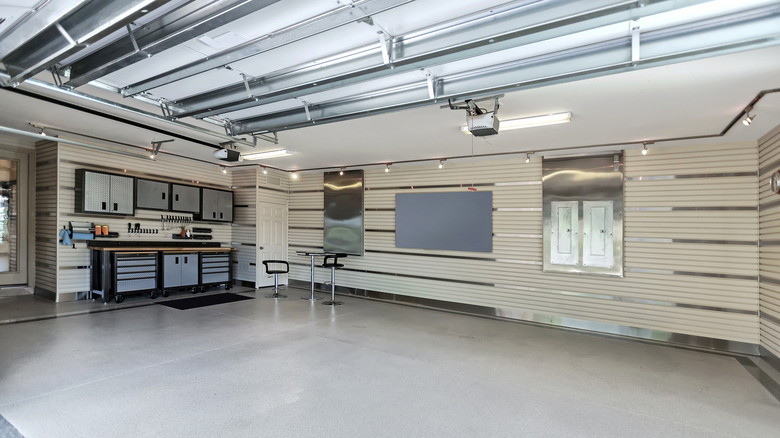
It's surprising how much stuff accumulates on the garage floor. Boxes of holiday decor, bicycles, garden tools, and sporting equipment all tend to get shoved on the floor along the edges of the garage. But you can really elevate the look of your garage and reclaim valuable floor space by turning walls into flexible storage with slatwall or rail systems. Yes, you can use a pegboard, which is a budget-friendly way to organize your garage, but that tends to look very DIY, and it's not usually as strong as a properly installed rail or slatwall setup. A single wall of flexible storage can accommodate multiple bikes, canoes, garden tools, power tools, and whatever else that normally sits around on the floor.
Hooks, baskets, shelves, and other compatible storage features slot into the gaps in the panels. Because they're movable, you can customize and adjust positions and fixtures as your needs change. You can make it family-friendly by storing your kids' bikes and other gear on the bottom-most level and the adult gear higher up. Another option is to zone the storage wall, keeping one section for sporting equipment, another for garden implements, and another for tools, and so on. So this doesn't start to look like a dumping ground, keep it slick and intentional by choosing color-matched trim and storage accessories.
Design a laundry corner that looks built-in
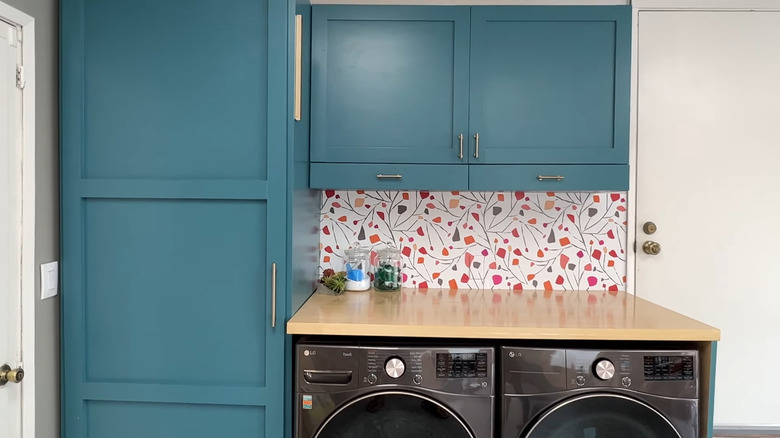
If your washer and dryer live in the garage, you can make their corner of it look more like a proper laundry room with some simple additions. When you've got front-loading machines, one smart and relatively easy design option is to add a countertop above them. Ideally, choose one that matches or echoes the countertops you've got in your kitchen or utility for the most cohesive whole-home design. Having this countertop defines the laundry area and gives you space for sorting and folding.
Adding wall cabinets above can further refine the laundry nook look and gives you somewhere to store detergent, softener, dryer sheets, and all the other essential but untidy laundry supplies. If you want to get really fancy, you can even add a backsplash behind the machines and running between the countertop and the bottom of the cabinets to give a more finished look and protect the wall. To conceal the front of the machines when they're not in use, a simple style upgrade is to run a curtain track under the countertop, and add some curtains that fit the rest of the style of the laundry nook, then just draw them closed when you're not doing laundry. You could also add sliding doors or cabinet fronts.
Layer ambient and task lighting for a brighter, safer space
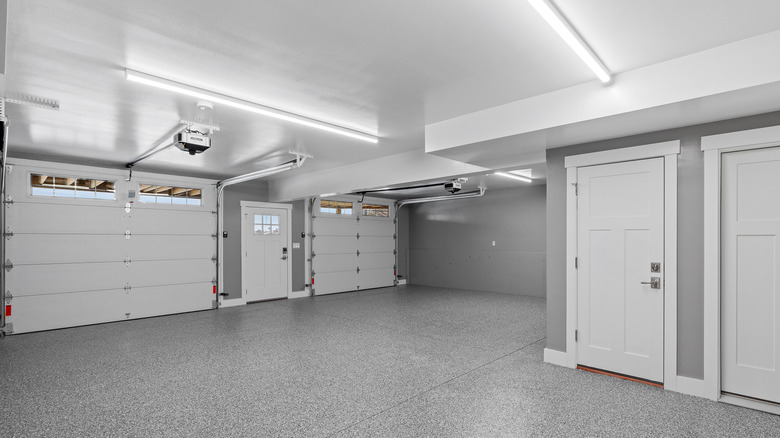
The garage can feel a bit like a cave. It's often either brightly illuminated with eye-watering, brilliant fluorescent lighting or barely lit at all by a dim yellow glow that makes the space feel dingy and uninviting. But if you want to make the most of your garage space, good lighting is essential.
One of the easiest options is to replace bare bulbs or ancient fluorescent lights with LED batten fixtures or panels. The Philips LED ProjectLine all-in-one strip batten 2-pack is a nice choice, as the lumens and light color are adjustable. These spread light evenly across the whole room without dazzling you. Neutral white rather than cold white or warm white/yellow makes colors show true. Adding task lighting over workbenches or work areas, the laundry zone, and entryways helps deliver bright, focused light where you need it most and stops you from having to work in your own shadow. Under-cabinet lighting strips, like Govee dimmable white LED strip lights, add a little extra lighting to storage and laundry areas. Wall sconces flanking doorways create a warm yet practical feel, and motion-sensor fixtures, especially at doorways, add an additional layer of convenience when you have your hands full and need to see where you're walking.
Build a streamlined workbench wall with integrated storage
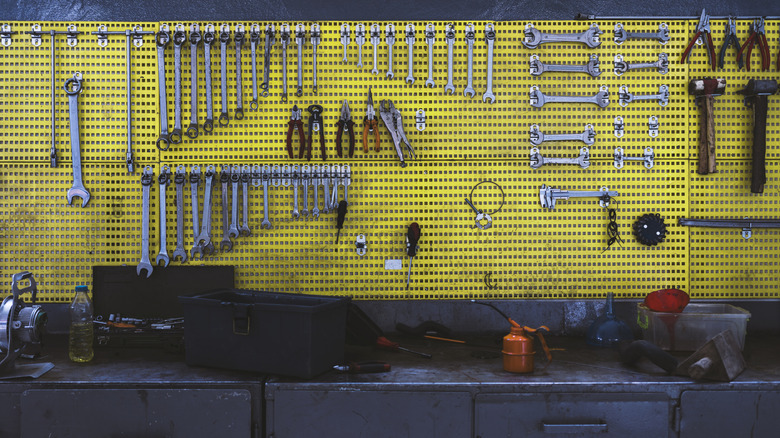
If you're someone who always has at least one project underway, turn one wall into a project hub. Dedicating one wall, or part of a wall, to a workbench, tool storage, and project supplies gives you a clear workspace and stops unfinished projects from taking up half the room. Use trim and accents that pick up colors used elsewhere in the garage or the home for a cohesive overall appearance.
Go for a sturdy, practical workbench with shallow drawers down at least one side so you can keep your tools and supplies close to hand. You'll also need task lighting above, and perhaps a sturdy metal pegboard, like Ultrawall metal pegboard wall panels, for more tool storage and mini supply bins. You could also use a rail or slatwall system instead of the pegboard, especially if you're using it elsewhere in the garage. In most cases, you should probably add a decent chair as well, so you can work comfortably.
Use ceiling space with clean-lined overhead racks
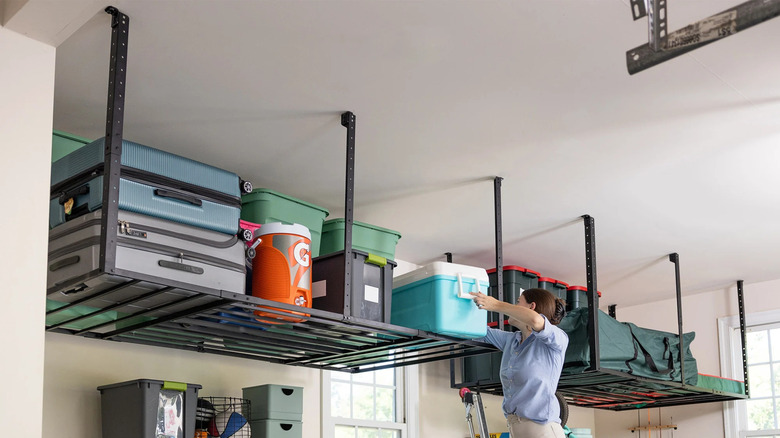
Everyone has bulky stuff lying in their garage that they rarely use but don't have an efficient way to store. For example, holiday decorations, camping gear, or spare luggage can all end up sitting around getting in the way. But you can't get rid of the items because they are used once or twice a year. Simple overhead racks can be a solution to this issue. They can hold organized bins or shelves, and there are manual options where you climb a stepladder to reach the bins, and mechanical systems that raise and lower the bins or shelves with a hand crank or electric winch. You can also get specialist kits for bikes, kayaks, and other specific items. Before you install overhead racks, declutter your garage to determine how many accumulated items you can remove.
Whichever option you choose, proper installation is essential for safety. These systems need to be anchored properly into joists or solid framing. You also need to know and adhere to the weight limits and take care to account for how the door opens and closes, so you leave sufficient clearance and avoid potential issues. And don't forget to leave headroom for the car, too. It's a good idea to either avoid the area above the car entirely or reserve it for the lightest items, such as empty luggage, in case of an accident.
Carve out a home gym corner with cohesive finishes

If you don't have room in your home for your workout equipment, it's most likely sitting in your garage amid the rest of the clutter, even if you use it daily. That kind of cluttered space doesn't lend itself well to a focused, in-the-zone workout. You can remedy this by creating a clean, inviting workout area. It doesn't have to be huge. Just a well-designed corner works perfectly as a compact gym.
Start with clearing a spot large enough for you and your equipment, whether that's a weight bench and a yoga mat or a good-size multigym. Make the floor comfortable with some interlocking rubber or foam tiles that zone and define the area, and protect the floor. Adding a large wall-mounted mirror, like Trahome's frameless glass home gym mirror, and adequate LED lighting makes your little workout studio feel bigger and more inviting, and lets you check your form as you work out. If you have a storage system elsewhere in the garage, carry it through to the gym zone to tie the whole area together. Add racks for your weights and hooks for resistance bands, mats, and ropes.
Pick a simple color and material palette that flows from the house
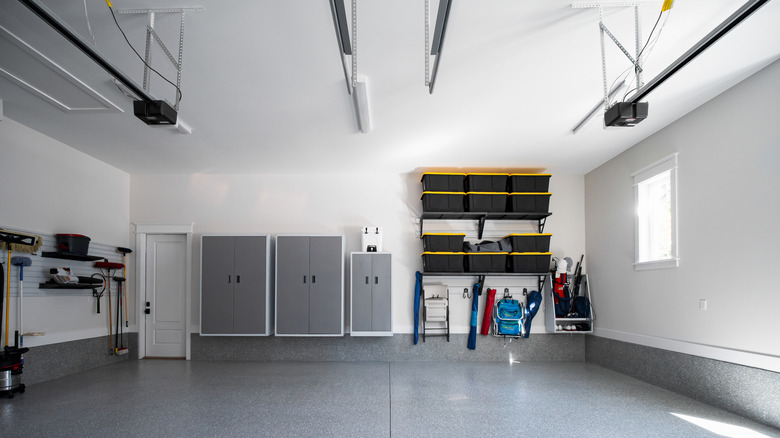
If you want to make your garage feel like a part of the house, you need to carry design features from inside into the garage. The easiest way to do this is with paint and material colors. Stick with just a few colors and materials so you don't overwhelm the space and avoid lots of mismatched zones and items that are visually jarring. Just aim to echo a few main colors and finishes from the kitchen or utility room in the garage.
If you've got warm wood panelling or hardwood flooring in the house, for example, carry this through to the garage by using wood or wood-look trim and baseboards that match the color and texture of the hardwood flooring indoors. If your faucets or hardware in the kitchen and utility are black or gray, use the same in the garage. Repeat finishes through the whole garage. Instead of chaotic and mismatched finishes in every zone, pick one finish color, like brushed nickel, and use it on cabinets, wall hooks, door hardware, and drawer pulls. You can even achieve a consistent palette by matching the color or finish of shelves, benches, and laundry surfaces. And don't forget to match accessories like hampers, bins, and tool racks.
Upgrade doors and glazing to bring in more natural light

Adding or upgrading windows, side doors, and glazed garage doors all help to transform a dark, dingy, drafty garage from a sad cave to an inviting, relaxing, bright workspace. Installing a new garage door is a garage upgrade with one of the biggest ROIs. The additional natural light from windows and glazed garage doors makes a significant difference in how the space looks and feels. You can maintain privacy and security by choosing reeded or frosted privacy glass, which lets light in while protecting your privacy and belongings.
Talk to a professional garage door installer for privacy and security-conscious options that allow light through without sacrificing safety. And, of course, you'll need to make sure any significant changes meet local building regulations. When finishing the exterior of the new windows and doors, choose trim colors that match your house so the outside of your whole property feels cohesive. A professionally installed custom garage door that complements your home could instantly boost your property's curb appeal.
Conceal the least attractive utilities with paneled fronts or curtains
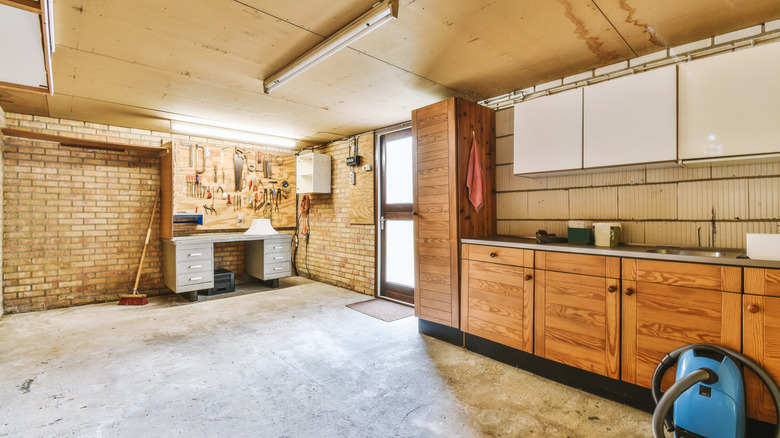
The garage is often home to the ugly utilities that you don't want inside your home. Water heaters, meters, and exposed pipework are necessary but not necessarily something you want to see in a finished space, even a functional one like a garage. They can drag down the look of the whole room, even after you've done a really nice renovation.
The trick here is to disguise them so they're less obtrusive without blocking access and airflow. You can conceal appliances with cabinetry so they look like built-in features. Or, if budget is a concern, you can use curtains to mask them instead. You can also box in exposed pipework and, if you know you'll need to access it regularly for maintenance, add hinges and a catch to create a drop-front that you can open whenever you need to get at the pipes. Remember to account for adequate ventilation, though, as most appliances require some degree of clearance or airflow.
Borrow bootility and mudroom ideas for family gear

If you've got an attached garage and the family uses it as the primary entrance to the main house, turn the area near the door to the house into a "bootility". This is essentially a boot room, utility room hybrid. Use a durable, hardwearing mat to wipe dirty shoes on. Add a bench, cubbies, a shoe rack, and hooks for outerwear. This gives you a simple, functional space that keeps dirt out of the house and provides the family with a place to store their shoes, bags, and coats neatly, rather than dumping them in a pile by the door.
You could even combine a bench with drawers below for compact storage and comfortable seating for donning shoes and wrestling with stubborn rain boots. If you have room, you can incorporate closed cabinets and shallow drawers to tidy away shoes, cleaning supplies, hats, gloves, and scarves. If you have kids and dogs that tend to get wet and muddy, make room for clean towel storage and a hamper for the used ones. Make sure this area has the same theme and color scheme as the inside of your house, so the transition from the garage to the entryway to the interior is smooth and easy on the eyes.