

12 Downsides Of Portable Air Conditioners That'll Make You Rethink Using One In Your Home
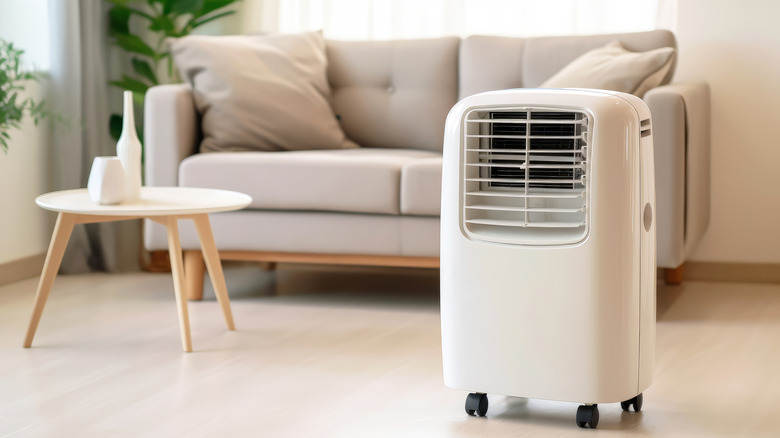
In the heat of the summer, you'll take any relief you can get. If your HVAC system breaks down or you don't have a ducted system installed, a portable air conditioner seems like a reasonable option. These portable cooling appliances seem like a flexible, easy-to-install way to cool your home, and they are to some degree. But just how much you can move them depends on the weight of the unit and the proximity to a window. This brings us to another drawback: window security issues and blockage.
That's not to say a portable air conditioner is completely bad. It could be a good temporary solution until you can afford a more effective, long-term option. For example, it'll keep you cool while you save money to have your central air system replaced. Or, you might consider buying a portable AC unit to get through a heat wave in a climate that doesn't normally require air conditioning. Portable air conditioners can also work for occasional use in spaces like workshops, additions, or garages that aren't connected to your main ductwork system. Please plan for higher utility bills, as they're not particularly energy-efficient compared to more permanent solutions.
The unit is noisy and can disrupt activities

Even the best portable air conditioners can be quite noisy, mainly because the entire unit is inside your home. Central AC units house the noisy condenser unit outdoors, so you might hear it, but it's not in the room with you. Window air conditioners are a little noisier since the unit is partially in the room, but most of the noisy condenser parts hang outside of the window, which helps dull the noise. With a portable unit, all of the noisy components are inside the room, which can become distressingly clear when the machine revs up. The unit also sits on the floor and could be closer to you than a window unit, which also increases the noise you hear.
In common areas, the noise might force you to talk louder or turn up the TV, but you can usually work around it. For some people, having a portable AC running in the bedroom is like white noise, but others find it more difficult to sleep. You might consider using window air conditioners in the bedrooms to reduce the noise a little. Or, position a portable unit as far away from your bed as possible.
It takes up floor space since it's a freestanding unit
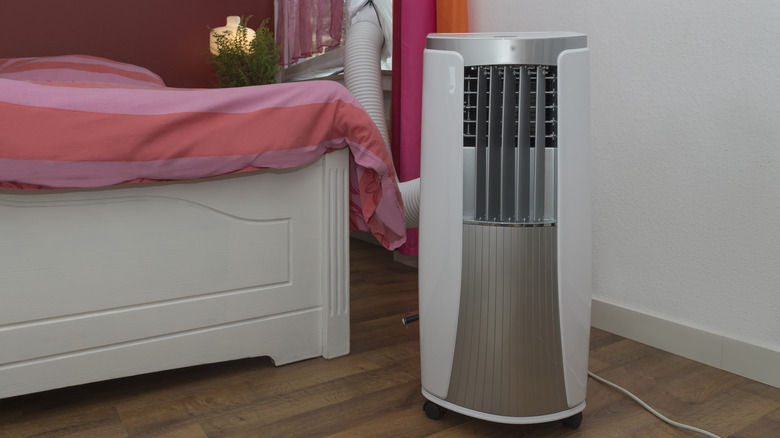
While there are creative ways to utilize empty floor space and corner spaces, filling them with a portable air conditioner might not be your first choice. Unfortunately, your portable unit will take up floor space, like it or not. It's a freestanding unit that's typically at least a foot wide and deep. You'll need to leave 20 to 24 inches of clearance between the unit and the wall or other structures, and you need to make sure there isn't any furniture or other objects blocking the airflow from the unit. That can limit the placement, especially considering it also needs to be near a window and an outlet.
When buying a portable unit, take note of the size and shape. A little creative rearranging can help you fit a portable air conditioner into the room better. You may need to move furniture or reposition a piece to accommodate the unit. Keep in mind that the changes are only temporary, as you only need the portable unit for the warmer months. That can make it a little easier to live with for the time being. If you have no room to spare, consider a window unit instead.
The appearance might stand out in your decor
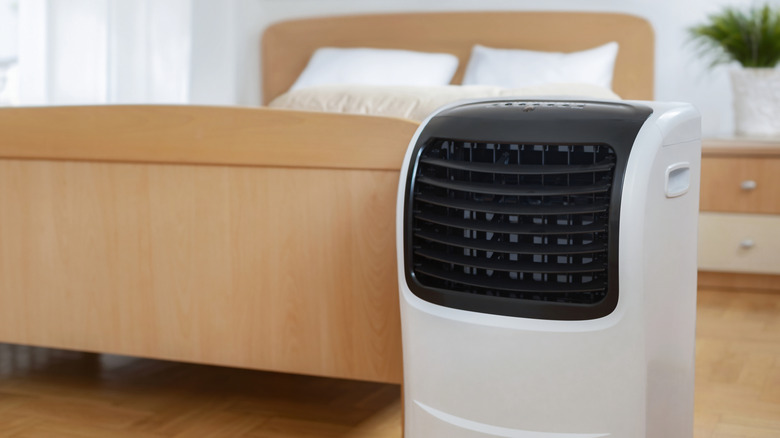
Not only does the unit take up floor space, but the location requirements can make a prominent fixture in the room. And let's face it: No appliance is that attractive, especially a portable air conditioner. The AC also has a very noticeable hose coming out of it that takes away some of the aesthetic appeal of the room, particularly in common areas where everyone who visits can see it. Portable units typically include window kits to exhaust heat outdoors, but they aren't particularly attractive and block some sunlight from entering the room.
Even though there are simple and stylish DIY ways to hide common eyesores around the house, you don't want to block your portable AC, or it won't cool as effectively. In a common room, such as the living room or dining room, try to find an out-of-the-way spot where the unit won't be a focal point. For example, if the seating in your living room points toward one direction, try to position the appliance in a different area out of that line of sight. Placing the appliance as close to the window as possible reduces the amount of visible hose.
Ventilation is necessary to get rid of the hot air
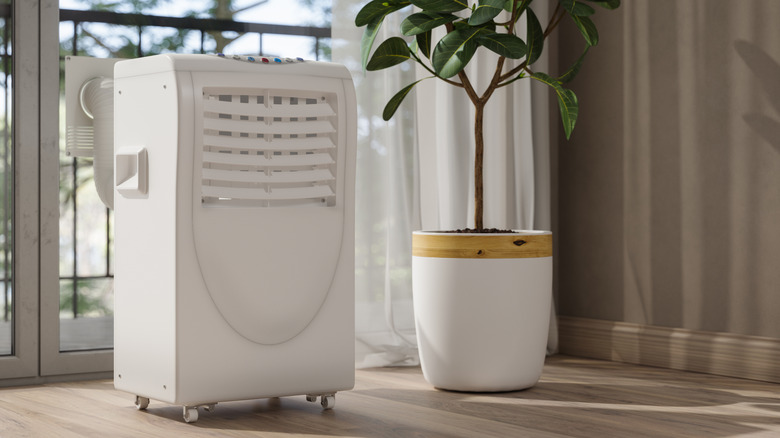
There are hidden downsides to air conditioners of all types, but the awkward ventilation method is unique to portable units. The appliance itself sits inside the room, but the hot air needs to be expelled somewhere. That's why the unit has at least one hose that must be vented outdoors — usually through a window, using the included window kit to hold the hose in place. Some models use a two-hose system, where one is the traditional exhaust hose and the other pulls air from outdoors to cool instead of using air from the room. Either way, the AC needs to be close to a window, and that window will become partially blocked and unusable during the cooling season.
Opting for a window air conditioner won't mitigate this downside — in fact, a window air conditioner will likely block a larger portion of the window. Choose the placement of your portable unit carefully, so you can vent it through a window that you wouldn't normally open for ventilation anyway. Also, consider which window provides most of the sunlight for the room and avoid using it for the AC hoses.
Placement options can be limited, which cuts down on the portability
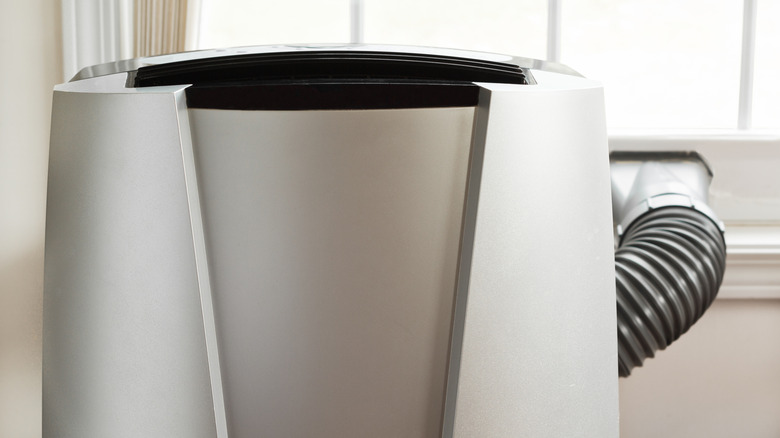
In theory, this type of cooling unit is highly flexible with many placement options, but the "portable" part in the name can be misleading. First of all, the appliances are large and heavy — a 14,000 BTU unit weighs between 65 and 75 pounds. If you decide to move it from one floor to another, you'll be hefting a lot of weight up or down the stairs. The unit must be located near a window or another ventilation outlet for the hoses, which cuts down on where you can put it. You likely won't want to move it once you install the window exhaust setup. You also need to place it near an outlet on a circuit that can handle the load of the appliance.
Going into the purchase, know that you'll likely need to choose a spot and leave the unit there — it won't be as simple as a fan that you can move from room to room whenever you need a little cool air. While most portable AC units have wheels installed on the bottom, they're not all the same quality. If possible, test the model to see how well the casters roll if you want some degree of portability within your home. Check the weight of different models if you plan to move them around, and consider how easily the window kits install and uninstall, as you'll need to move them to the new location.
Portable units only cool a small area, so you'll need multiples to cool your whole house

A portable AC isn't a whole-house solution — each unit is meant to cool a single small or medium-sized room. They come in different sizes with varying BTUs, but even higher-powered ones typically don't handle larger spaces as well as installed units. For example, if you have a large, open floor plan, the unit will likely cool only a small area directly around it. The larger the room, the more inconsistent the temperatures may become when you're using a portable AC.
If you're looking for ideas on how to cool down a single room, like an addition or a bedroom that's over an uninsulated garage, a portable air conditioner could help. To cool larger portions of your home, you'll need separate portable AC units for each one, sized to fit the space. This can be costly, both in the initial purchase price and the energy costs to operate them, but it also helps cool your home more consistently. Closing the door of a room that has a portable AC unit in it can reduce the strain on the appliance and help it work more efficiently.
Single-hose portable ACs create negative pressure in the room
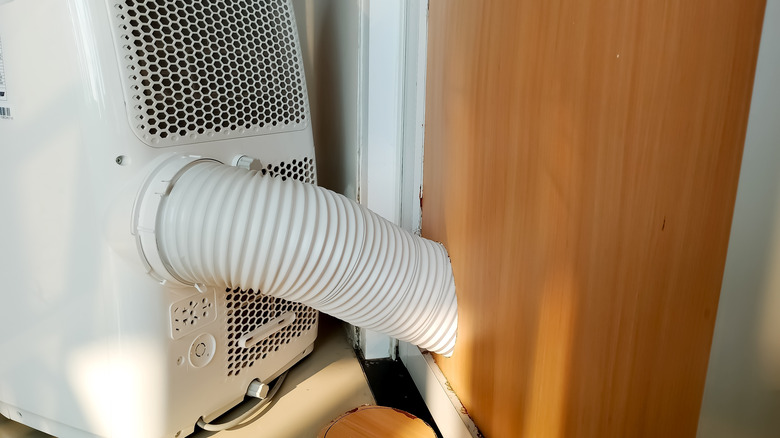
While the single-hose style of portable AC unit is the most common, it can also create a problem in your home: negative pressure. Simply put, a negative-pressure situation happens when the air pressure inside your home is lower than the air pressure outside. That, in turn, draws hot air from outside into your home, which forces the AC unit to work harder to cool the space. Negative pressure can also cause exhaust from other appliances, like your water heater, to backdraft and enter your home, potentially increasing carbon monoxide levels. Single-hose units create that negative pressure by drawing hot air from inside your home, and then expelling it outdoors through the single exhaust hose.
An easy way to avoid this situation is by choosing a dual-hose portable air conditioner. It draws air in from outside with the additional hose to keep the appliance cooler and eliminate the worry of negative pressure. If you use a single-hose model, only use it in a small space, which is what it's designed for. The dual-hose model is better for larger rooms.
Portable ACs aren't very energy efficient
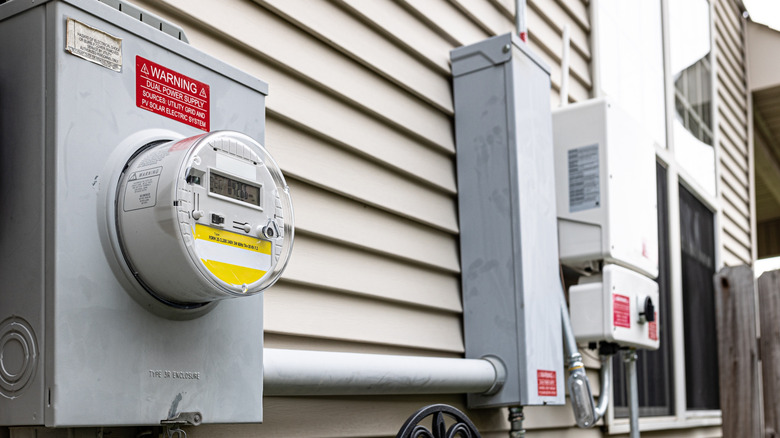
Of all the different types of air conditioning units to consider, portable AC units are typically the least energy-efficient. A central AC unit uses anywhere from 2,000 to 5,000 watts per hour, which is a lot, but that's the amount used to cool your entire home. Window units average 500 to 1,500 watts per hour, while portable ACs use 800 to 1,500 watts per hour. While those numbers are significantly lower, those units only cool one small area — if you use multiple units, your energy usage increases significantly. Although window and portable units both cool similarly sized areas, the portable models typically use more energy than window units, making them the least efficient option. They also tend to have a lower energy efficiency ratio (EER).
You can't do much about portable air conditioners being energy hogs. However, you can do your best to help them work as efficiently as possible. Maintaining the unit by cleaning the filter and coils regularly helps it work more efficiently. It's also helpful to seal leaks that allow hot air into the home and to use window coverings to block direct sunlight. If you're still debating between a window and portable model, consider a window unit since they can use as little as half the energy of a portable AC.
You'll need to deal with the drainage issues
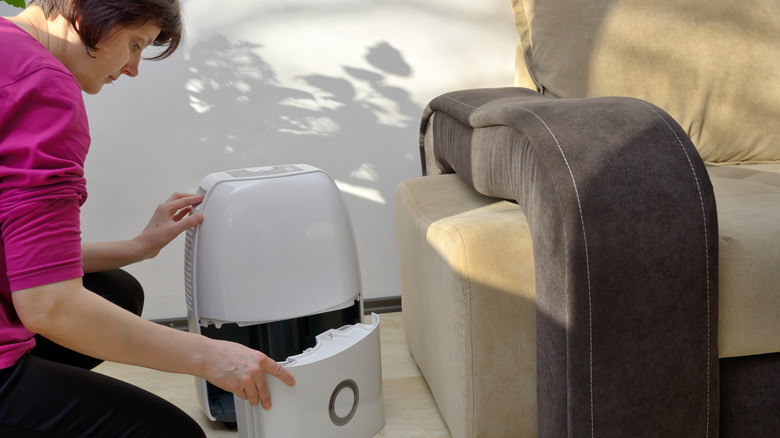
One of the perks of air conditioning your home is that it helps keep summer humidity under control. The appliance pulls moisture out of the air and condenses it into water as part of the cooling process. Window units have drain pans and a drain hole on the exterior portion, allowing the water to drain automatically. Since the entire unit of a portable AC is inside your home, it needs a different drainage method. The two main options are a drain hose that runs out the window and a pan that collects the water and needs to be emptied manually. Draining the unit regularly is essential to avoid spilling water all over or growing mold inside the appliance. If you're doing it manually, it can be a pain to empty the pan regularly, and it's easy to forget to do so.
You'll need to know how to drain your portable AC and how often you should do it to keep the appliance running correctly. If you don't want to empty a pan or bucket regularly, consider buying a model with a hose you can direct outdoors or installing a window unit that drains itself. Some portable models are self-evaporating, so you don't have to mess with manual draining unless it's overly humid.
Portable air conditioners don't last long
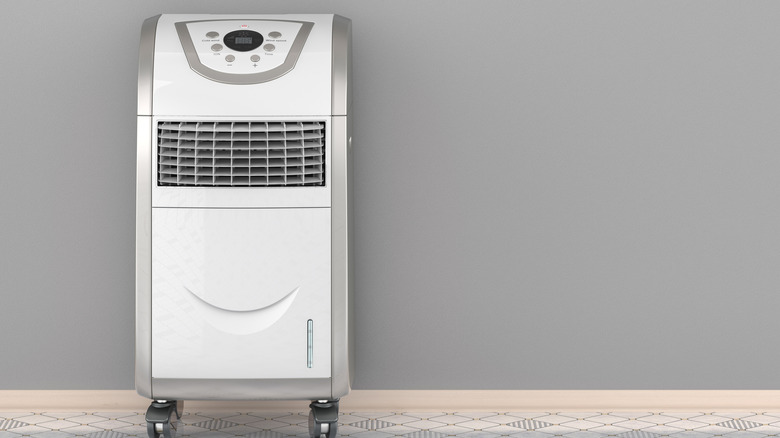
You'll likely only get five to 10 years of cooling out of your portable AC unit — that's a lifespan similar to that of a window AC unit, which can last up to 10 years. Both are much shorter than mini-split systems, which often provide 15 to 20 years of service (and they do so year-round since they typically heat and cool with the same equipment). While you'll save money up front by purchasing a window or portable AC unit, you'll have to replace the appliances more often to keep your home cool effectively.
Perform regular maintenance on your portable cooling unit to help extend its life. A dirty, poorly maintained appliance operating in a poorly insulated room will experience significant strain, which can wear on its parts and shorten its life. You might also consider investing in a ductless mini-split system instead. You'll pay more upfront – but you'll get a longer life and much higher energy efficiency.
The cords and hoses could be a tripping hazard
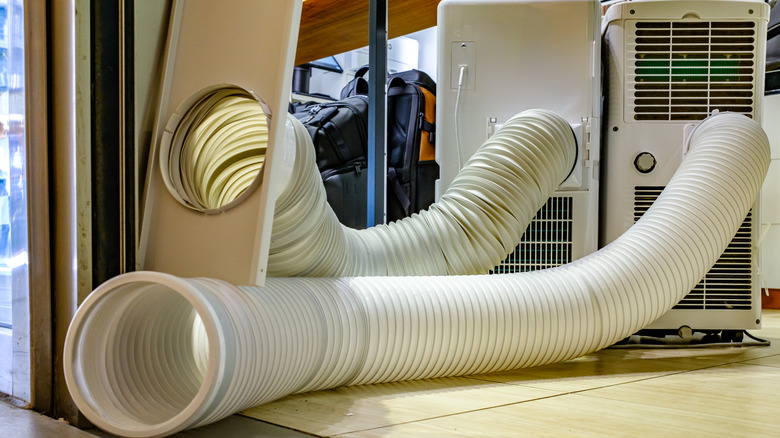
Besides potentially making your space look cluttered, the cords and hoses needed to run the portable air conditioner can present a tripping hazard. Ideal positioning means you'll want about 2 feet on all sides of your portable AC unit to allow for good airflow. That leaves plenty of space to walk between the unit and the wall, but the problem is that the hose and cord will stretch that distance. If you're not paying attention, the setup could cause people to trip or get caught up in the connections.
To avoid this issue, choose a location that's not right in the main traffic flow area of the room. If you have little kids or pets who tend to wander near the unit, consider setting up barriers along the side, so they can't get behind the AC where the cords and hoses are located. Keeping the area well-lit also prevents tripping at night when the cords and hoses are more difficult to see.
Venting a portable air conditioner creates a home security risk

Is it safe to use a portable air conditioner? Yes, the appliances are typically safe, assuming you follow the product instructions, ventilate them properly, and put them in a safe location. However, the need to vent a portable AC through a window creates a security vulnerability in your home. You'll need to leave the window partially open to install the kit and exhaust hose, which means the standard window lock won't work. The way you install the window kit can also affect your home's security — using adhesive foam tape to hold it in place leaves the cover vulnerable.
When installing the window kit, use screws instead of adhesive tape to hold it in place. While you're using the portable AC unit, add extra locking mechanisms to keep the window from moving, or position a dowel rod in the window to prevent it from sliding open. Window sensor alarms may not keep an intruder from trying to open your window, but they may scare them off before they enter your home or at least alert you to a security issue.