

Say Goodbye To The Fluted Design Trend And Hello To Its Sophisticated Replacement
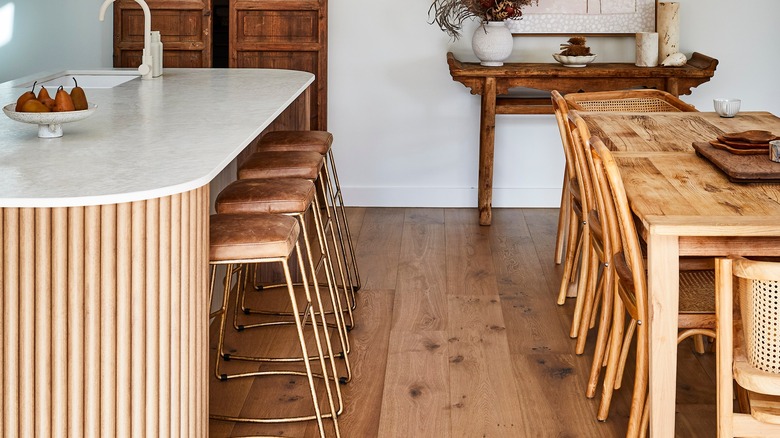
It seems everywhere you turn, from flawless magazine covers to designer homes, fluted paneling has been dominating interiors. However, interior design experts are shaking their heads, hoping to say goodbye to fluted accents and leave them back in 2025. Moving forward, alternative tactile wall features may prove more timeless and elegant. While features like fluted cabinets or fluted tile look cool now, you may come to regret the trend in the future, given the overuse of the material.
One design expert told Good Housekeeping, "There has been so much fluting and channeling going on, and it's making rooms feel anxious and unsettled." Rather than dragging out trendy fluted details, experts suggest shifting toward classic alternatives like raised paneling.
Raised paneling comes in an array of patterns and shapes, but it's often used in wainscoting, which is the use of wood materials to create an architectural detail along the bottom half of a wall. Wainscoting can come in many forms, including flat panel, beadboard, and board and batten. But many of us may be familiar with raised paneling, which features square or rectangular panels of raised wood pieces and beveled edges. Raised paneling can be used not only in wainscoting but also covering the expanse of an entire wall. This simple design feature is the key to making your space look expensive or vintage, and many designers favor the versatility and elegance of raised paneling.
How to style classic raised paneling in your home
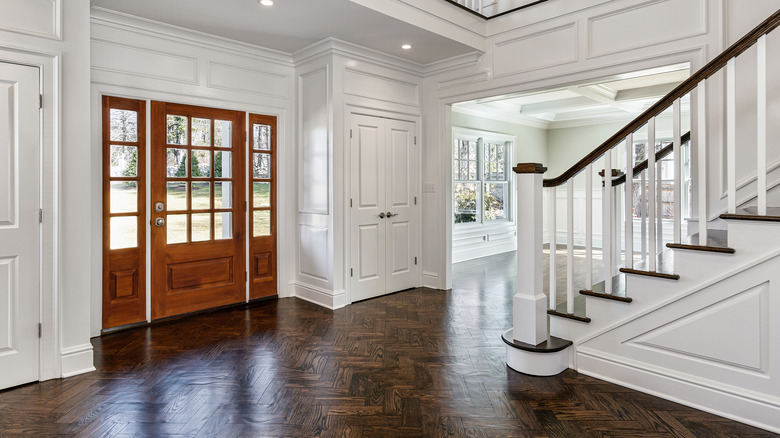
A go-to for an opulent or aristocratic aesthetic is to use raised paneling along your walls. Raised paneling has a regal look and originated in the 17th century. It's commonly found in American and European-style homes, most notably in Victorian or Edwardian spaces. It's great for formal dining rooms or sitting areas, where raised and beveled wood details bring a unique craftsmanship to the space. To achieve the perfect look, experts recommend choosing a millwork that suits the scale and proportions of your space.
Beyond walls, there are other ways to use raised paneling in your home. You might choose to add texture to your kitchen with thoughtful wainscoting ideas, such as using raised panel cabinets. Similar to shaker cabinets, raised panel cabinets add architectural variety and classic elegance to your space. However, the key difference is that raised panel cabinets are more ornate with decorative edges compared to shaker cabinetry. The raised center panel and distinctive edges create a more high-end, traditional feel.
Another way you can use raised paneling to add a timeless feature in your home is by swapping your doors. Both interior and exterior doors could benefit from the craftsmanship of raised paneling. If you're craving more formality or dimension in your design, or if you live in a colonial, craftsman, or traditional home, raised panel doors could greatly enhance your design and look more appropriate in your space than fluted features.