

Is Hot Gluing Art To Your Kitchen Backsplash A Good Idea? Here's What To Know
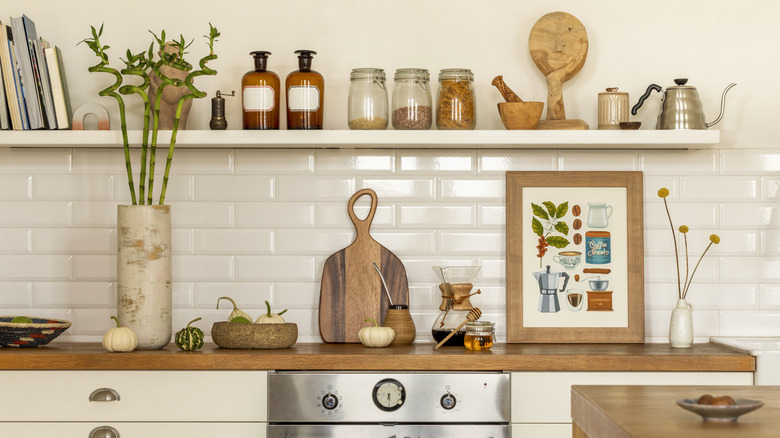
Adding bespoke art pieces to your kitchen backsplash can spark intrigue and elevate your design. The simple addition of a unique print or a beautiful painting is one kitchen backsplash idea that's easy and stylish. However, before you try this method at home, it's understandable you'd want to ensure it's executed correctly to avoid any damage to your tiling or art. Options for displaying art in tandem with a kitchen backsplash include using adhesive strips, stacking art on floating shelves, or simply leaning the painting against the wall on the counter, since using traditional methods of mounting with nails and screws could prove destructive to your backsplash tiles. One idea you may not have considered is using hot glue to adhere wall art directly onto the backsplash, which could be especially useful for lightweight art that isn't considered fragile.
Using hot glue as a convenient and inexpensive adhesive for home decor is not a brand-new concept. DIY enthusiasts in the past have been known to use hot glue to secure decor onto shelves. But whether or not it's one of the best hot glue hacks to use around your house depends on what type of art you're hanging, the type of tiling you have, and if you're willing to risk potential damage to the backsplash or the painting. This hot glue hack could be a useful solution in some scenarios, but it won't be ideal for everyone.
Pros to using hot glue as an adhesive on kitchen backsplash
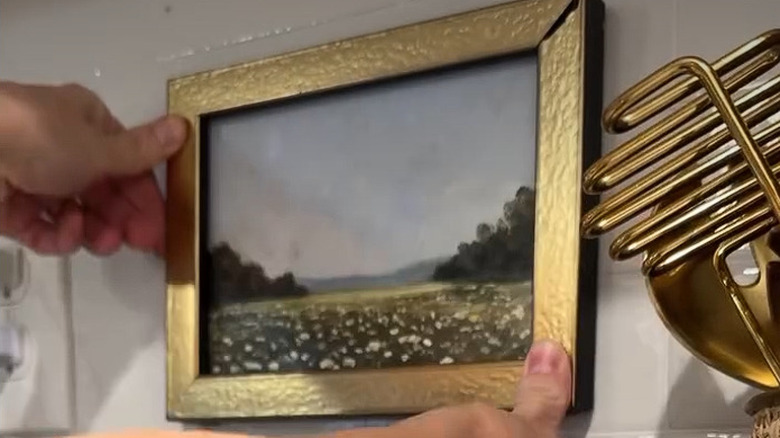
One of the most obvious perks to using hot glue as an adhesive for wall art is that the only materials needed are crafting essentials you might already have lying around. Hot glue guns and glue sticks are generally affordable and easily available, making this a straightforward and accessible DIY that can be achieved without breaking the bank. This hot glue hack also negates the need to drill screws or hammer nails into your backsplash's grout or tiling, which can be difficult to do safely in a way that doesn't cause damage. Overall, this method is less invasive than other alternatives.
Finally, when it comes time to change things up, hot glue is generally easier to remove from tiling compared to other popular adhesives that are commonly used for the same purpose. Epoxy or construction adhesives are options for these types of projects; however, they are more difficult to remove and prone to leaving behind residue. These are generally considered a more permanent solution, which limits your freedom to rotate paintings or remove them with ease, unlike hot glue.
Potential downsides to using hot glue on tiles
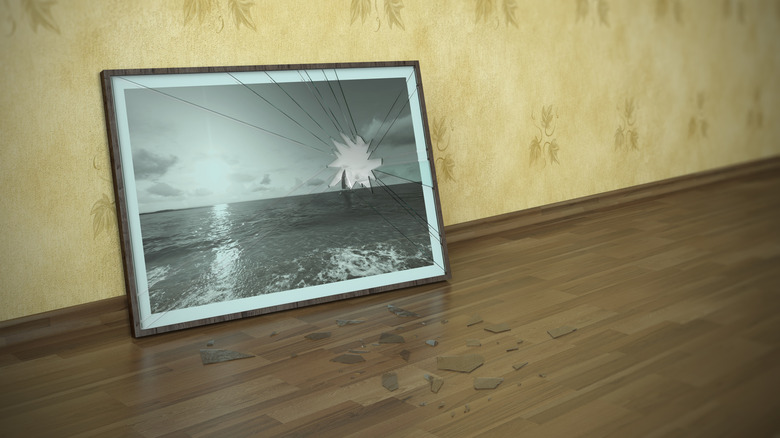
One big concern surrounding the use of hot glue as a method of securing art to a kitchen backsplash is that it is not as strong or reliable as other popular adhesives. This could be seen as a perk if you intended to hang small, lightweight pieces of art; however, it's not recommended for larger or heavier pieces that could easily fall from the backsplash and sustain damage. The fact that hot glue is weaker than alternative adhesives limits the kind of art you can hang when trying this hack at home. Hot glue is also considered to degrade more quickly than other glues, which can also lead to wall art falling.
While hot glue residue is generally easier to remove than alternatives, you might also want to consider that the hot glue could potentially still damage tiling, especially if the tiles are vintage, hand-painted, or fragile. When you peel or scrape off the remnants of hot glue from the backsplash, you run the risk of potentially scratching or scraping off the tile's paint or glaze, so if you have expensive, rare, or antique tiling, you might want to steer clear of gluing directly onto the surface.
Finally, there are many elements in a kitchen's environment, like heat and moisture, that make it a less-than-ideal match for hot glue. Hot glue is not considered waterproof and is temperature sensitive, so activities like boiling water on a stovetop nearby can potentially weaken the glue's bond over time. Overall, this hack can still be a good option for lightweight pieces of art that aren't considered fragile on durable tiling.