

Turn An Old Sock Into An Affordable Solution To Protect Glass Jars In The Freezer
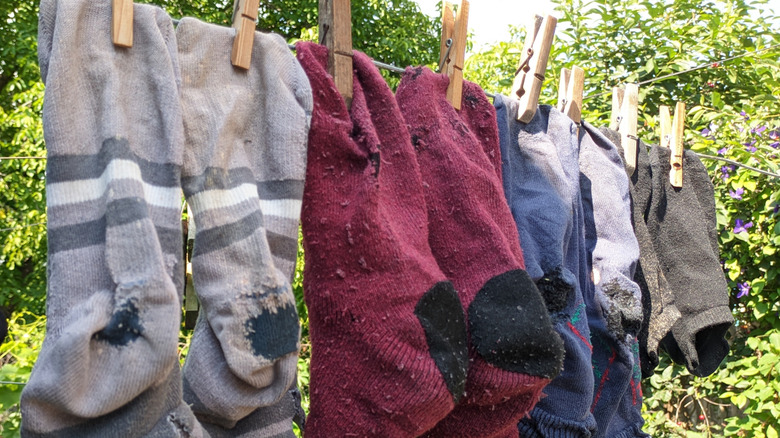
Getting your food prep in order and planning to store sauces, jams, soups, or leftovers in the freezer? Perhaps you had a brilliant fall harvest and want to preserve your bounty by freezing it. You might run into some problems. For instance, finding the right jars for freezing food can be challenging. Plastic jars aren't always the safest option. Plastics contain harmful chemicals, such as BPA, and microplastics, which can leach into your food when it's reheated in the same container. Glass jars are the safer option where leaching is concerned. But can you put a glass storage container in the freezer? Many of us fear breakage. While you can't stop glass jars cracking in the freezer entirely, you can take steps to prevent it from happening. Simply slip the jar into an old but pristinely clean sock before you store it.
There are different types of glass jars you can upcycle as reliable frozen food storage containers. As long as the glass is marked freezer-safe, it can be frozen. If the glass is also heat- or oven-proof, it's safe to thaw the food contained inside in a microwave or oven and wash the empty container in the dishwasher. Unlike with plastic storage solutions, you don't need to worry about staining or lingering food smells with glass. Glass jars, however, aren't the perfect freezer storage solution. They can be sensitive to abrupt changes in temperature, which can lead to cracks and breakages. Putting a food-filled glass jar in a sock before storing it in the freezer is an easy way to reduce the repercussions of thermal shock. The fabric will soak up leaks if the jar does happen to crack.
Pop frozen glass jars in socks to absorb leaks from cracks
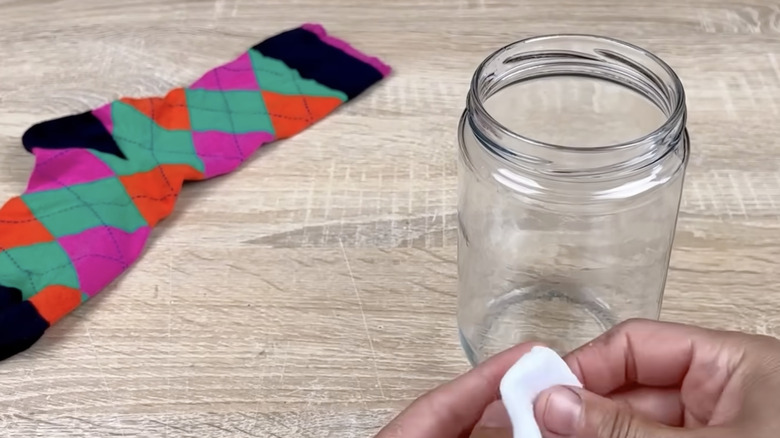
Thermal shock in glass occurs when temperatures fluctuate dramatically. The outside and inside of the glass jar expand or contract at different rates. This creates stress in the glass, causing cracking. One common reason this happens is if you fill a jar full of hot food and put it straight into the freezer without cooling it first. While popping a jar in an old (but, again, well cleaned) sock doesn't stop thermal shock — you need to take other measures for that — it will contain the mess in case of cracking. In short, it can save you having to spend an afternoon cleaning sticky pasta sauce or soup from freezer shelves.
Glass jars in the freezer can also crack due to other reasons. If you fill a glass jar right up to the brim with a liquid, it can crack. Liquid expands as it freezes, and the tight shoulders of a narrow-necked jar are a vulnerable spot. The expanding liquid has nowhere to go in the shrinking space. Similarly, if you're making the most out of your freezer space and freezing lots of food, the jars can crack when they collide with one another. Frozen glass is more brittle than room temperature glass. Clothing your jars in used socks provides an extra layer of protection in either case. Before you put a glass jar in the freezer, there's one thing you should do, too: Leave an inch or more of empty space at the top of each jar to account for expansion. Your freezer will thank you for it.