

Tips To Help Prep Garden Soil In Late Winter For A Healthy Spring Start
We may receive a commission on purchases made from links.
Winter often feels like a pause button for your garden. Some plants die back to the ground while others drop their leaves. Their roots wait quietly for spring, when warmth returns to the earth. Just because your plants are taking a break, it doesn't mean you can take one, too. In fact, the dormancy of late winter offers a golden opportunity to rebuild your soil. From loosening compacted dirt, which helps boost root growth, to testing the soil pH and nutrient levels and adding organic matter to the soil, there is a lot you can do in late winter. It all helps to boost soil health, getting it ready for the upcoming growing season. Soil quality — or the lack of it — can make or break spring garden success.
If your garden soil is unhealthy, it won't matter how well your seeds germinate or how strongly your perennials performed last season. Bad-quality soil will eventually affect your entire garden. Poor structure and low nutrient density cause all kinds of problems for plants. Either issue — or, worse, both combined — can lower seed germination and emergence rates and suppress root development in existing plants, hindering their above-ground growth. As a result, your plants may start to show signs of environmental stress. And that is even before the nutrient- and space-hogging weeds and hungry bugs show up in spring. In short, a little soil preparation in late winter goes a long way toward ensuring a bountiful harvest next year from the fruit trees you planted this fall — and everything else in your garden.
Loosen the soil and conduct a soil test
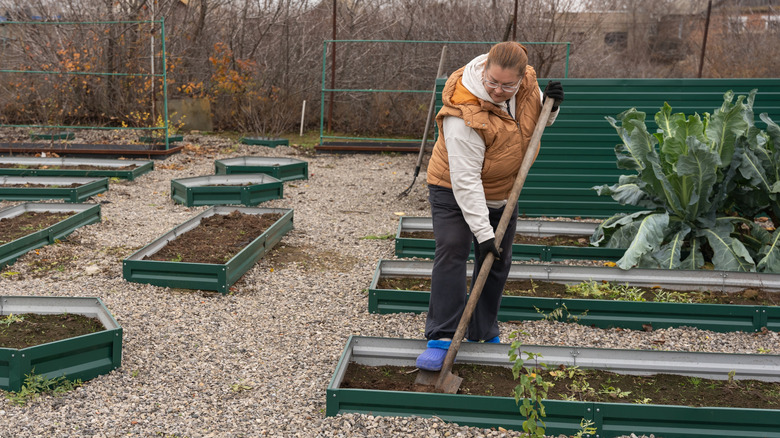
Begin your late winter soil preparation by loosening the soil with a garden fork or cultivator (or both). You'll aerate the ground and fix compacted soil for a healthier yard or garden. At this time, the soil in your garden is most likely no longer frozen, yet the rush to get plants into the ground for spring has not yet begun. However, don't perform this activity when the soil is overly saturated. You can easily tell if the soil in any given garden bed is ready for digging and tilling by squeezing a handful of it into a ball. If the soil ball crumbles when you poke at it, it is workable. If it remains a sticky mass, you should wait until it has dried out a bit. Loosen the soil to a depth of 6 to 7 inches, which is usually more than enough for most home garden vegetables and plants.
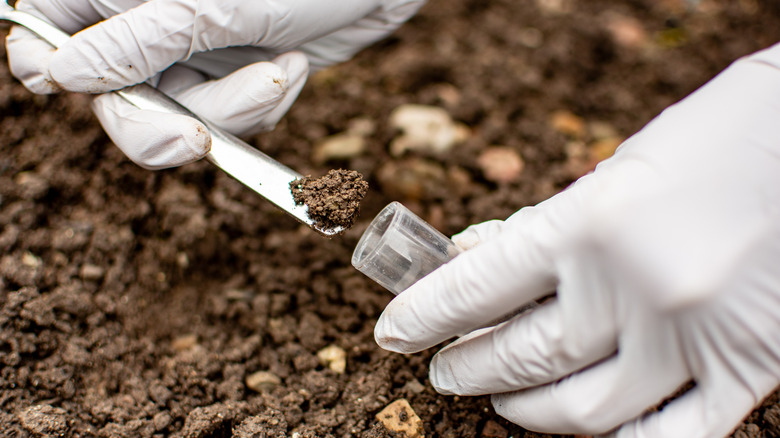
Loosening the soil before you do anything else also makes other soil preparations more effective. For instance, when you are digging up the soil, you will have a chance to collect samples of soil for testing from deeper underground. Likewise, nutrients can penetrate loose soil more easily — something any gardener with a soil test returning poor results will appreciate. Wearing disposable gloves, take five to six random samples of soil from across your garden or yard. You'll get more reliable results from many samples than just one. Take the samples from soil sitting 6 to 8 inches below the surface. Are home-based soil testing kits really accurate? Somewhat, but sending your samples to a lab offers better peace of mind.
Fix deficiencies, build organic matter, and protect with mulch
Once you receive and review the test results, you can fix what is actually wrong with your soil instead of simply guessing. If the report shows any pH issues, fix those first. Sometimes it is not a lack of nutrients that causes deficiencies in plants, but an imbalance in soil pH. Without the correct pH, certain nutrients will remain locked in the soil, unable to be accessed by some plants. If the soil is too acidic, you can add lime to raise the pH. If the MySoil Soil Test Kit or lab report shows your garden soil is too alkaline, add sulfur to bring it down.
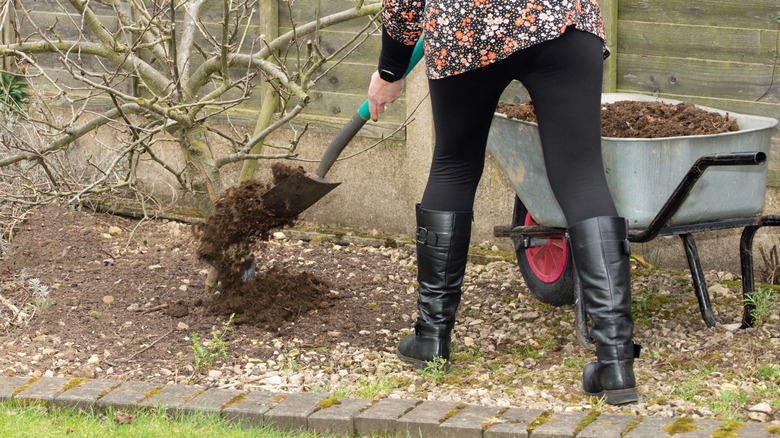
After adding pH balancing amendments, take more soil samples and test them again. If the report shows nutrient deficiencies, treat them with amendments designed for that specific issue — and no more. Never over-fertilize. It can be just as harmful to plants as under-fertilizing. If the test results show, however, that your soil is in perfect condition, you can still build resilience by adding organic matter. It slowly releases nutrients into the soil over a long period of time and improves soil structure. Compost, which works in sandy and clay soil and is generally readily available, is a reliable choice for most home gardens.
If you decide to disregard all of these late winter soil preparation tips, there's one thing you should still absolutely do. Do not leave your garden beds bare. Instead, cover the soil with a layer of mulch 2 to 3 inches deep — any kind will do. Mulch helps to moderate the soil temperature, protecting the roots of your dormant plants from the last of the freezes. It also locks in moisture and stops weeds from getting a head start when spring arrives.