

Say Goodbye To The Eyesore Of Compost Bins With One Sleek DIY Solution
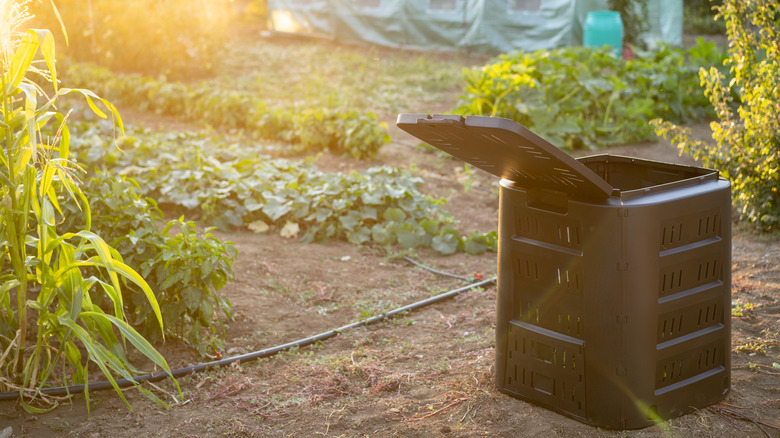
Composting is beneficial for both gardeners and the environment, but the eyesore compost bins can create in the garden might discourage you from setting one up. Fortunately, there's a simple and budget-friendly solution in the form of wooden pallets. One person's trash is another's treasure, which is certainly the case with these humble boards. Discarded wood pallets can be made into DIY furniture or utilized for adding extra storage around the house. Outdoors, they offer an equally clever upgrade: transforming the look of your composting setup. By converting pallets into a structured enclosure for scraps and yard waste, you can remove the visual clutter of standard compost bins, which stick out as plastic monoliths. It's a way of giving both your pallets and your food waste a second life, in a form that looks far more intentional thanks to their warm, textured slats.
One of the cleanest ways to do that is with a simple pallet-based compost system: a structured, three-section bin that keeps waste tidy, contained, and surprisingly attractive. Multi-bay setups are especially useful because they separate fresh material, active compost, and finished soil into distinct compartments — turning a messy necessity into something ordered and unexpectedly attractive. Before you begin, take a brief pause for a safety check you shouldn't skip when working with wood pallets. Some are treated differently than others, and knowing what you're working with ensures you're building something safe for the garden. Look for the IPPC stamp and the letters HT (heat treated), which signal the wood was treated without chemicals. Avoid any marked MB, indicating methyl bromide fumigation. Once you've confirmed your pallets are safe to use, the rest of the project is straightforward.
How to build a composter with wood pallets
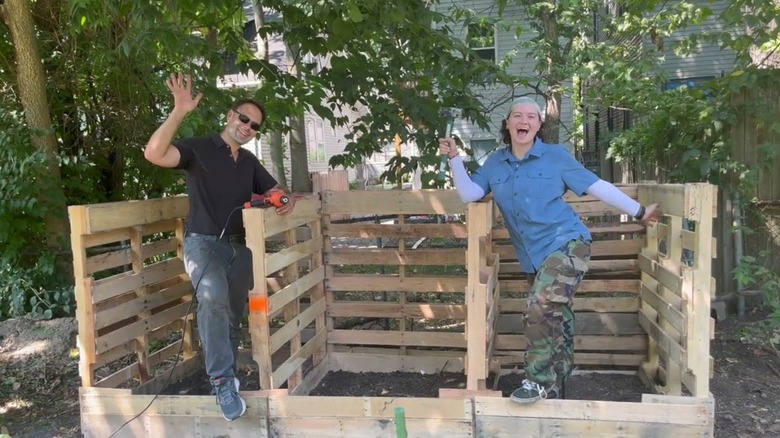
This DIY relies on the fact that pallets are easy to get your hands on. Once you've gathered the number you need — four for a simple single bin, or six to eight if you want a two- or three-bay system (this includes one or two extras to harvest boards for bracing and the front barrier) — remove any protruding nails. Most builds start by standing three pallets upright in a U-shape to create the back and sides, securing them together with 2½- to 3½-inch screws through the adjoining edges. For multi-bay designs, additional pallets are added as dividers and fixed to the back row to form separate compartments.
Next, cut additional boards to create a short front barrier. This can be adjusted depending on how much material you want to contain or how easy you want access to be. Because pallets allow airflow between slats, compost heats up quickly, but the open design means it may dry out faster. In this case, watering may be necessary, or you might add some useful modifications. For wide gaps an extra pallet can be dismantled to harvest spare boards that neatly close openings and help keep materials contained. Some gardeners also install a vertical chicken-wire tube in the centre of the bay to improve airflow throughout the pile, which can speed up decomposition. Or, you can add hinged doors made from cut pallets if you prefer a fully enclosed front.
Personalize and protect your pallet composter
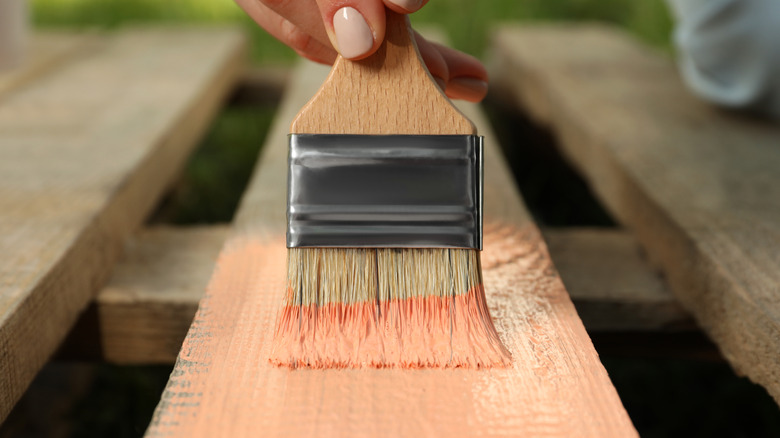
One of the joys of this project is that it's essentially free if you can source discarded pallets from local businesses. In comparison, similarly sized compost bins made from wood typically retail anywhere from about $300 to $400. Even factoring in screws and a protective finish, if you choose to add one, the pallet version remains the budget-friendlier option. That said, a few small upgrades can make your DIY bin both longer-lasting and more attractive.
You could match the color of the bin to your house or garden shed, or go for a bright hue for a community garden. Beyond aesthetics, treating the wood with an eco‑friendly, mineral‑based preservative before assembly can help repel water and UV damage. With that in mind, it's also worth thinking about placement. A sunny or shady spot both work since composting microbes generate their own heat, but it's best to avoid low areas where water collects, as excess moisture can slow decomposition and create unpleasant smells (for you and your neighbors). With regular turning, those kitchen scraps and yard trimmings will soon become rich compost, all thanks to pallets that might otherwise have ended up in a landfill.