

10 Authenticity Tests To Try Before Buying An Item At The Thrift Store
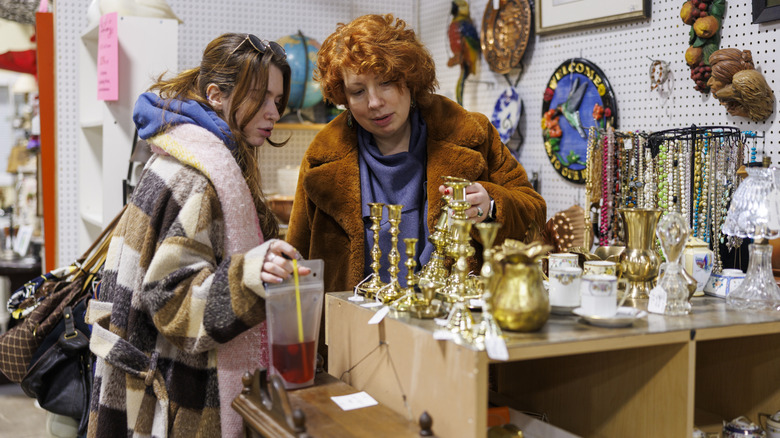
Thrift stores are full of fantastic finds — and just as many, if not more, misses. Because of this, if you're on the hunt for high-quality, authentic items, it's important to understand what to look out for. While an imitation of the real thing might look just as stylish on first glance, genuine antique pieces tend to outlast and far surpass the quality of remakes. Additionally, if you're planning to resell items you've picked up, it's necessary to be able to gauge whether or not something is real. Otherwise, you could end up misleading potential customers.
This authentication process is easier said than done, but there are a few simple tricks you can keep up your sleeve for times when you're unsure. Whether that includes looking for visual marks that could point you to an item's origin, bringing special items like a magnet or pocket black light to the thrift for inspection, or performing tactile checks that give you a hint into the item's material, these simple tests will help you sift through the shelves and stroke gold.
Of course, just because something is heavy doesn't automatically mean it's valuable, and even if a glassware piece doesn't dinging like crystal doesn't mean it's not worth picking up. If you're still unsure of an item's value or authenticity, consider doing some research online, bringing it in for a professional appraisal, or asking the store's staff for more information.
Listen for the sound of real crystal
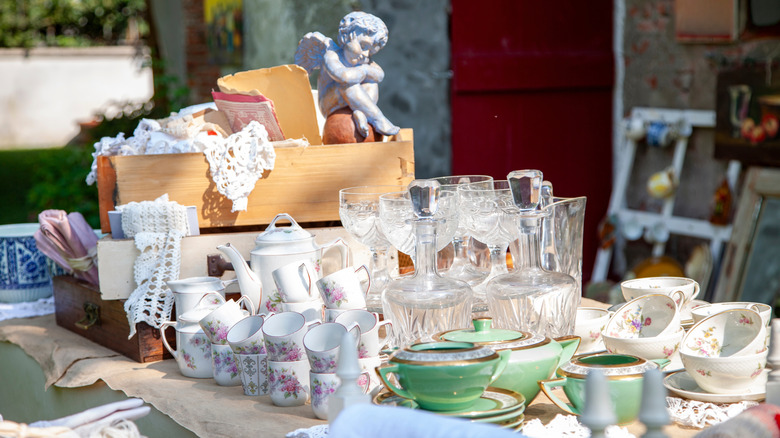
While all crystal is glass, not all glass is crystal. Crystal refers to a specific type of glass that contains minerals to make it more durable. As a result, this glass can be shaped into thinner pieces, giving it more clarity and a distinctive, luxe look. To tell valuable crystal from cut glass beyond visual cues, all you need to do is tap the item with your fingernail. Crystal pieces will make a distinctive "ding" tone that sounds full and lasts longer, while regular glass will create a duller, shorter sound.
Check for maker's marks
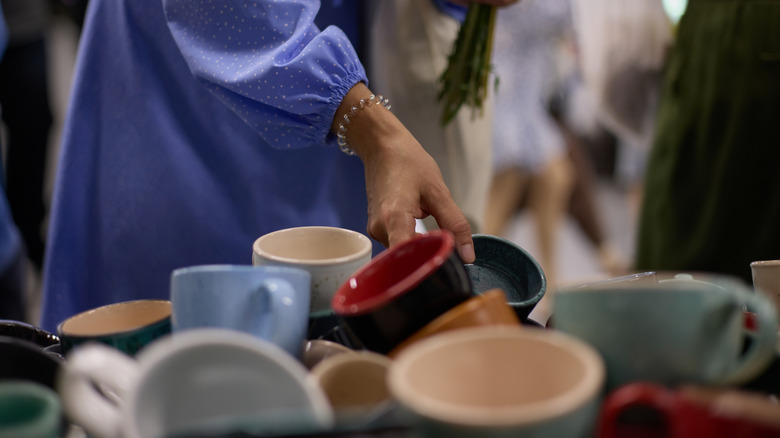
If you're shopping for pottery, antique furniture, glassware, silverware, or clocks, there's a chance you might be able to identify the origin of the item in seconds. Maker's marks are typically stamped or engraved onto inconspicuous parts of a product, and even a tiny symbol can grant you a wealth of knowledge about an item's value and quality. After finding a maker's mark, it will likely be necessary to do some more research, but its worth familiarizing yourself with common vintage brands that are worth buying at thrift stores to make identification easier.
Test for real brass and silver with a magnet
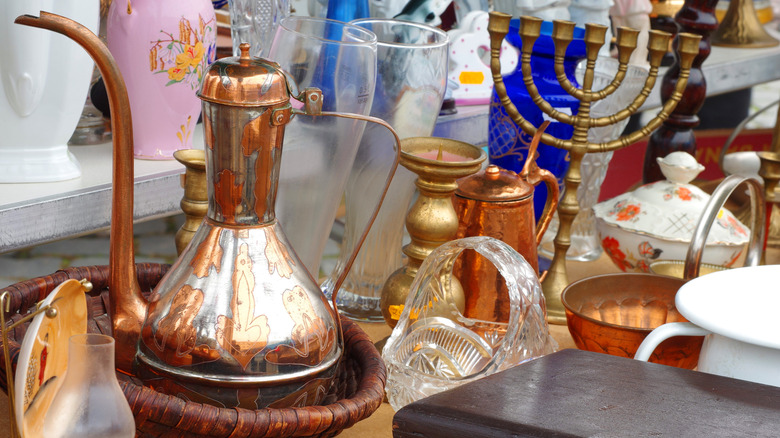
Shopping for high-quality metal objects, whether that means candlestick holders, silverware, kitchenware, trinkets, or hardware, can be a struggle. Natural wear, tarnishing, and decorative finishes can obscure the item's appearance. Plus with so many metals and alloys appearing similar, it can be difficult to work out which pieces are real gold, bronze, silver, or copper. Luckily, there's an easy trick. None of these materials are magnetic, so if you hold a magnet up to the item and it sticks, it's likely made of nickel, iron, or steel.
Identify uranium glass with a blacklight
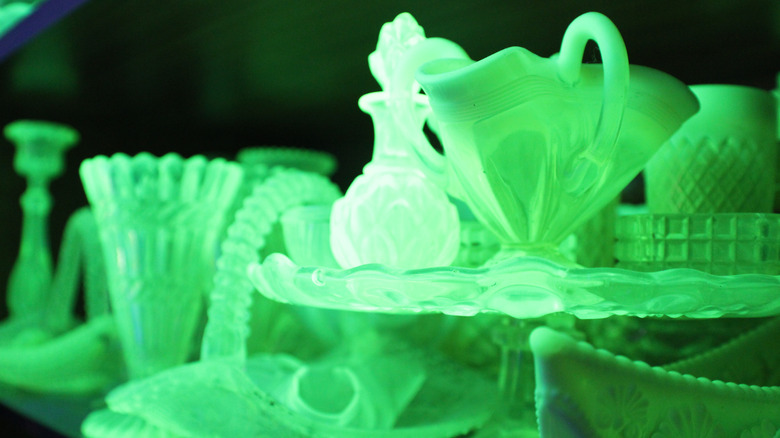
To the unfamiliar, uranium glass might sound like something out of a superhero movie, but the truth is more mundane. From the 1830s up to when it dipped in popularity in the 1940s, glassmakers often added uranium to their pieces as a coloring agent, but this isn't just any simple add-in. When under blacklight, uranium glass glows an eerie green color, and this florescence could help you spot vintage pieces in the wild. Who knows — you might even stumble upon another one of the kinds of glass that can glow in the dark, too!
Check the backs of paintings for nails or staples
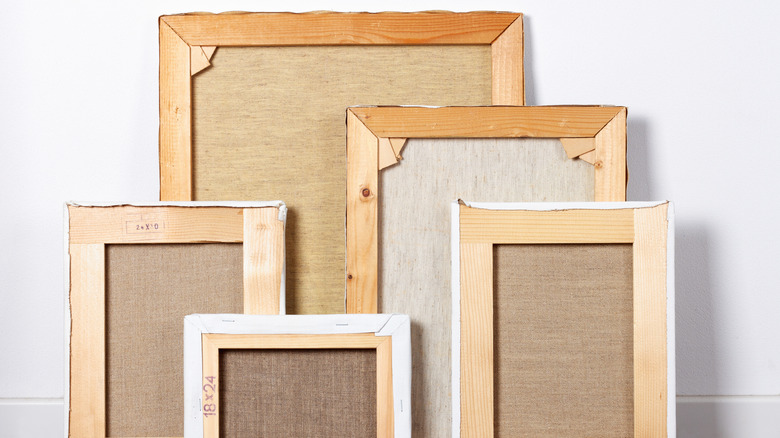
If you want a better idea of whether or not a painting is antique, one of the easiest methods is to sneak a peek at the back of the canvas. To create a surface for painting, canvas fabric is draped over and stretched to fit a frame, also called a stretcher. To keep it taught and in place, it needs to be fastened. In the modern era, staples are the most common tool for the task, but on canvases assembled before the 1940s, you're likely to find nails instead.
Inspect joinery on wood furniture
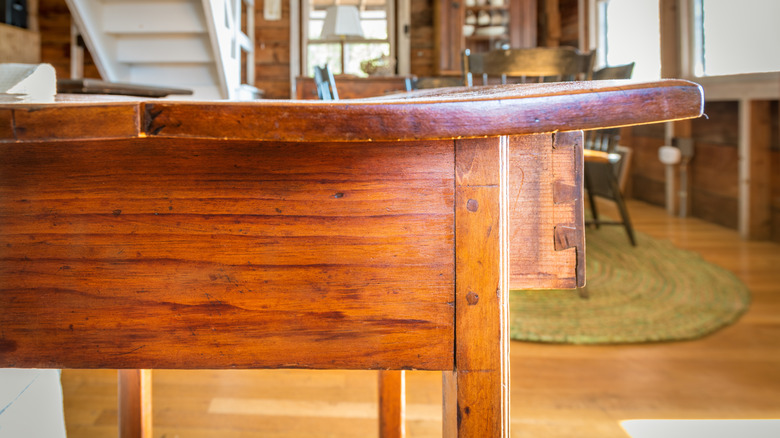
Antique furniture styles are often replicated by more modern builders, so it can be particularly difficult to determine whether or not a piece is original or a reproduction while thrifting. One of the biggest tells, however, lies in the details. Look to places where individual pieces of wood are joined together — think the sides of drawers, along corners, and where seats are attached to chair backs. If these spots utilize joinery methods that minimize the use of screws and nails and look a bit imperfect, it's likely that you're dealing with a handmade, antique piece.
Feel the weight of items
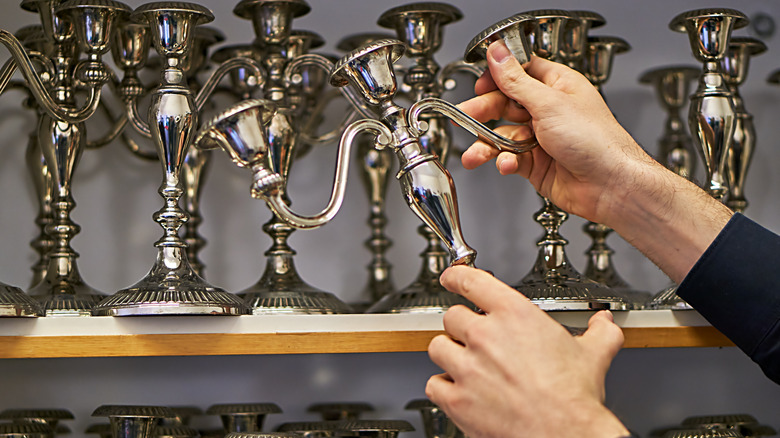
While this isn't a 100% accurate method of determining whether or not an antique-looking item is real or high-quality, it can be beneficial to pick the piece up and feel its weight. Mass production favors profit, which often means lightweight, low-quality materials — sometimes even plastic or resin. Craftsman making pieces that were luxury goods or designed to last, however, were less likely to cut corners. As such, it's often a good sign when a piece feels heavy in your hands, especially if it passes other authenticity tests.
Keep an eye out for wear
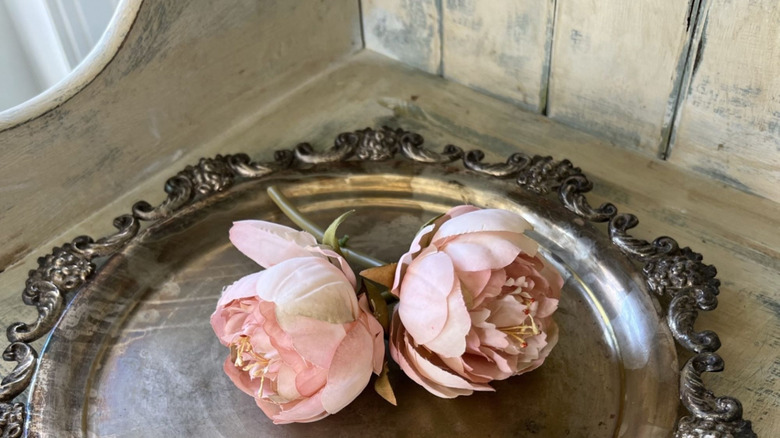
Over time and with use, even well made items naturally start to lose their luster. Silver tarnishes, wood gets scratched, colors fade, and iron rusts. It's unavoidable, and especially if an item has found its way to the shelves of the thrift store, it's likely that it hasn't been maintained or repaired in some time. Because of this, minor wear or discoloration is actually a good sign that the piece you're looking at is a genuine antique. If something is ultra-shiny or in pristine shape, it's either been kept in storage its entire life or is a more recent reproduction.
Check for 'made in' stickers for more accurate dating
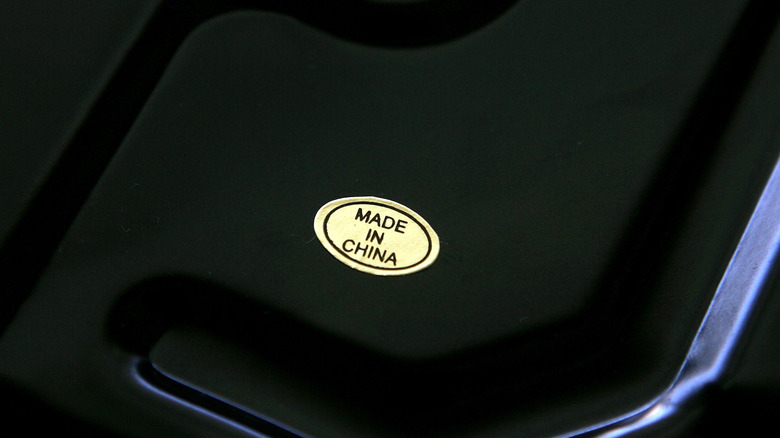
Trade between countries is always fluctuating. In recent decades, it's been cheaper for United States-based companies to outsource labor to different parts of the world than manufacture items stateside, but the most popular locations for this outsourcing ebb and flow as relations between countries change. Checking items for "made in" tags can give you a better idea of when they were produced. If a piece has a "made in China" sticker, for example, it's likely that it was produced after the 1970s — bad news if you were thinking it was a genuine antique.
Try a reverse image search
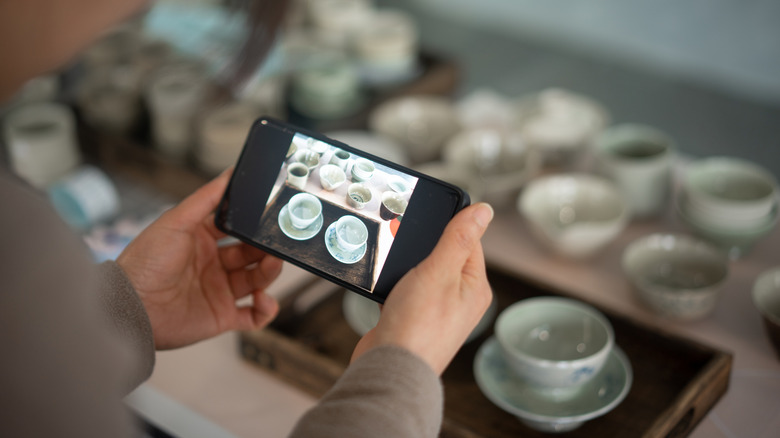
If you're completely lost on whether or not that piece at the thrift is a valuable, high-end item, it can pay to use technology to your advantage. An app such as Google Lens can pull up results of similar-looking items, tell you exactly what something is, show how much similar pieces are selling for, and give you a starting point for research. If you're worried that something might be a dupe, seeing an image of the actual item can also help to highlight differences and showcase marks of authenticity that you might have otherwise missed.