

12 Kitchen Tools That Users Say Aren't Worth The Cupboard Space
Most home cooks have at least one drawer or cupboard that's crammed full of "useful" tools they never touch. These gadgets were most likely bought on a whim because they seemed like a good idea at the time. The majority of kitchen tools that get used once and then forgotten are marketed as saving time or increasing convenience, and others are promoted as making cooking fun or saving money. But actually, they're awkward to use, hard to clean, only serve one very limited function, or take more time to use than if you had done it the regular way.
None of these tools are really universally useless. Some people love their mandolin and use it on a regular basis. Others used it once, and now it gathers dust in the cupboard. The same with an ice cream maker, breadmaker, or apple corer. They do all serve a function, but that doesn't make them worth the counter or cupboard space for most people.
Mandolines that feel more scary than useful
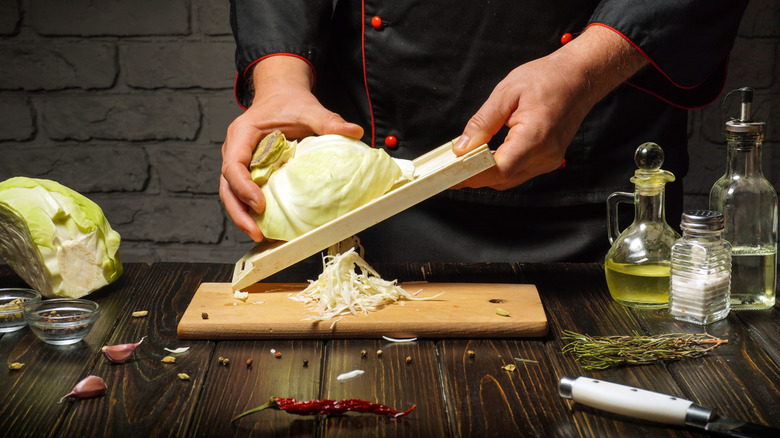
The mandoline is the classic professional chef tool that home cooks buy when they want to feel fancy. They're convinced they'll use it all the time to get ultra-fine, uniform slices of veggies for slaws, chips, gratins, and other recipes where finesse is necessary. But they're fiddly, and you need a fair amount of skill and precision to use one safely. Lots of people say they find mandolines hard to use, difficult to store, and not worth setting up just for a couple of onions or potatoes.
Most home cooks end up relegating their mandolines to the back of the cupboard, and not just because of the awkwardness of setup. Mandolines are notorious for causing injury, even with the guard in place. A split second of inattention, and you can do yourself significant damage. Forum threads are awash with tales of sliced fingertips and dashes to the emergency room from accidents with mandolines. The blades are extremely fine and sharp, and the action and proximity of your fingers to the blade make injury likely unless you're extremely careful and well-practiced. One Redditor said, "If your mandoline merely disappointed you without permanently disfiguring you, call it a win, quit while you're ahead, and throw that thing out." And they're really only necessary for people who want to batch-prep a lot of veggies at one time. Plus, modern food processors often come with a mandoline or fine slicing blade that's safer.
Avocado slicers and other single-fruit gadgets that are difficult to use
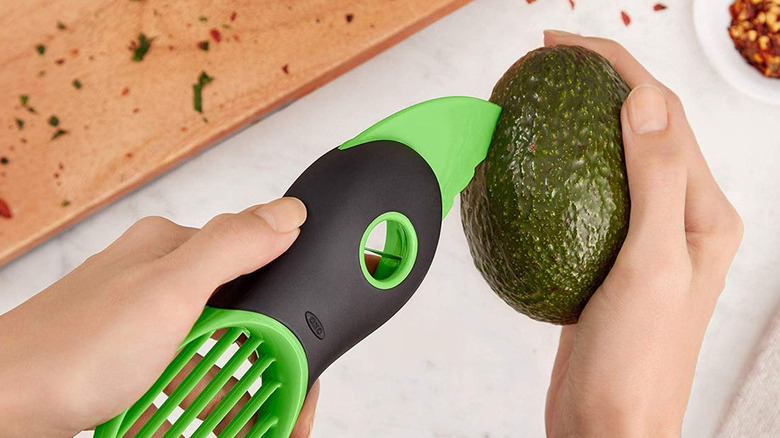
If you eat a lot of avocado, you've probably at least been tempted by an avocado slicer or pitter. The same goes for strawberry hullers, pineapple corers, apple corers, and other single-fruit gadgets. They're tempting because you can see the appeal and the purpose. And you get Insta-worthy fruit prep with minimal skill and time. The in-store demonstrations and the affiliate marketing demos on socials make them look so fast and functional, and they're promised to be way safer and easier than using a knife.
Common complaints center around how difficult these little gadgets really are to use. People talk about how the slicers don't work on avocados that are even slightly under- or overripe. They can also slip, which can be dangerous. These kinds of single-purpose gadgets are often fiddly to clean and don't really save time, especially when you add in how long it takes to clean, compared with using a knife or, in the case of things like strawberry hullers, when you can literally just use your fingers. In a thread discussing the kitchen gadgets people bought and never use, one commenter said, "Mine is the avocado slicer. Looked cool, now collects dust."
Egg separators, slicers, and other egg gadgets that only do a single job
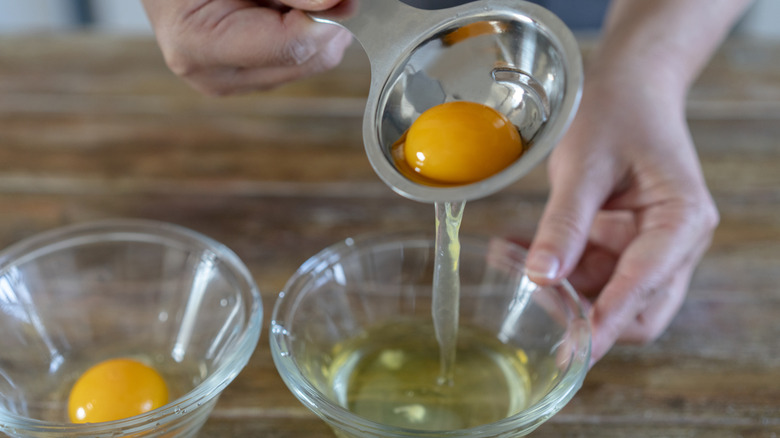
Egg separators are small gadgets that separate egg whites from yolks. The idea is that they'll keep the yolk intact, cleanly separate the whites, and you won't get any shell in the mix. They're relatively inexpensive and are available in cute novelty shapes, so they make a nice, low-risk novelty purchase. The same applies to boiled egg slicers that promise perfectly even, mess-free egg slices for your salad. But before you buy, ask yourself whether you actually need to have perfect egg slices or whether you can really just use a knife and cope with slightly odd-sized pieces.
Someone who tried an egg separator declared, "Every egg separator is useless. Use your hands. My 5 yr old granddaughter knows how to do it." While that's a little harsh because they do perform their intended function, for many people, these gadgets just never get used. The problem is that an egg separator just creates more work in terms of fetching it out of the drawer, using it, then cleaning it and putting it away. It's faster and more efficient to do it with your hands or the shell. You can simply pass the egg back and forth between the two halves of the shell, letting the white fall into the bowl below while the yolk stays in the shell. Or you can use your hands. You crack the egg, then gently pour the contents into your hand, with your fingers slightly spread. This lets the white pass through but keeps the yolk cradled safely in your fingers. No gadget required.
Garlic presses that turn cloves into a cleaning chore
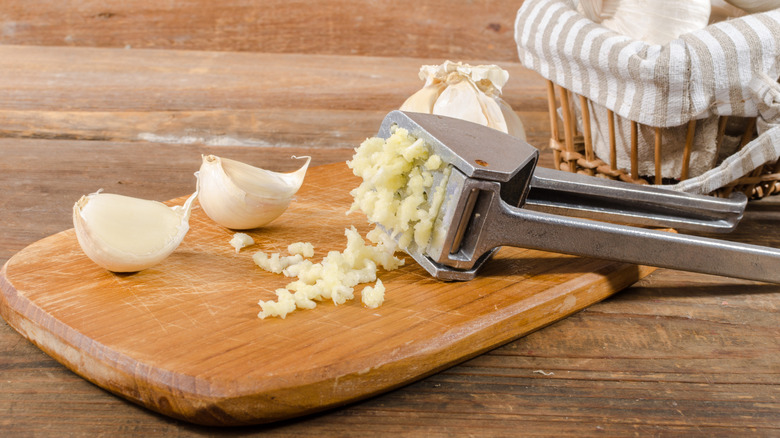
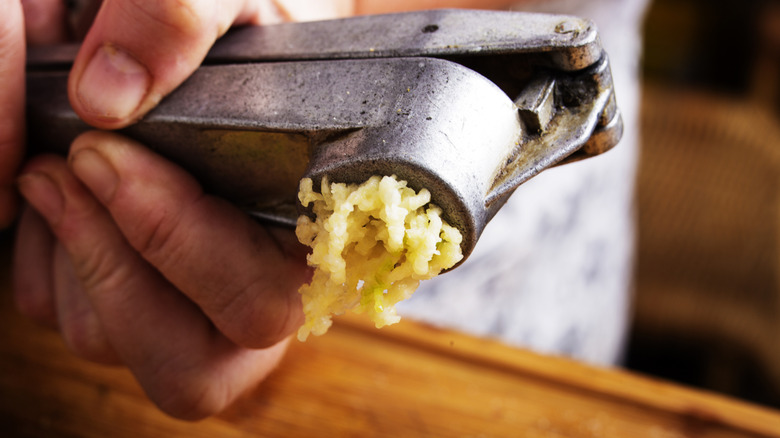
Some home cooks swear by their garlic press and use it frequently. Others never use theirs and proclaim that they regret the purchase. Whether you grow your own garlic or buy lots from the store, the garlic press is an oddly divisive kitchen tool. Some people love the speed at which a good press turns a clove into minced garlic. Others think it's not much faster than some good basic knife skills, and some serious cooks claim that you get better flavor and texture from knife-cut garlic.
By far the most common complaint about a garlic crusher is the challenge of getting it clean. Mashed garlic tends to get stuck in those tiny holes, and many models aren't easy to rinse clean, requiring you to use a toothpick or brush to free the old garlic. In one forum thread, someone said of the garlic press, "I find that way too much garlic gets left behind in it, and it's all [sorts] of stringy globs instead of a finely minced product. Easy enough to simply chop, anyway."
Herb strippers, herb scissors, and other leafy helpers
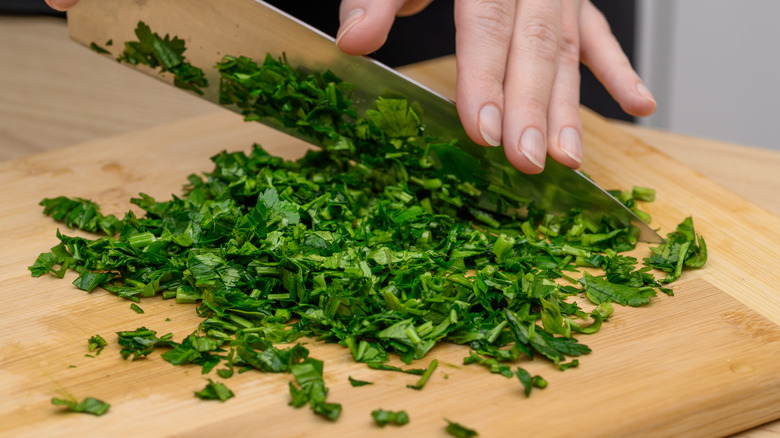
The purpose of herb scissors and strippers is to avoid having to mince herbs or to chop them with a big knife. In theory, you use them to snip or strip fresh herbs straight into a pan or salad with a few quick motions. The multi-bladed scissors, in particular, look impressive, like they might be a significant bit of kitchen equipment for serious chefs. But they're not. And frankly, herb strippers, even fancy ones, are just pieces of wood, silicone, or plastic with a few holes in them.
Cleaning between all of those blades is challenging. Lots of users complain that even in the dishwasher, herb scissors still don't reliably come clean, and even if your pair comes with a cleaning comb, it isn't really effective. Others note that herbs get clogged up between the blades, especially when you're dealing with soft, leafy herbs like basil. And, particularly if you've gone to the effort of growing your own basil, you don't want to see it wasted as a clogged-up mess. Another common theme is that herb scissors tear and bruise leaves rather than cleanly cutting them. One Reddit user was particularly passionate about their dislike, saying, "They're AWFUL. I threw mine out. The herbs just get stuck between the blades and get all mushed up. Total garbage." With strippers, most people end up just finding they're useless and that woody-stemmed herbs break as you draw them through the holes. And in both cases, you can more easily use a knife or your fingers.
Manual vegetable choppers and slap-chop-style gadgets
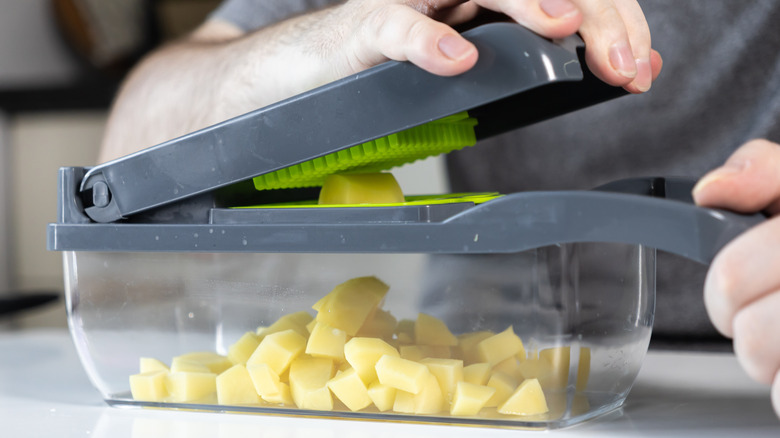
Manual veggie choppers that push down or use a slap-style method are odd contraptions that, in theory, should deliver uniform dice or slices without the user needing any real knife skills. But again, these things tend to get relegated to the back of a cupboard or donated to the thrift store because they overpromise and are, for most people, more hassle than they're worth.
Users complain that the dice and slices are anything but even and that the vegetables end up bruised and not well-cut. A Reddit user said, "Slap [chops] are just useless junk. I was given one ages ago and found it useless for basically everything. Zero control over what you're doing, and a [pain] to clean." Another common pain point is the time it takes to disassemble and wash the chambers and blades, and that cleaning isn't always particularly easy. By the time you've done all the disassembling, cleaning, and drying, you may as well have just used your knife and a wooden chopping board that's easy to care for. They also tend to be big and bulky or awkwardly shaped, so they take up a lot of shelf space.
Big knife block sets that go mostly untouched
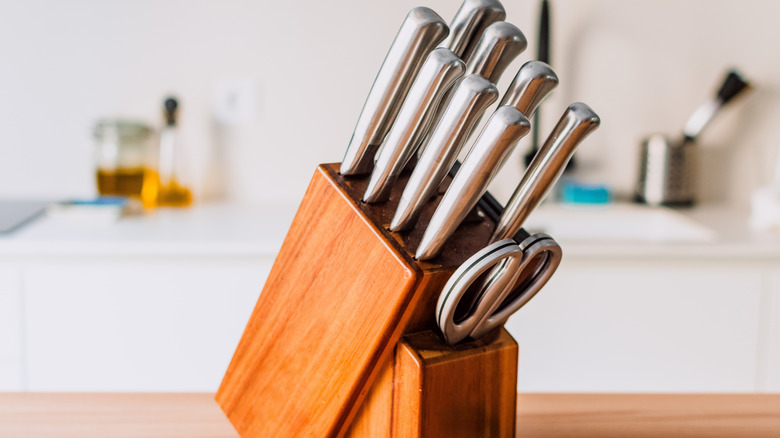
Massive chef's knife blocks look gorgeous and impressive in the store and staged on social media. They give real weight and gravitas to a kitchen. But knife blocks are supposed to be more than just decorative, and it's pretty unlikely that you'll actually use all of those knives on a regular basis. Even seasoned home chefs tend to use just a handful of knives in their home kitchens. A large chef's knife, a paring knife, a serrated bread knife, and maybe one mid-size multipurpose knife is probably all you'll ever use. So you may want to ditch the knife block in favor of a drawer insert or magnetic strip.
Lots of people concur that you'll only really use a select few knives. A forum poster summed it up beautifully when she said, "We have a knife block, but I only use three knives: [paring], carving, bread. The carving knife has a million uses. I use it most simply because it's so comfortable and weighted perfectly." And really, beyond those core knives, all the others, barring maybe the steak knives, will just sit in the block collecting dust. And those big blocks take up a lot of counter space that could be put to better use, especially if your kitchen is space-poor.
Dedicated ice cream makers for small or busy households

Ice cream makers seem like a really good idea every summer, when the weather is hot and you crave something sweet and cold. They're the classic "this is going to be so much fun, and I'll use it every week" gadget that you buy on an impulse. Or maybe you've been hankering after one for years, until you finally have enough money to buy that really fancy one with all the bells and whistles. Then you get it home and realize it's not really "fun." You can't just grab some ice cream whenever you want. It takes planning because you've got to freeze the bucket, which takes up valuable freezer space, and it takes quite a bit of time to actually get any ice cream out.
People commonly say that the novelty quickly wears off and that the money they'd save on high-quality ice cream isn't worth the hassle involved in prepping the ingredients, using the machine, and then having to do all the clean up. One woman who said she used hers a lot for the first few months said, "It's great but a lot of hassle. Ours sat in the cupboard for two years before we sold it on Facebook last summer (for almost what we paid for it)." This is one of those gadgets that some people really love, especially if they enjoy experimenting with flavors and ingredients, and it's a great option for those who want affordable dairy-free ice cream. And some models let you make frozen yogurt and other things beside ice cream, too, making them slightly more versatile. But for most, ice cream makers quickly become dust gatherers.
Bread machines for people who rarely bake
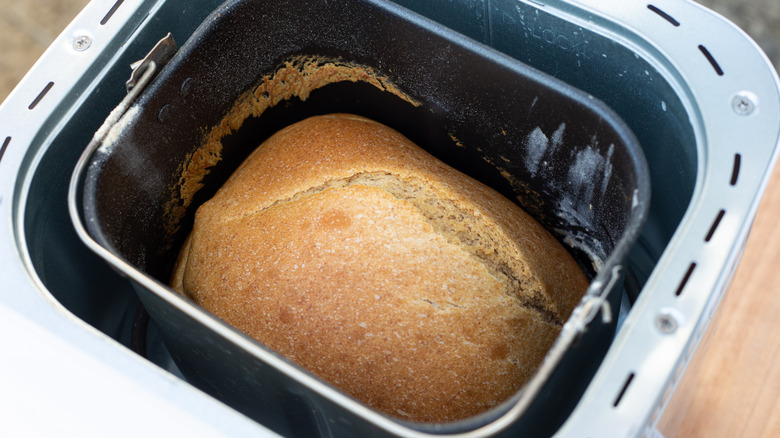
Bread machines were all the rage at the turn of the century. This old school kitchen essential was a feature in so many homes in the '90s and '00s. They were massively popular, and so many households had one. The allure of freshly baked bread in the morning without the effort was (and often still is) irresistible. It seems like a no-brainer. Dump the ingredients in the machine, push a couple of buttons, and let it do its thing. Come back later and enjoy fresh baked bread with lashings of butter. But they are big and bulky and take up a lot of counter or cupboard space, which is one of the primary user complaints. They fall into the category of short-lived obsession gadgets that users quickly lose interest in. MadGeographer, on a post about unused kitchen gadgets, said of their bread maker, "We used it once. The bread was delicious. We never used it again."
The cost of bread mixes is also a common pain point. Some people adore their bread makers, but others struggle to master them and complain about odd-shaped, dense, or unusable loaves. If you really love to bake bread and have the kitchen space, a breadmaker could definitely be a useful addition, but if you're going to use it less than a couple of times a week or have a small, cramped kitchen, your money may be better spent elsewhere.
Vacuum sealers when you don't freeze or batch cook much
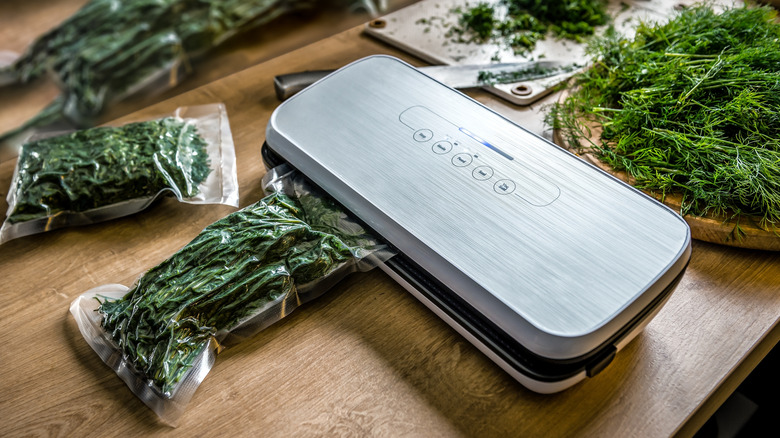
On the surface, a vacuum sealer seems like a great purchase. They let you sous vide, batch cook, meal prep, freeze without freezer burn, and generally help make your food last longer. Plus, the things you seal tend to take up less fridge or freezer space because there's no air in them. They are, potentially, a smart option for storing bulk purchases. If you are a bulk purchaser, like to batch cook large quantities, and have a roomy chest freezer, then yes, a vacuum sealer could be a good option if you have the counter space and the money to shell out for one. There are plenty of people who get a ton of use out of their sealers and swear they pay for themselves many times over in a pretty short span of time.
On the other hand, they could easily be a waste of money if you don't shop or cook in this way. They are generally bulky and take up a lot of space on the counter. Plus, depending on the model, you may be forced to buy expensive proprietary sealing bags, so the costs may outweigh any potential savings you make when working with smaller batches of food. In a forum thread discussing vacuum sealers, one person said, "I used mine for a while, but I started to feel like I was working in a factory when I'd rather just cook, so I gave it up."
Panini presses and sandwich makers
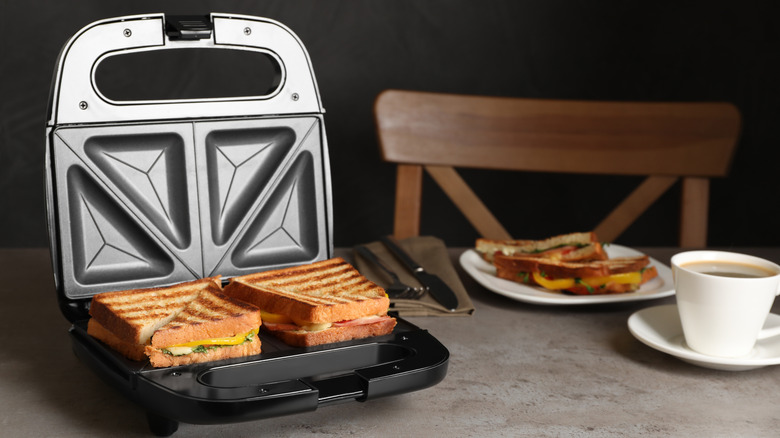
Panini presses and sandwich makers also fall into the single-use bucket. Admittedly, they're pretty fun and novel at first, as you can whip up grilled cheese, paninis, waffles, and toasted sandwiches of your choice. But most people quickly find themselves reverting back to a pan or a griddle for quick toasties and grilled cheese or even just silicone toastie bags that let you make a toasted sandwich right in the toaster with no mess.
Some of the biggest user complaints center around the difficulty of cleaning the fixed, non-removable cooking plates effectively because, obviously, you can't submerge the whole appliance due to the electronics. So cleaning isn't easy, especially if you've got crusty cheese or sauce all over the place. A Reddit user said, "I rarely remember to use it, and when I do, I immediately remember why it collected dust because the thing is a pain to clean." Some are also big and bulky, so you may not think it's worth the counter space if it only gets used every other week, especially when you can get the same result from things you already own. Many owners bemoan their purchase and say that, like other single-use gadgets, their sandwich makers and panini presses now live on top of the fridge or the back of a cupboard.
Cake pop, cupcake, and mini dessert makers
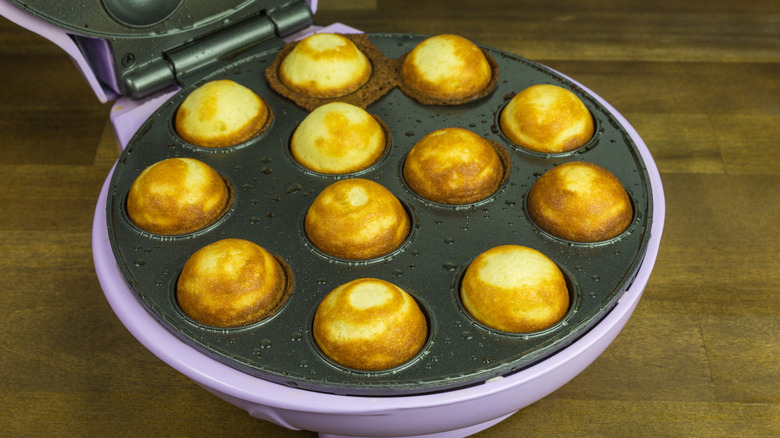
Mini dessert makers, such as for cake pops and cupcakes, really fall into the same category as panini presses and sandwich makers, except that they get even less use. Yes, they're a fun novelty, especially the pretty ones that have a cute or kitschy theme. But their use tends to be short-lived. Often, they're used just once or twice for a children's activity, and that's it. They take up cupboard space or get donated. One Redditor, talking about a cookie maker, said, "It had little forms that you'd stick six pieces of sugar cookie dough in, close the lid, and it cooks for however long. So much more work than just cutting and baking cookies."
A muffin pan and some skewers do the same job with less fuss, easier cleanup, and more versatility. You don't need specialist equipment, even for cake pops. Some people even argue that cake pops should never have been born to begin with and that they're grateful the trend is over. Samantha Maxwell of Paste Magazine said, "For anyone who has good taste in dessert, it's a welcome respite from the ridiculous reign of the cake pop, an odd dessert that absolutely nobody asked to be birthed into existence." And when it's mini muffins you want (if for some reason you don't want full-sized ones), you can make them with a small silicone muffin pan.