

The Old-School Hack That Can Deter Pests From Your Indoor Plants
We may receive a commission on purchases made from links.
There is probably nothing more infuriating than bringing a new plant indoors, caring for it, and taking every step in the book to help it grow — only to find whiteflies and fungus gnats claiming their territory on the plant a few days later. Next thing you know, you're looking for all sorts of hacks to keep insects out of your house. But no matter what you do, these unsightly creatures are back every morning!
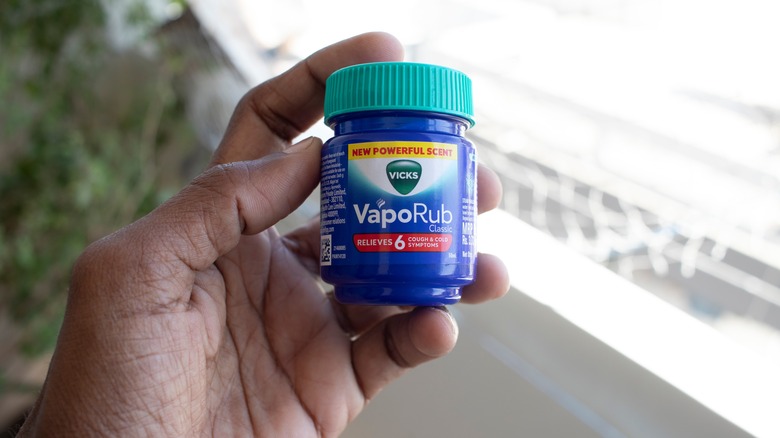
Although you should continue to take other measures to get rid of pests, one old-school solution to protect your indoor plant might be hiding away in your medicine cabinet: Vicks VapoRub. The same ointment you've always used for cold relief can also provide relief to plants against pests. Many people have found that common household pests don't stand a chance against Vicks VapoRub, and when combined with other pest-repelling solutions, a thin layer of Vicks on the rim of the pot can be more than handy for houseplants.
Pests, unfortunately, are a persistent problem in the plant world, and its indoor members are no less susceptible to it. Outdoors, there are some factors that keep pest populations in check, such as predators and the elements themselves; but inside your home, all your beloved plants can hope for is your care and ingenuity. Pests can severely damage the aesthetics of your indoor garden, cause diseases that spread from one plant to another, and even lead to plant death. In fact, the frustration that accompanies constantly dealing with aphids, whiteflies, fungus gnats, and mealybugs on your indoor plants can even test your love of gardening, especially if you're brand new to the game. But gardeners have long come up with creative, affordable solutions, like Vicks, for dealing with pests.
The science behind using Vicks VapoRub as a pest repellent
Remember how you could tell from a mile away if one of your buddies had put Vicks on their nose back in school? Well, it feels almost the same for pests, only way more intense and repellent. Although grandmas swear by this solution all the time, we want to understand exactly how Vicks VapoRub can have such a deterring effect on pests.
Vicks VapoRub is primarily composed of three active ingredients: camphor, eucalyptus oil, and menthol. These ingredients work as both cough suppressants and mild analgesics for pain relief. Camphor has been historically used as an insect repellent. It has a strong aroma, which can repel moths and other pests by disrupting their sensory organs. Herbivorous insects rely on their olfactory receptors to locate food and hosts. A study in Pesticide Biochemistry and Physiology showed evidence of camphor's repelling effect against the fall webworm moth by activating one of its olfactory receptors. Since camphor is a significant ingredient in Vicks, this may be one of the reasons pests find it repulsive. Camphor is also present in the sage plant – one of the plants that help keep spiders away and is also known to repel other pests, like cabbage moths, flea beetles, and mosquitoes.
Similarly, the aroma of eucalyptus and the oil extracted from the plant have proven effects against pests like spider mites, whiteflies, and aphids. Menthol, too, is useful in deterring mites, mosquitoes, and other insects — it is present in peppermint oil, which is used as a natural pesticide. Even though there is not much direct evidence for using Vicks to protect your plants, its deterrent activity can be traced back to its pest-repellent components.
Why Vicks works better indoors (and how to apply it)
The Vicks VapoRub solution is affordable, convenient, and something that can easily be tested. For the effort the hack takes, your chances of receiving a giant ROI are high. Vicks VapoRub is also more effective for indoor plants because of the conducive indoor environment. Its scent can linger longer indoors. It doesn't get washed away by rain either, which would curb its effects.
To try this hack, apply a thin coating of Vicks VapoRub to the outer rim of your plant pots. Measure its effect over the course of a few days, and evaluate if you can see significant results. Reapply every few days or if you see the bugs increasing. Since Vicks should hopefully drive away the pests, they should also be unable to lay any more eggs in the potting soil, so you should see their population slowly dwindling down.
Having said all that, make sure you never apply Vicks directly to indoor plants. Although some gardeners apply it on some hardier outdoor plants to deter deer, putting Vicks on the stem or soil of your delicate potted plant can be damaging to its health. Furthermore, keep in mind that Vicks can also be toxic to pets like cats, so make sure they don't linger around the application either.