

The Winter Hack That Has People Putting A Bowl Of Salt By The Window
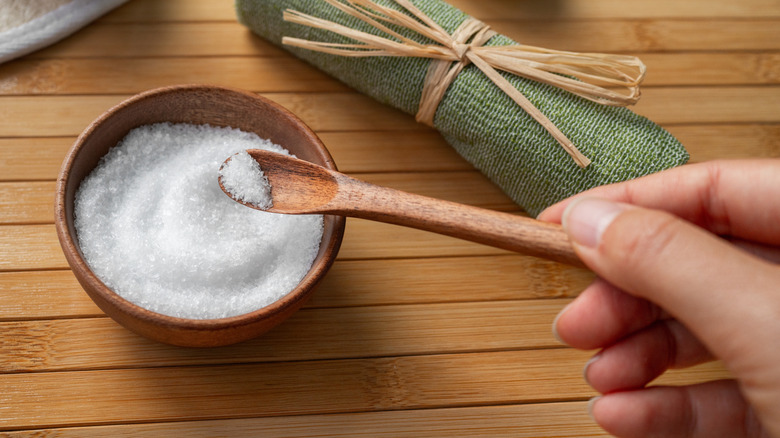
Salt has many uses around the house, from adding savory flavor to your food in the kitchen to helping remove stains from clothing. But did you know it also has a place near your windows in winter? Condensation is one of those winter woes we all seem to have to deal with, even with brand-new windows. It's not your windows' fault; it's all about moisture and the air. It's cold outside and, hopefully, it's warm inside. The clash of those two temperatures will start fogging up your windows, and the more that fog builds, the more it turns into moisture that can run down the windows, along your walls, and onto the floor. It seems you can absorb condensation on your windows before dripping begins by placing a bowl of salt under them. Yes, it is a trick to help prevent window condensation without a humidifier.
While humidity is generally lower in the cold winter months in snow-covered regions with freezing temperatures, it's not entirely absent. Additionally, the temperature difference between indoors and outdoors can affect humidity levels inside, particularly at your windows. To address the condensation this imbalance causes on your windows, place a bowl of salt (rock or table salt) on your windowsill. You'll want one medium bowl per window and a couple of bowls for large ones, such as picture windows. By removing moisture in the air with salt, you not only help prevent water spots but also reduce foggy, ice-covered glass, giving you a better view of the beautiful snowfall when it comes. This is just one of many genius ways to use salt around the house.
How that bowl of salt is working
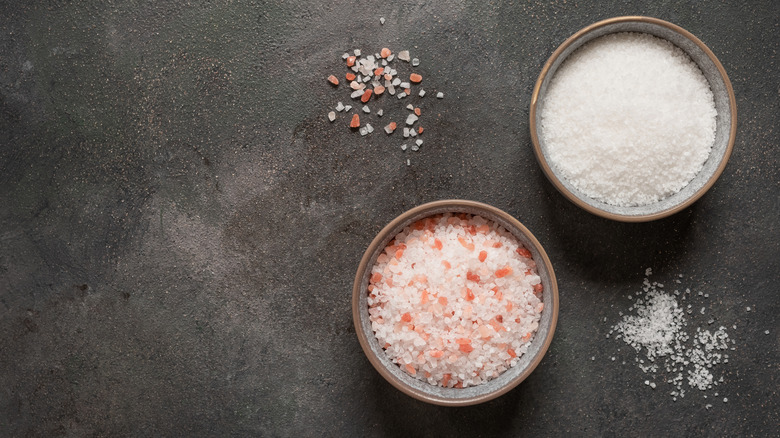
Salt functions as a desiccant, similar to packets that absorb moisture, or to plastic bags or containers with plastic-looking pebbles in them that people keep in their basements to keep items dry. Desiccants are drying agents, usually made from materials such as silica gel (silicon dioxide), which is found in sand. They're the same in the fact that they both absorb moisture, but salt attracts moisture, and you don't even have to do anything to help it along. Proof of this is in your salt shaker, if you've ever noticed our salt clumping whenever you try to use it. It's salt's hygroscopic tendencies that sucks moisture in whenever there is some humidity in the air.
While salt will begin absorbing moisture from the air at any humidity level, you won't see noticeable amounts unless the humidity is over 74%. That's not likely to be a problem in the winter. However, it will still absorb small quantities, so it doesn't hurt to experiment with this trick and see if it works for you. Since you're not trying to remove humidity, but rather limit condensation, and salt is, again, a natural desiccant, it could still be helpful in the home. Check it every few days to see if the salt has begun to clump, which means it's done its job, and you should put out some fresh salt. Rather than throwing out our old salt that has some moisture, consider the many ways you can use salt to clean your home.