

How To Avoid Panic Decluttering — And Make Lasting Progress Instead

We have all been there. You open closet doors and see bags and shoes accumulating on the floor, mail you need to sort through is stacking up on a counter somewhere, and kitchen drawers have become a dumping ground for various items that you definitely meant to find a more intentional place for. Whether it's a particularly busy time of year or regularly cleaning out your home just isn't fitting into your schedule, eventually, you hit a wall. Maybe because guests are coming over, or the mess is getting to be overwhelming, or that deadline you gave yourself is looming. The stress and frustration wear you down, and you start pulling stuff out of drawers and closets with no idea how you plan to reorganize any of it. You may even start making hasty decisions and tossing items with no plan — items you may need later. Does any of this sound familiar?
This process is called panic decluttering — a rushed job of tidying up that usually leads to regret. Often, when you start decluttering in this manner, the intentions are good. But while panic decluttering provides temporary relief, it isn't actually a long-term solution to your problem. Whether it's coming from the pressure you feel for your home to look a certain way or a genuine need to tackle the chaos of your belongings, the only real solution is to be intentional with your approach. Since you'll have to deal with the mess eventually, it might be time to develop strategies that work best for decluttering your home. So instead of getting frantic and trying to get rid of things without intention, look for easy habits to adopt for a clutter-free home.
How to make lasting progress
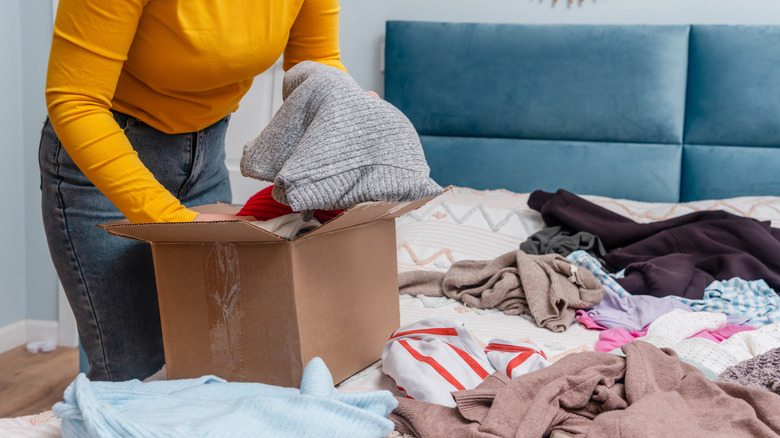
You can start building these habits by incorporating small, daily resets into your routine. If you spend five to ten minutes tidying up smaller objects, purging items, or returning them to their proper place, you can help avoid a bigger mess piling up later. Something as simple as clearing kitchen counters can prevent panic decluttering later. This idea extends to how you handle items that regularly rotate into your daily routine. Sometimes we set these kinds of items in a temporary place, planning on putting them away later for whatever reason. But over time, the temporary home becomes cluttered with items you forgot to put away. If you can get in the habit of handling each small task immediately by putting each item back in its proper place, it reduces the chance of major clutter later.
Panic decluttering can also be a response to too much stuff coming into your home in a short period of time. Especially in today's world, where many companies offer free 2-day shipping, purchases, along with their shipping containers, can easily become overwhelming. Being mindful of what you are buying and knowing where you will put items when they arrive can help you practice mindful consumption and prevent clutter before it starts. You can also schedule regular, low-pressure decluttering projects into your free time. Choosing one drawer, closet, or shelf to work on at a time can help you feel like you're making progress and managing your clutter without becoming emotionally overwhelmed. When you're looking to make your home more organized, small changes will make lasting progress way more than frantic bursts of decluttering ever will.