

The Clever Snow Blower Trick That'll Help Remove Standing Water
We may receive a commission on purchases made from links.
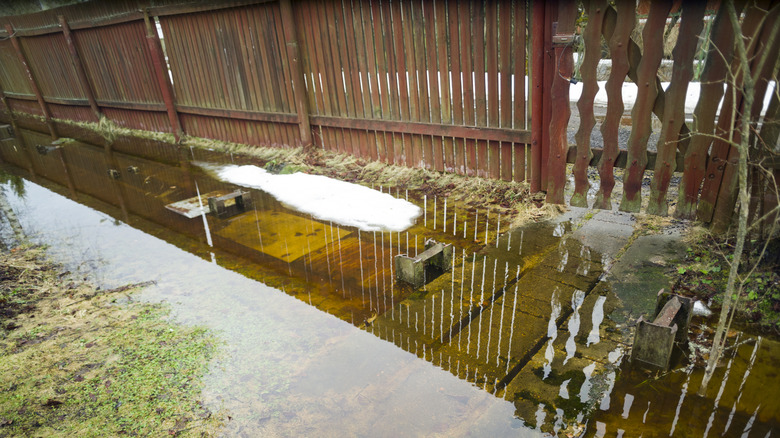
Standing water pooled in your yard or driveway can be more than just an eyesore — it can be a health and safety risk. There are all kinds of methods you can try to clear the water away. You could soak it up with an absorbent material, such as sand. You could use a shovel to dig a hole and fill it with gravel, creating a DIY French drain. Or, of course, you could spend a bit of money and hire a professional landscaper to fix the issue. Do you have a snow blower in your garden shed or garage? This nifty tool is a fast, convenient option for removing standing water.
Although snowblowers aren't manufactured for water removal, they can easily tackle water just as they do snow. Snow blowers are designed to handle wet substances, so you won't risk damage — to the tool or yourself. All you need to do is take the blower over the pool of water, switch it on, and point the chute wherever you want the collected and expelled water to go. Voilà! You just found yourself one of the easiest ways to remove standing water from your yard (without hiring a pro).
Why get rid of standing water in your yard at all? Flooded areas pose significant risks to your property and your health. If left untreated, the boggy ground can quickly become a hotspot for breeding mosquitoes and other pests, which may bring in a host of diseases. The water may leach underneath your house, damaging the foundation or building materials. Mold and mildew proliferate in damp conditions, rotting framing or triggering allergies in some people. In your yard, standing water kills grass and compacts soil. Don't wait for the sun to dry up the puddles. Grab your snow blower instead.
Why snow blowers are a useful tool for removing standing water
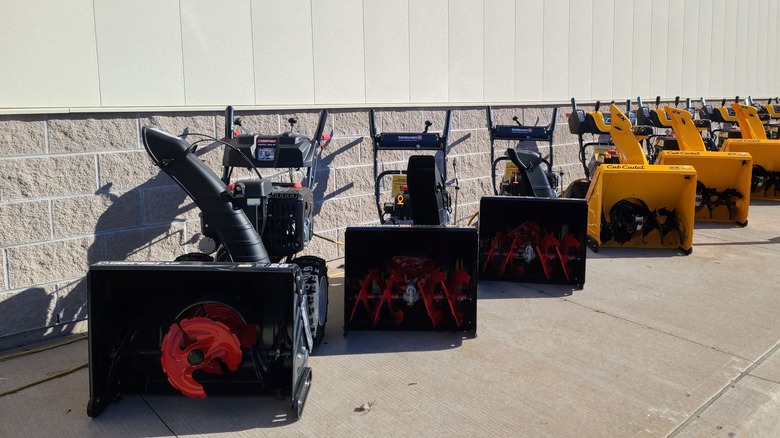
A snow blower has two primary components: an auger to pull in snow from your sidewalks and an impeller to throw it out. Stage one snow blowers do not have an impeller, whereas stage three machines have an additional accelerator to increase speed. If you own a standard stage two snow blower, like Craftsman's popular two-stage gas snow blower, it likely works by collecting the snow in the housing and directing it to the impeller. Once there, the machine breaks the snow down and throws it out of the chute. If it works on slushy wet snow, it can do the same for standing water.
In fact, there's direct evidence of snow blowers being used in this way. For example, when floodwaters wreaked havoc in Ile-Bizard, Canada in 2019, local authorities turned snow blowers into makeshift pumps to remove floodwaters from critical areas (per CBC). Snow blowers are great for clearing up snow, and as such are typically only used in winter. Most of the year, they're sitting idle in your garden shed or garage. Many people refrain from buying one because it only snows for a few months in most regions. Holding onto a snow blower year-round may seem like a low-return investment. Using this tough piece of machinery for water clearing means you can get your money's worth from it.
How to get rid of standing water with a snow blower and precautions to take
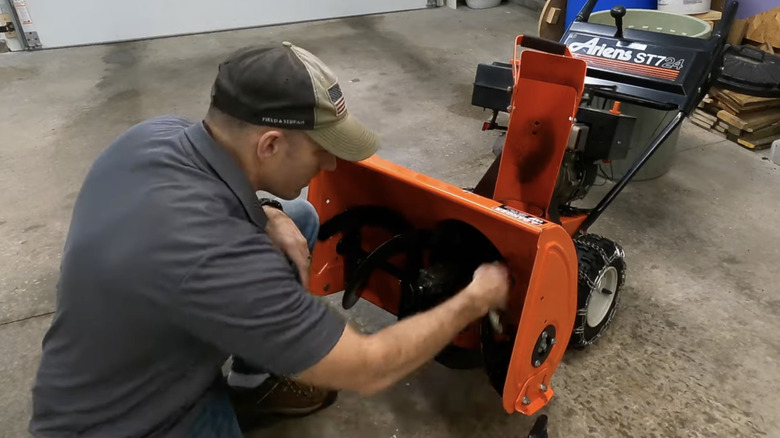
If you have a stage two snow blower, wheel it beside your patch of pooling water. Take a bucket or tub with you to collect the water thrown out of the chute. Snow blowers can also pump out rocks — along with water or snow — at speed, so make sure the chute points away from populated parts of your yard. Next, switch on the auger, which sucks up the water, and the impeller, which throws it out of the chute. Disable the traction drive. You don't need to move the snow blower as you would when removing snow from, say, your driveway or the sidewalk. Then just sit back and watch the machine save you hours of hard water-removal work.
Having said that, there are some standard snow blower safety tips to keep in mind — even if you're moving water rather than snow. If the impeller gets clogged with wet debris, as it's prone to do, always stop the engine before cleaning it. Some electric snow blower manufacturers warn against using their machines near water because of the risk of electric shock. Consult the manual that came with your machine before using it as a water pump. Snow blowers are primarily designed to remove snow, not water. If you're dealing with a large area of standing water or need to clear water often, you're better off investing in a Cleartide Submersible Sump Pump or similar water pump. Furthermore, if water is constantly pooling in your yard, you may be dealing with a more serious issue, like poor drainage. You'll need to find the root cause of the symptom and get it fixed.