

13 Home Design Trends That Are Dating Your Home
We may receive a commission on purchases made from links.
Interior design trends just don't last like they used to. In the past, these fads stayed around for longer periods because styles slowly evolved and good furniture stood strong for decades (see that overstuffed sofa in your grandma's living room). But fast furniture and more easily swappable finishes, paired with the rise of social media, changed all of that. Now interior design trends, like gray floors and jewel-toned upholstery, can emerge quickly and find their way onto Wayfair or Amazon in a matter of weeks.
But a quickness to adopt these trends may be coming back to bite buyers, as some of them are now making their homes look dated. However, there are some ways to lessen the impact of this, such as painting the cabinets in an all-white kitchen. But the easiest way to avoid being trapped with outdated looks in the future is to microdose them. It may be tempting to invest in that jewel-toned sofa. However, opting for a sapphire throw pillow will allow you to enjoy what's trending without investing a ton in a short-lived look. If you'd like to make your home more timeless, learn about the trends that are dating its vibe and how modernize it instead.
Shiplap walls look dated as the farmhouse fad fades
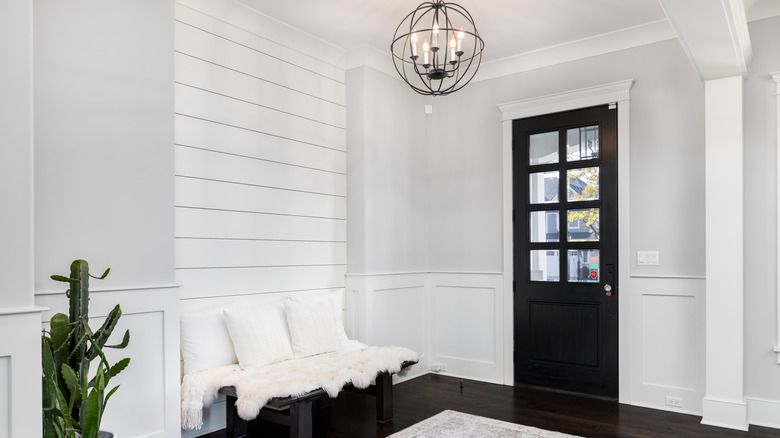
There's a reason that shiplap walls have been trending for so long. The material's versatility to work with modern farmhouse and cozy cottage styles has made it a go-to. Homeowners and interior designers have used it as a way to add architectural detail to a space beyond paint or wallpaper. Since it began trending with the modern farmhouse style, designers have come up with all sorts of creative places to use shiplap in the home, from bathrooms to foyers.
Now that farmhouse decor is going out of style, shiplap walls are also looking more dated. Plus, the thicker boards can feel clunky and oppressive, especially in small spaces. However, removing them can be difficult and leave you with lots of drywall repairs. So if that's not an option, coating them with a bold accent color such as dark teal or reddish brown can revitalize the look and move them towards a more contemporary style. If you're still craving a textural accent wall, an easy-to-remove option like Zeeko's Peel-and-Stick Embossed Wallpaper can also liven up a room.
Gray walls lose momentum as the go-to neutral
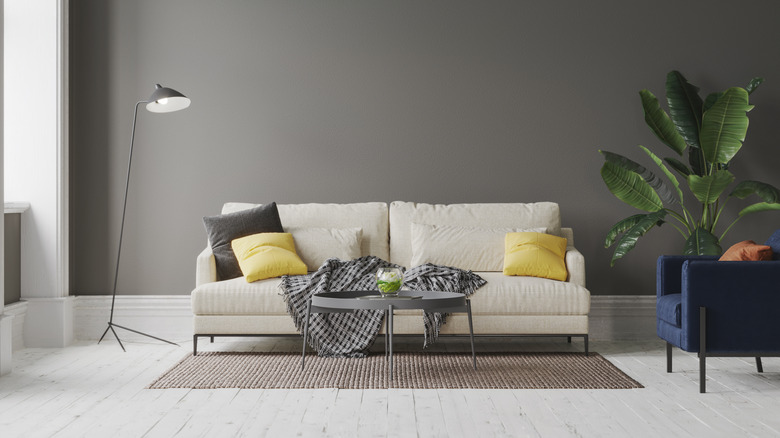
If you've shopped for a home recently, then there's a good chance you faced gray wall overload. It's all part of the cycle of neutrals. These neutrals (like white, beige, brown, black, and gray) never completely go out of style and function a little differently than other trends. They all remain consistently popular, but every few years, one of them emerges as the favorite. Most recently, gray has been the top neutral, thanks to its Millennial support. As more of the generation bought their first homes, some sellers painted their walls gray to cater to this up-and-coming cohort.
After so many years of domination, gray walls are now dating homes, and it's easy to see why. Although light gray walls can make for a relaxing home, they can also feel oppressive and gloomy. Plus, when every wall is gray, it looks monotonous instead of elegant. Luckily, fixing this trend requires just some time, a ladder, and a few cans of paint, such as Behr's White Moderne, Valspar's Warm Eucalyptus, or any of these other trendy paint colors for 2026.
Barn doors are overdone and lack functionality
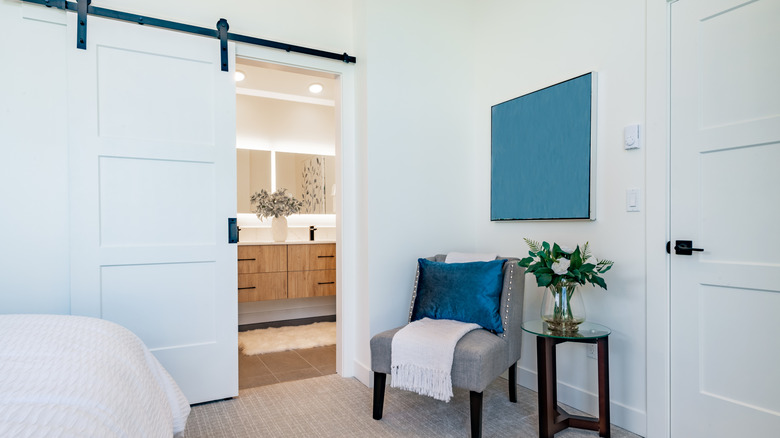
Nothing symbolized the modern farmhouse trend more than sliding barn doors in the home. They added instant character to a space, which meant a lot of extra decor wasn't needed, and they could be as bold or minimal as the homeowners wanted. Plus, as cool as this trend seemed, it had some drawbacks. The wheels could come off the tracks, and spaces between the walls and floor also made it difficult to block out sound from other rooms.
Now, as the modern farmhouse style fades, barn doors will be looking more dated than ever in homes. If getting rid of them isn't an option, painting them can refresh the space. The hardware and accent metals can also be changed out or removed altogether. Vintage or antique hardware can also elevate the style and make it feel more unique. For those looking to swap them out, consider the double French-door look for larger doorways. For bedrooms, offices, and other smaller entryways, a pocket door looks sleek and never goes out of style. Some homeowners are even going for bold bookcase doors to hide closets and other rooms, which can be both a fun and practical option.
All-white kitchens look bland and can be high-maintenance
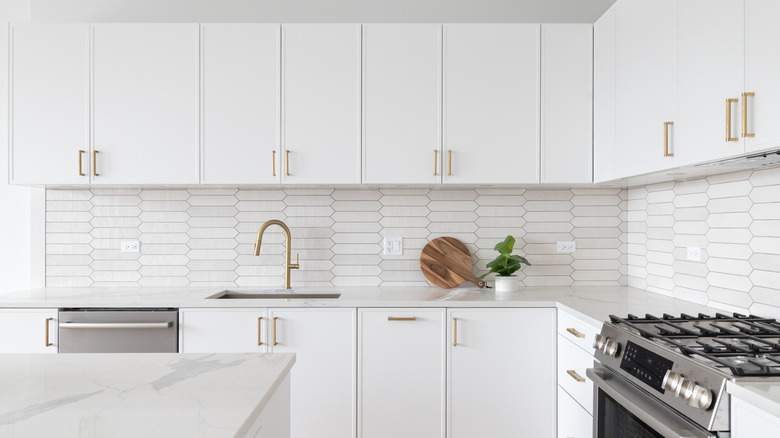
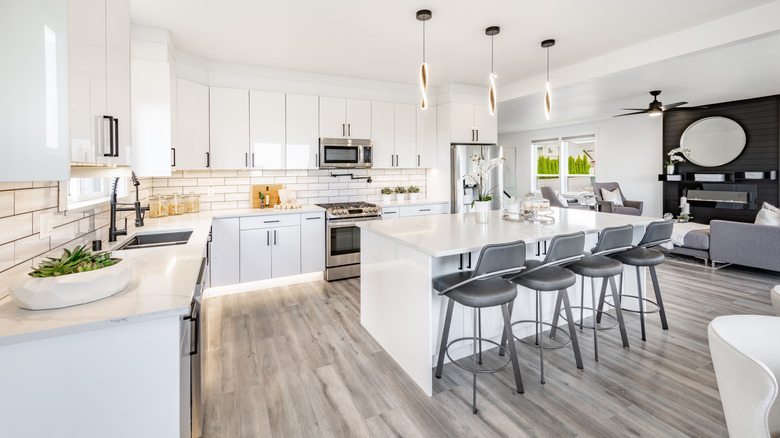
Few designs photograph as well as an all-white kitchen. However, in person, the color scheme (or lack thereof) can fall flat and feel outdated. The airy vibe may make the space appear larger, but it can make the heart of the home feel less-than-cozy. Plus, they require a ton of upkeep and cleaning to keep the white surfaces shining and stain-free.
In 2026, many will see all-white kitchens as overdone and sterile, but there are options for homeowners to update these spaces. Kitchen cabinets can be painted in just one day, and shades of earthy green or deep burgundy will pop next year. Backsplash can also be redone or replaced with a more colorful option using a DIY product like Tiwoos Peel-and-Stick Tile Sheets. Swapping out faucets, hardware, and textiles can also give the kitchen a fresh update and visually break up the white surfaces.
Gray flooring tips the scales on monochromatic overload
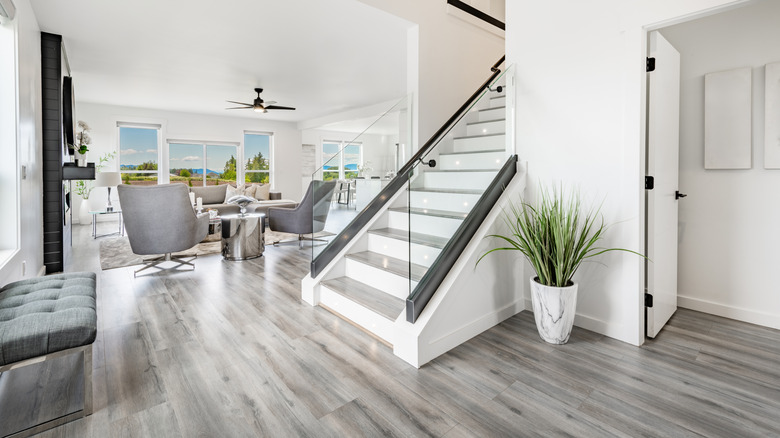
Gray has really done a number on interior design trends over the last few years. When the shade crept down from the walls to cover the floors as well, the combination proved to be too much, pushing the color scheme to look dated. Gray flooring may have been part of the larger neutral trend, but it looks somewhat unnatural as a flooring option.
For many homeowners, painting the walls will be much easier than removing the floors, and it can still lessen the neutral's impact. Just take a hard look at the undertones in your flooring and choose a warmer paint that aligns with them. For example, if they have yellow undertones, coat your walls in a buttery cream. Textiles that combine grey with warm tones, like Toneed's Abstract Area Rug, can help balance the look. Natural elements like wood furniture and bamboo window shades will also break up the cooler surfaces.
Open shelving looks cool, but poses major limits
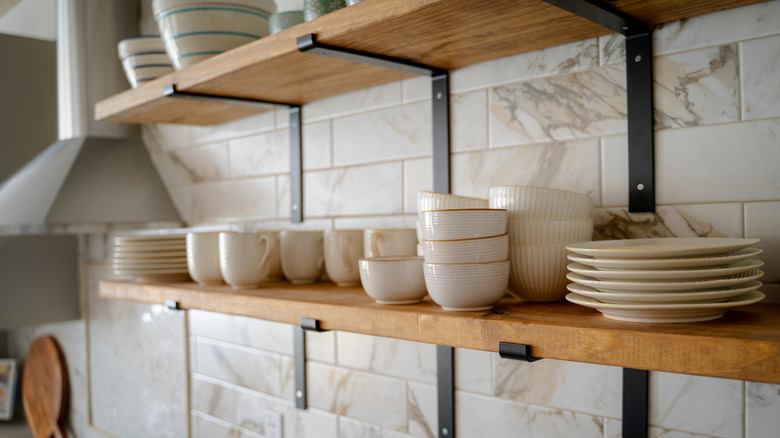
Open shelving seemed like a cool design idea in theory. Instead of hiding the nice cookware behind cabinet doors, open shelves allowed homeowners to display stylish dishes or glassware. Many everyday staples like coffee, tea, and sugar could be kept in decorative jars for easy access. This trend, however, started to feel dated once the practicality of these shelves set in. Plus, using them as display shelves means they need regular dusting.
Homeowners can replace open shelves with cabinets, but it's an expensive job and might not work for every kitchen. Other options are out there, though. Instead of storing plates or cups, use large canisters for coffee, flour, and other kitchen staples. Or, opt for wooden crates or metal bins for more concealed storage. If you have enough space in your cabinets to move the displayed dishes inside, consider turning the open shelves into decorative displays for your cookbooks and a few pieces of decor.
Edison light bulbs are dimming in popularity

Edison light bulbs caused a splash when designers first started using them in homes. They instantly gave spaces that cool, modern farmhouse or industrial feel while looking interesting compared with a plain old light bulb. Suddenly, table lamps didn't need lampshades, and ceiling fixtures incorporated Edison bulbs as part of the design. At first glance, it looked like these bulbs would be dominating the design conversation for a long time, especially as long as farmhouse styles remained popular.
However, this aesthetic is fading as quickly as it surged in popularity. And, because of the transparent design, these bulbs can be extremely bright and tough to look at. This can be even worse in a whole room filled with them. However, there are a lot of light fixtures designed for exposed Edison bulbs. So, homeowners could swap these bulbs for others in interesting shapes and shades, such as these Stained Glass Bulbs, that still make an illuminating statement.
Mid-century modern furniture can look themed when overdone
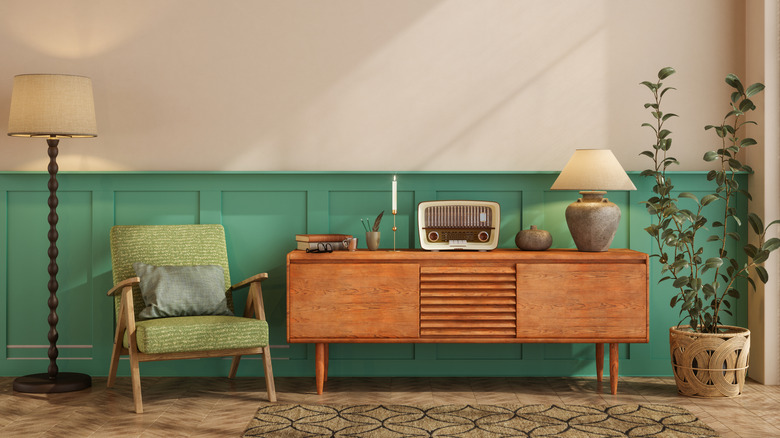
The hit TV show "Mad Men" may have sparked the most recent mid-century modern furniture craze, but the trend long outlived the show, which ended in 2015. Fueled by its Millennial fanbase, the mid-century modern furniture trend kept going in part because retailers were so keen to capture this new, emerging market. But in 2026, a house filled with mid-century modern furniture is bound to look dated.
However, you have some easy options available to make your home look a little more varied and interesting. Mid-century pairs very well with art deco, bohemian, and Scandinavian designs. So, mixing in some decor like Flber's Macrame Wall Hanging or this Keebik's Art Deco Pillow Covers will make the room feel a little less matchy-matchy. While buying a new sofa or media console may be too much, swapping out the coffee table or rug could also help balance the mid-century vibe.
Farmhouse sinks fail to meet functionality expectations
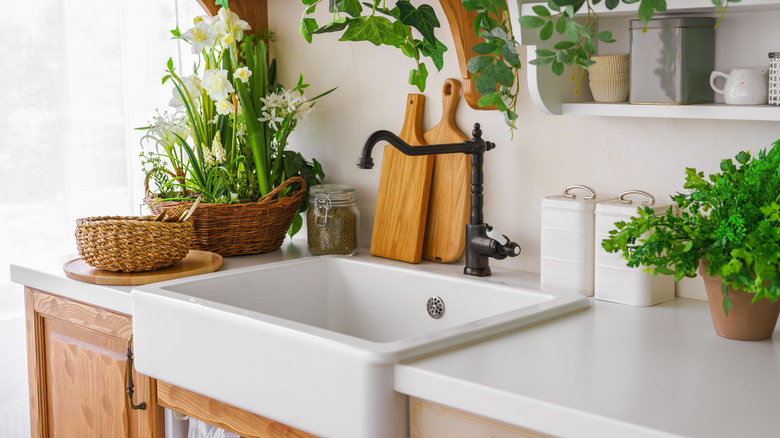
Farmhouse sinks (the wide, exposed-front sinks that appeared on tons of Instagram accounts) have remained trendy in kitchens not only because of their connection to that style, but also because of their perceived functionality. Now as that style loses its popularity, the matte black and white combo is looking dated, and homeowners are finding that it doesn't blend as easily into other design aesthetics. There are also some hidden downsides to farmhouse sinks, such as draining and sizing difficulties, that can make them impractical. Plus, the exposed fronts are also prone to scratches and dents.
Some cooks may opt to replace these sinks altogether. Exposed-front stainless steel and stone options have unique looks, and they likely won't require new cabinets or countertops. For others who keep them, changing out matte black hardware for a glam look, like Havin's Gold Kitchen Faucet, can provide an inexpensive makeover. Although it will depend on the material of the sink, painting the surface may also give you an updated look.
Jewel-toned upholstery can't compete with neutrals
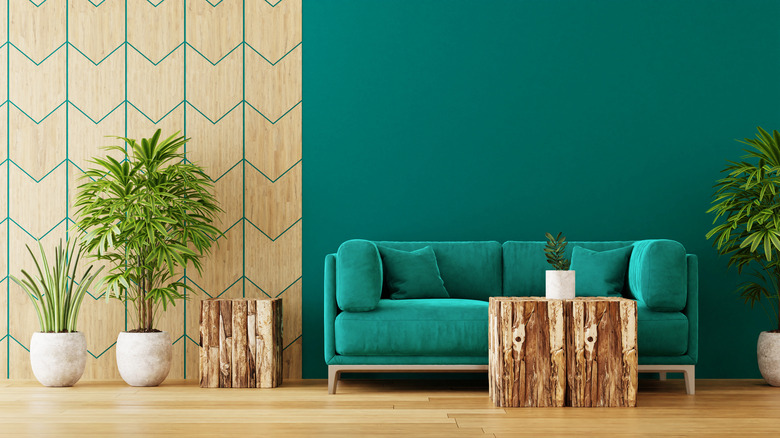
Many interior designers will advise clients to choose a neutral color for their living room sofa. This will allow them to paint walls, change colors, and add new on-trend decor without worrying about matching the upholstery. However, as jewel-toned pieces started showing up everywhere on social media, that advice went out the window for some. Those emerald and sapphire sofas looked polished and sophisticated on Instagram, but buyers quickly learned the downsides. Because the couch dominates the living room, the decor needs to be planned around it. And unlike a gray or beige sofa, emerald doesn't quite match with everything.
If replacing your vivid sofa isn't an option, reupholstering it in a more versatile fabric may be more doable. Or, conceal the bold color with a removable, neutral-hued option like Xineage's Sofa Slipcover. If you still want pops of jewel tones, add bold linens like Greenland Home's Quilted Throw.
Open-concept homes are noisy and can lack character
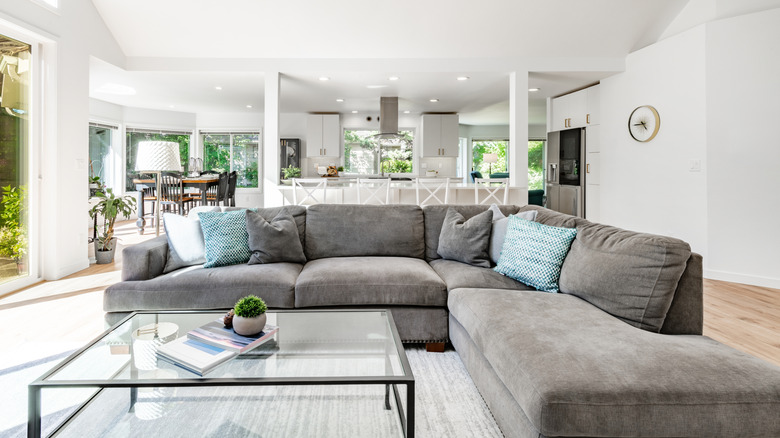
On paper, open-concept homes seemed like the perfect way to bring families together and make entertaining a breeze. The design style brought down the walls between the kitchen, dining room, and living spaces, making them all feel connected. It meant that a parent in the kitchen could keep an eye on kids in the living room while preparing dinner. Hosts who were busy plating appetizers and taking hot food out of the oven didn't need to feel disconnected from the party. Everyone could congregate together in one large area.
The idea of the open-concept design may have seemed great, but now it's sounding dated in 2026 as the flaws come through. The open space meant that no one room had sound buffers. A parent trying to answer a work call in the kitchen would have to contend with the noise from the kids watching TV, no matter how loud the TV actually was. Smells also traveled. The scent of cooked salmon didn't stay in the kitchen. It followed the family when they sat at the dinner table and then onto the sofa for a movie night. The design also made it difficult to entertain with diverse age groups. Kids wanting to play loud video games would make it harder for the adults having a conversation to hear each other.
A renovation would fix many of these issues, but they're expensive and time consuming. Other options may help in the meantime. Room dividers can help separate spaces and add a little bit of privacy when needed. Large furniture, such as bookcases or cabinets, can also block off spaces in open-concept homes. They can also act as better sound buffers as they're much heavier than most room dividers.
Painted brick lacks the staying power of a more natural look
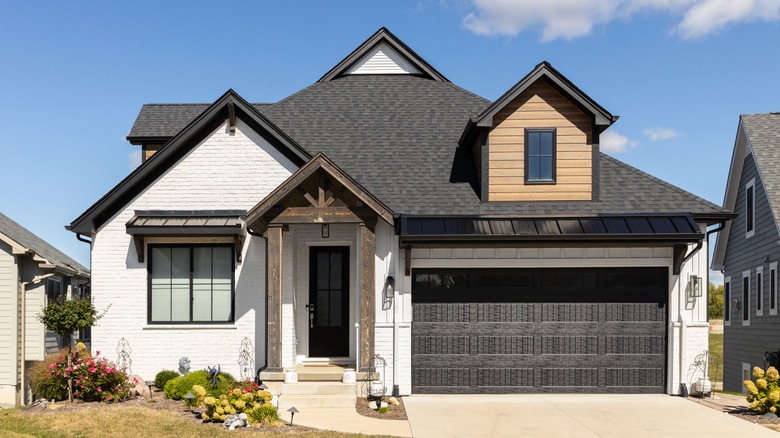
Brick remains one of the top building materials because of its durability, and it has a texture and color variance all its own. However, not all designers and homeowners agreed. For the last few years, painted brick has been a hit with both exteriors and interiors, turning reddish brown and tan bricks mostly black and white. This often went along with the modern farmhouse craze, but now, as that style fades, homeowners are left with painted brick that looks outdated.
Homeowners do have options to banish this trend. A paint stripper can be used on fireplaces and interior and exterior walls, but it's a tough job that often takes a long time and likely won't remove all of the paint. There is also a chance that removing the paint will expose cracks and crumbling brick underneath it, so consider contacting a professional before getting to work. If unpainted brick is just too boring, there are alternatives that are more evergreen as far as trends go. A stain will penetrate the brick itself, not just sit on top of it like paint, and change its color in a more subtle way. Whitewashing can also modernize the look, and limewashing can still allow some of the variance to subtly shine.
Light oak finishes give way to walnut and maple
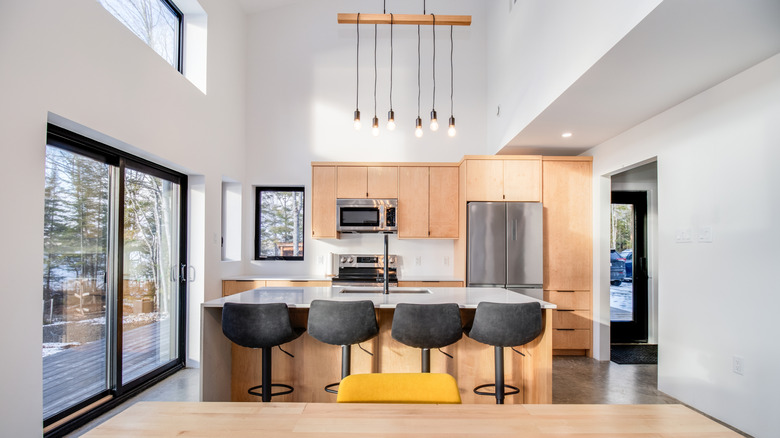
Light oak finishes became popular in the last few years for similar reasons as the all-white kitchen. They made spaces appear bright and sleek. However, they don't hide dirt or cooking smears. And the trend didn't stay in the kitchen. When paired with bookcases and media consoles also in light oak, the effect is just too boring — and now dated.
As light oak fades, darker finishes such as walnut and maple are starting to reemerge in popularity. Refinishing light oak floors is possible, but there are simpler ways to break up the color scheme. Cabinets can be stripped and stained in a new finish, which will remedy the overly matchy look in the kitchen. In living spaces, consoles and bookcases can also be restained or even painted in deeper hues to create contrast with other surfaces.