

8 Exterior Door Hardware Upgrades That Will Make Your Home Safer
We may receive a commission on purchases made from links.
Your home's first line of defense isn't a security system or a camera. It's your front door. No matter how strong your walls, how sophisticated your monitoring equipment, or how quiet your neighborhood, weak, aging, or outdated exterior door hardware can fail. And that may make your home an easy target for break-ins. Many homeowners turn to alarms and smart devices when choosing the best security system for their home. By doing that, they overlook simple, physical upgrades that can dramatically improve safety — from door security bars, reinforcement locks, and floor barricades to deadbolts, door jammers, and chain locks.
You don't always need a state-of-the-art smart security system to keep your family safe. Small changes to your locks, door frames, hinges, and reinforcement hardware can significantly increase resistance against forced entry. These relatively everyday items that you can place on your door to keep your home safer also improve the durability of your door and offer peace of mind. From strengthening vulnerable latch points to upgrading lock hardware, the right exterior door improvements can deter intruders attempting to get inside. Wherever you live, investing in reliable door hardware is one of the most practical and cost-effective ways to protect your family and belongings.
Door security bars
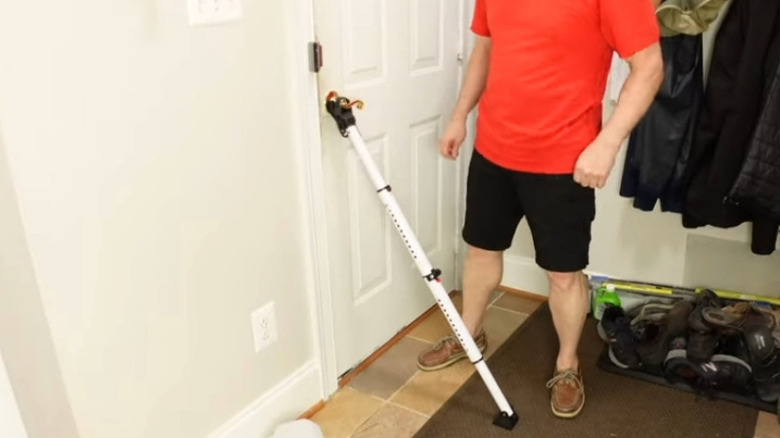
Most homes have an inward-swinging front door, so door security bars are an effective security solution. These simple tools hook onto the doorknob and take advantage of resistance to prevent someone from opening the door — even with a lot of force. Avoid bars with plastic components or weak safety-pin designs. They can fail under pressure. The most reliable models are constructed from durable aluminum and feature interlocking, slide-through safety pins. You can install a door security bar quietly in seconds; you don't need to modify your door. Quick-release models comply with National Fire Protection Association (NFPA) codes.
Reinforcement plates
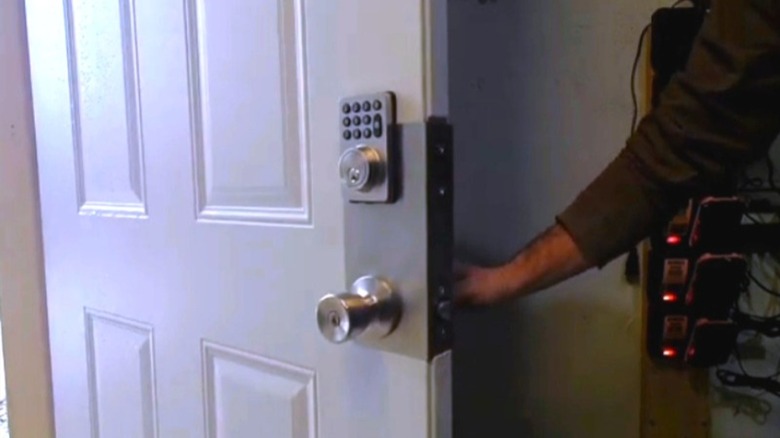
Reinforcement plates are a simple way to improve home security. They strengthen the latch, which is typically the most vulnerable point on a front door, especially if it's made from wood. Reinforcement plates are three-sided metal plates that you install around your door's latch to deter lock tampering. This extra layer of protection helps reduce the chance someone can kick in your door and use brute force to open it. They're easy to install, relatively inexpensive, and you can match them to your existing hardware for a seamless look.
Reinforcement locks
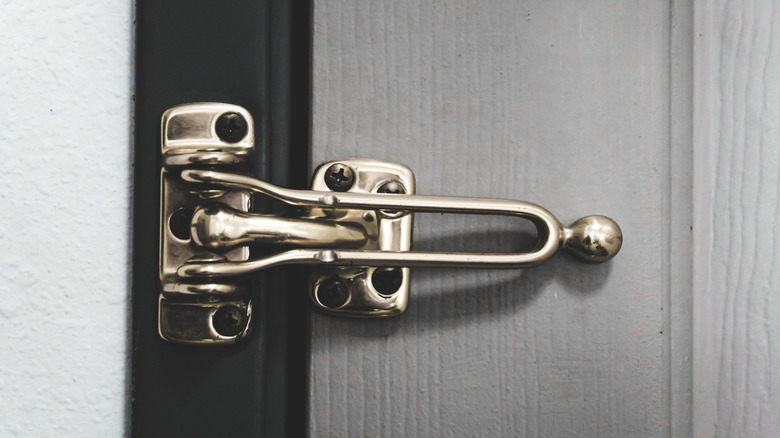
A reinforcement lock increases the protection of a traditional lock or even a reinforcement plate. Installed onto the front door and the frame, a reinforcement lock features a latch arm that will hold the door shut even when unlocked or ajar. With their intuitive design, reinforcement locks are affordable and easy for DIYers to install. Keep in mind that you may accidentally engage the latch if you bump the fixture, and the lock can also be removed with excessive force. Durability varies across products; expect the mechanism to eventually wear down and require replacement.
Deadbolts
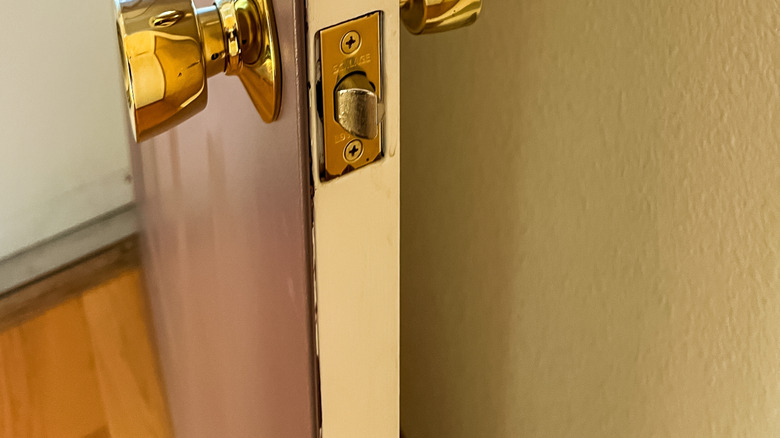
If you want a simple yet effective home security upgrade, it's best to put a deadbolt lock on your door. To secure the front door, a solid metal bolt slides into the frame. They're quiet and withstand significant force. Deadbolt locks fit broadly into two categories: traditional and electronic. You use a key to open traditional deadbolts from the outside and a thumb turn on the inside, which can slow access during emergencies. Electronic deadbolts eliminate the need for a physical key and are instead opened using a keypad — as long as you remember your code.
Chain locks
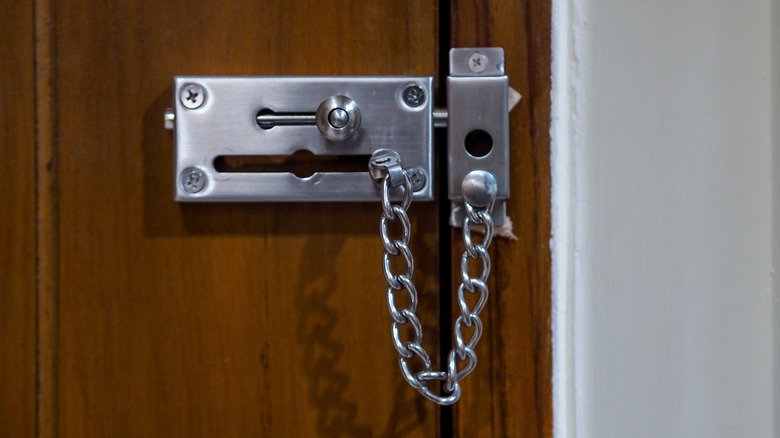
Chain locks are commonly found in residential homes. A short chain attached to the door frame connects to a track mounted on the door, limiting how far the door can open. The homeowner can partially open the door to see who's outside while maintaining a basic level of security. While affordable and simple to install, chain locks aren't without downsides. The chain is relatively weak; a determined intruder could cut or break it. Never use a chain lock on its own — consider it an additional layer of security alongside a deadbolt or reinforcement plate.
Door jammers
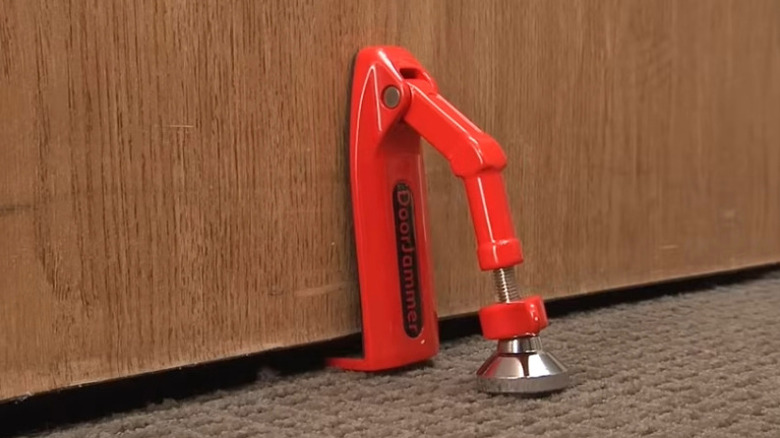
A door jammer prevents your front door from being kicked in. You wedge one arm firmly underneath the door; the other arm rests on the floor. These devices are user-friendly, requiring no installation or drilling, and extremely affordable. For example, a Mimiracle Portable Door Lock costs about $19. However, door jammers only secure the bottom of the door. If someone tries to force the middle or top of the door open, they may still be able to get inside. They're also relatively bulky devices; finding a place to store one when it's not in use can be challenging.
Mid-mount barricades
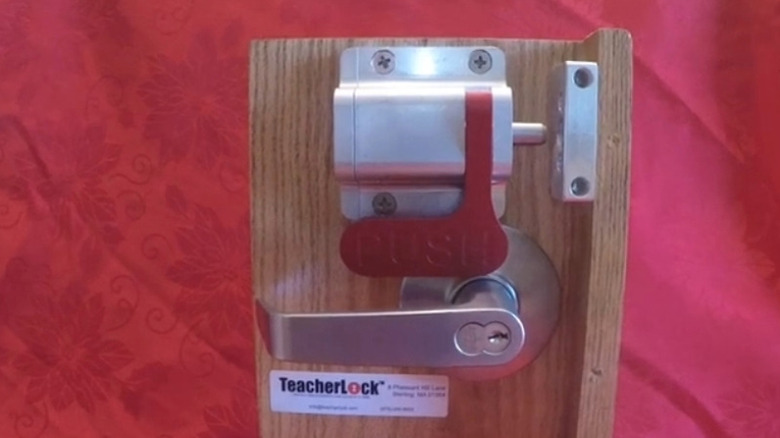
Mid-mount barricades are most commonly used during emergency lockdowns. However, they have their place in home security, too. These hefty locks are installed on the inside of a front door, near the traditional lock. They function similarly to a deadbolt but are inaccessible from the outside — there's no external keyhole or keypad. They are designed to operate quietly, can withstand significant force, and can be activated in seconds. It's worth noting, though, that a mid-mount barricade is only as effective as the strength of the door frame it's attached to.
Floor barricades
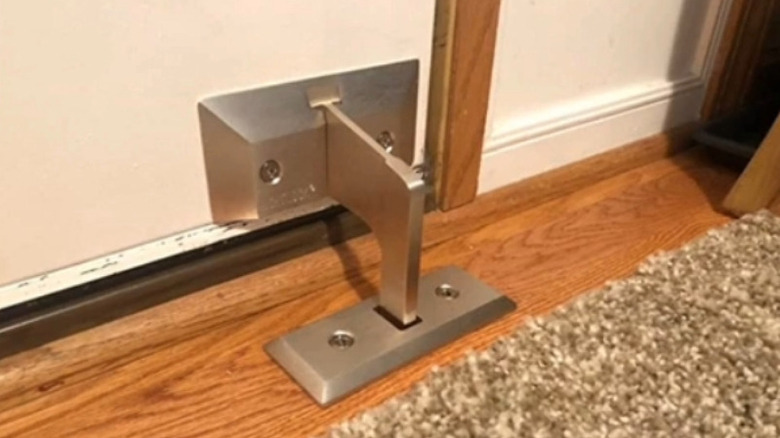
Floor barricades are made of two metal parts — an arm you screw inside the front door and a lock you screw into the floor. They operate similarly to a deadbolt, but secure the base of a door rather than the middle. Larifull Door Braces and similar barricades are easy to install, quiet, quick to activate, and capable of withstanding significant force. Like most other locks in this list, their effectiveness depends on the condition and strength of the door and floor. They also need to be vacuumed often to remove dust and dirt from the floor lock.