

What Starter Homes Will Look Like In 2026, According To A Real Estate Expert
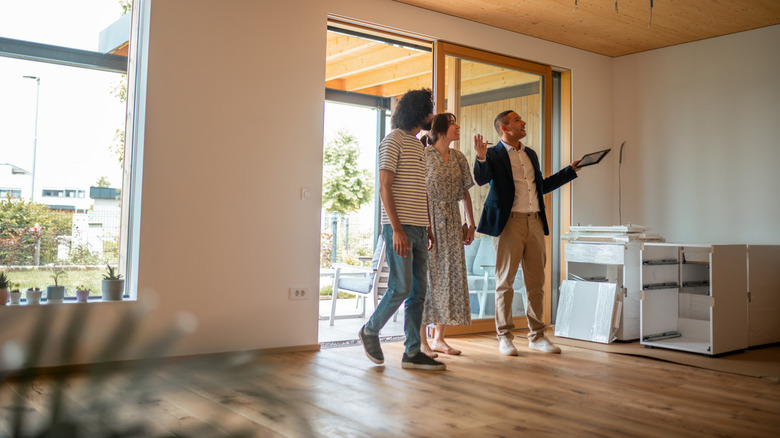
Typically, starter homes marked the starting point for individuals who wanted to slowly make their way toward their forever house. As such, they were usually budget-friendly, of a modest size, weren't always in tip-top shape, and weren't found in top neighborhoods. However, the narrative is changing in 2026, with them becoming more than a small-term lodging for families. To understand what those changes are and to help you choose the best starter home this year, House Digest sat down for an exclusive interview with Ryan Fitzgerald, a real estate expert and the owner of Raleigh Realty in North Carolina. Opening up about what the current definition for such properties is, he says, "In 2026, a starter home is less about being a short-term stepping stone and more about being a practical long-term first purchase."
This shift is happening mainly because "...many first-time buyers are approaching their purchase with the mindset that they may stay put longer, either by choice or necessity," he explains. As such, our expert feels that size isn't the most important primary factor today. "A starter home in 2026 is often defined by price relative to the local market, monthly affordability, and overall livability rather than square footage alone." According to him, starter homes are no longer limited to single-family units; they can be condos, townhomes, and duplexes. But this will depend on the property's location. Fitzgerald also feels that "Buyers are also more open to homes that need cosmetic updates as long as the structure, systems, and location make sense." This is why, the narrative around them "... has shifted from entry-level and temporary to manageable, flexible, and financially sustainable," he elaborates.
Misconceptions first-time homebuyers have in 2026 about starter homes

Per Fitzgerald, waiting around for the right time (when interest rates or property prices drop) is a common misconception among first-time homebuyers. Discussing why this strategy won't really work in 2026, he explains in his exclusive House Digest interview, "In reality, market conditions vary widely by region and neighborhood, and waiting can sometimes mean missing opportunities that fit both budget and lifestyle. Buying decisions today are more personal and situational than market-driven in the way people often assume." So, instead of patiently hanging back for the best time of year to buy a house, act when you feel ready.
Moreover, don't base your decisions solely on the construction age of a unit, cautions our expert. He continues, "Another misconception is that newer homes automatically mean lower ownership costs. Buyers are often surprised to learn that new construction can come with higher property taxes, HOA fees, and ongoing assessments, depending on the community." So, he advises that you should give comparatively older houses a fair chance. "Older homes, while sometimes requiring more maintenance, can offer more predictable expenses and better long-term value in established neighborhoods."
Fitzgerald also busts some myths around flexibility once you buy a house. He adds, "Many first-time buyers think buying a starter home locks them into one path. In reality, buyers in 2026 have more options than ever, including renting out a property later, refinancing if conditions improve, or using appreciation strategically." So, don't feel burdened by the prospect of choosing a house that'll work for you forever. Instead, stay in the present and pick a place that meets your requirements.
Features modern homebuyers look for in a starter home
Modern homebuyers are demanding more functionality from a space than before, reveals Fitzgerald. Illustrating how this requirement flows into the real world, he states in his House Digest exclusive, "Open or semi-open living areas that make smaller spaces feel larger are highly valued. Buyers want homes that flow well, allow for flexible furniture layouts, and support everyday living without wasted square footage." This is primarily because individuals have a limited amount of money set aside for a new home. So, they want to make the most out of each area.
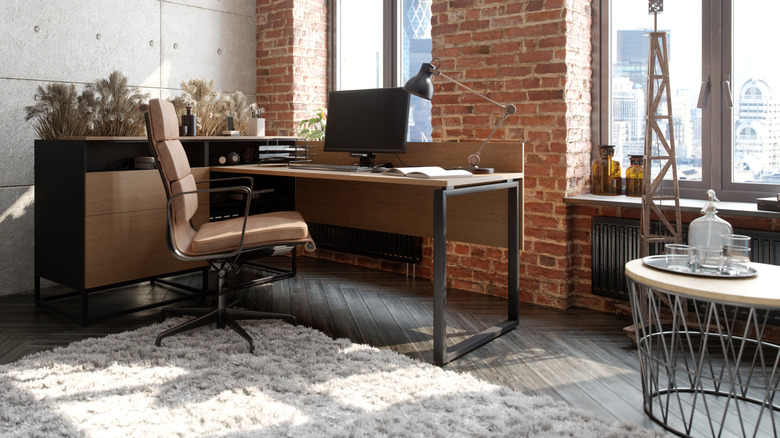
Additionally, a home office or, at the very least, an adjustable work setup is vital today. "This does not always mean a full home office, but buyers are looking for an extra room, nook, or finished area that can adapt to remote or hybrid work. Even buyers who are not working from home full-time see this as an important option for the future, especially as work patterns continue to evolve." In case the home you're interested in doesn't have one, make each square foot count by setting up a small workspace on your staircase landing to transform the space.
Current buyers are also quite passionate about energy efficiency and put a lot of stock into updated systems, notes Fitzgerald. Wondering why they're a priority in 2026? He expands, "Buyers are paying closer attention to insulation, windows, HVAC systems, and appliances because monthly operating costs matter more than ever. A home that is efficient and well-maintained provides peace of mind and helps buyers better predict their expenses, which is critical when stretching into homeownership for the first time."
Realistic expectations first-time buyers should have from their starter home

First off, keep in mind that starter homes are compact by nature and their design tends to be more practical, informs Fitzgerald. He relays in his House Digest exclusive, "Buyers should expect modest square footage, practical layouts, and fewer formal spaces. Dining rooms may double as offices, and spare bedrooms may serve multiple functions." Remember, they're built for function, so don't let the size discourage you from buying a property you otherwise like. Coming to the location, you have to be willing to compromise a little, warns our expert. "In many markets, buyers may need to choose between space and proximity. A starter home closer to employment centers or urban amenities may be smaller or attached, while more space may require a longer commute." So, determine your priority and make a choice accordingly.
"Buyers should also expect competition for well-priced homes, especially those that are move-in ready," he adds. Given this, he recommends having your finances sorted and being clear about your budget and non-negotiable requirements. Plus, consider how well a property will age in a few years. Fitzgerald urges, "Look at how the home could adapt over time, whether through small improvements, layout changes, or future use." Even though this might seem like extra work, this can pay off well. He agrees, "A home that works today and has potential tomorrow often ends up being a better purchase than one that feels perfect but offers little flexibility." In a nutshell, follow the important tips for first-time homebuyers, but "... remember that a starter home is about building a foundation, not finding perfection," our expert concludes.