

Say Goodbye To Your Muddy Gravel Driveway With These Must-Know Tips
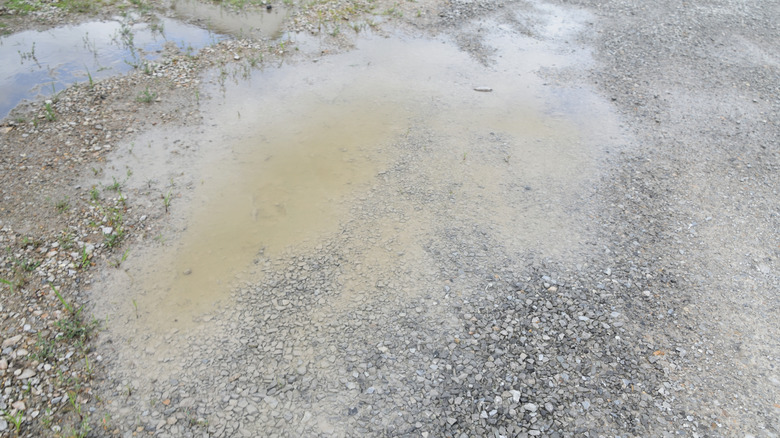
Rainwater and moisture are probably the biggest enemies of your house. Every time it rains heavily, there is a possibility of damage to your foundation, woodwork, walls, and driveways. Driveways, especially, are crucial for providing access to your home and need to be protected. Although there are mistakes people make when building out a gravel driveway, such as choosing the wrong type of crushed rock, constant wear and tear also make them susceptible to damage when it rains. The consequence: think mud-ridden shoes, broken car suspensions, potholes, permanent footprints all over the place, and an unsightly curb. While you can't do anything to stop the rain, there are ways to get your muddy gravel driveway fixed. Whether it is pouring some extra gravel on top for a quick fix, levelling mud with crushed rock, or getting to the bottom of the issue and fixing drainage, your driveway doesn't have to be a recipe for accidents or expenses for long.
Muddy driveways, if left untreated, can slowly cause costly headaches, both in terms of effort and expenses. First of all, having mud all over their front porch and entryway is no one's idea of an aesthetic home. Unfortunately, with a muddy gravel driveway, mud also eventually finds a way into your entrance, kills your curb appeal in the long run, and even gets inside your home. Mud also contains contaminants, which can be harmful to your family's health. Furthermore, you can also damage vehicles in a muddy driveway, especially if the mud lasts long enough to form ruts. With such dire consequences, you may eventually have to shell out a bit more money to get things back in order if you don't actively protect your driveway.
Add crushed rock into the mud (or a lot of gravel) for a quick fix
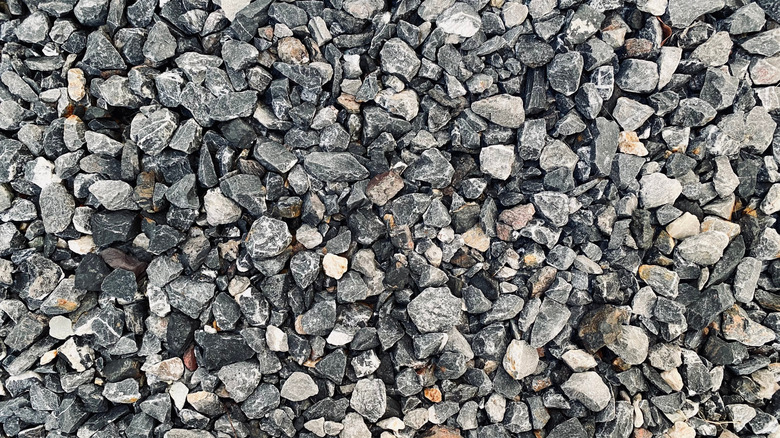
Simply adding more gravel to an existing driveway won't always solve your problems. The moment the rain returns, you might end up back at square one. Adding gravel in the driveway can only work as long as it forms a solid base for your vehicles to drive through. If the base is good enough, having more water is not a problem, since the vehicles have firm support underneath the water. Once you're done filling up muddy areas with gravel, you can also consider installing permeable pavers in your driveway. These pervious pavers can absorb heavy rainwater and provide an additional, even layer on top of the gravel.
One of the better ways to fix your muddy gravel driveway is to put some crushed rock into the mud, instead of gravel. However, you have to be careful during the process. The first thing you need to do is measure how deep the mud is — that is, how far it goes before it hits solid ground. This will determine both the size and the quantity of crushed rock you will need. The deeper the mud, the larger the crushed rock required to level the ground again. Once you determine the right size of the rock, pour enough to absorb the mud and settle on top. Once you're done, put some minus rock on top of the layer of larger rock to facilitate walking, driving, and other activities. The minus rock contains finer grades of rock that will settle into the bed of larger rocks beneath and compact it further.
Bad drainage and choice of gravel can be an issue as well
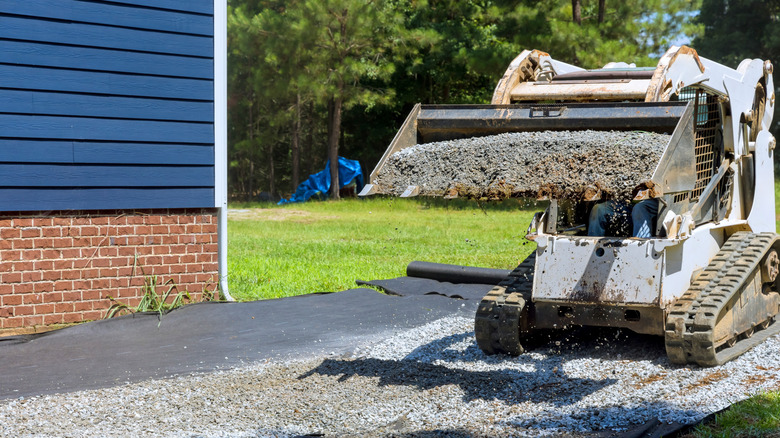
Having a muddy driveway can also be due to a deeper underlying issue with your drainage or the wrong choice of gravel. A gravel driveway offers features like permeability and low initial cost, but it is also high-maintenance and demands continuous raking to stay in shape. Therefore, a gravel driveway can be far more susceptible to getting muddy than asphalt or concrete driveways, since water cannot easily drain off as it does on a paved surface. If the drainage is not right or the quality of the gravel is not up to standard, water may have difficulty seeping into the ground. Low-quality gravel may also contain a lot of fine particles like clay or dirt that absorb moisture. If it rains heavily, gravel can also be washed away, exposing the soil underneath. Next thing you know, you're essentially walking through potholes.
To fix this permanently, you need to excavate all the soil that has soaked up water. Then work to improve the drainage of the underlying surface by compacting the soil. Only after you compact the soil underneath should you put the gravel on top. If the drainage isn't fixed first, you can get flooded with mud again. Choosing the best type of gravel (such as angular stone) for your driveway is a no-brainer. Adding about 12 to 18 inches of gravel should be enough, but the exact specifications depend on the grading of your area. This process will ensure that when rainwater falls on the driveway, it runs off the gravel, preventing the formation of mud, ruts, or potholes.