

Step Aside LED Lights, There's A New, Better Way To Brighten Up A Room
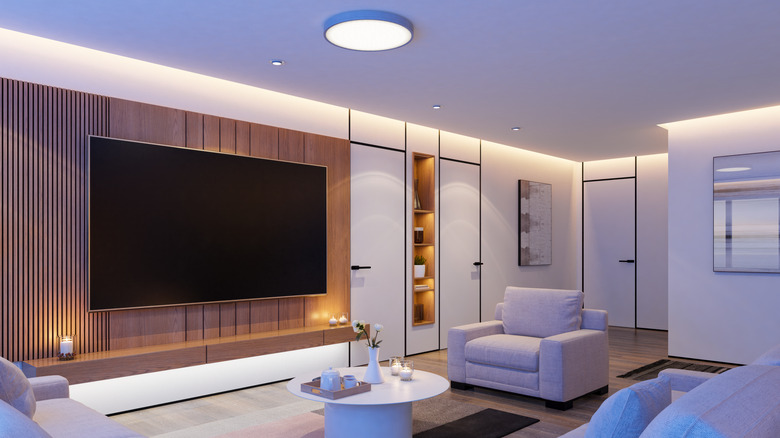
Over the past few decades, we have seen a lot of innovations in the lighting industry, including the transition from incandescent bulbs to fluorescents, all the way to LEDs (Light Emitting Diodes). These LEDs have completely changed the industry by boosting the energy efficiency of bulbs from a poor 10% in incandescent to around 80%. Although LEDs initially promised more than what they delivered –- some manufactures advertised a life span of 100,000 hours –- they are still your go-to option for lighting. But maybe not for long. A better alternative, OLEDs (Organic Light Emitting Diodes), are literally brightening up the urban landscape with low-glare and environment-friendly lighting. With better adaptability for interior design as well, it may be time to reconsider your lighting options.
So, how do OLEDs differ from LEDs? Well, the primary difference between the two technologies is in their composition. Although both work on the principle of electroluminescence (that is, they produce light whenever electricity is passed through them), OLEDs, as the name suggests, are made of organic, biodegradable carbon-based light-emitting materials. The most popular television brands in the US make use of this technology. But since its organic layers allow more flexibility in designing lighting panels than LEDs, OLEDs are better adapted for home interiors. Since they include organic components, OLEDs are also better for the environment.
OLEDs can elevate your home décor

As previously mentioned, OLEDs are extremely flexible. They are thinner than LEDs (by as much as a quarter of an inch), which makes it easy for manufacturers to add light-emitting layers on top of flexible substrates, like plastic. What this means for your interior is the possibility of attaching the lights as panels on walls, ceilings, and furniture, as well as several other unique places that could take your design quotient to the moon. OLEDs can be applied on curved surfaces, windows, mirrors, and other home appliances, making them one of the most creative lighting ideas for indoors. In fact, because of their ultra-thin and flexible nature, OLED lights can be installed where LEDs would not even fit.
When it comes to interior design, OLED lighting can cover big volumes of space without creating shadows — an effect that can be aesthetically pleasing. And while the technology has already entered hospitality, offices, and architectural settings, its soft, gentle lighting is gearing up to shake up indoor, residential landscapes as well. They can create a full broad light spectrum with a diffused ambiance, which is great for mimicking natural sunlight in indoor regions. Since these organic diodes can completely shut off their pixels in the dark, they also consume less power than LEDs in such moderate settings.
OLEDs are healthier and more environment-friendly
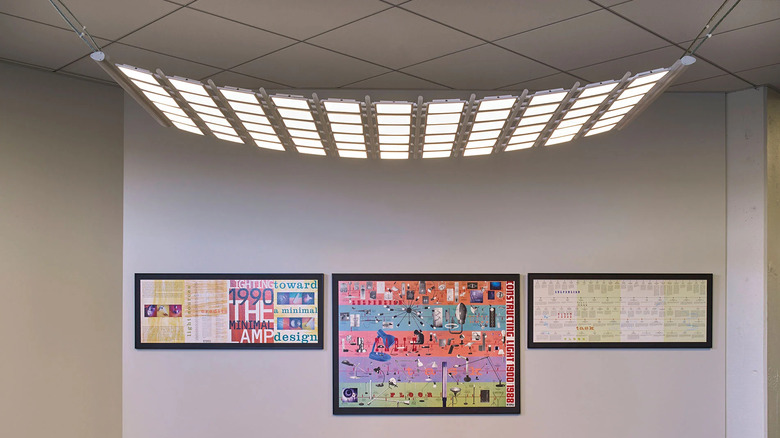
OLED lights are better for your health as they do not discharge harmful ultra-violet rays, unlike LEDs, which can emit a small amount. Normal LEDs also use blue light emitting diodes to create white light, which can be particularly harmful for your eyes, as well as your circadian rhythm. OLEDs have far less blue light emitting diodes and are unlikely to inflict damage to your retinal structure. In fact, the younger the age, the more susceptible the retina is to blue light, making LEDs particularly problematic for kids. The uniform nature of OLED lighting is overall better for your eyes and unlike harsher LEDs, they do not suppress your melatonin levels. You can use OLEDs to create a relaxing ambiance and design the perfect bedroom for a good night's sleep.
Despite the advantages that OLED lighting offers over more traditional methods, there are still some bottlenecks in its adoption that you should be aware of. First, they are more expensive than LEDs. Being organic, OLEDs are also less durable than normal LEDs and slightly less energy efficient. LEDs are better for illuminating brighter areas because of the harshness and pointedness of their lighting, as compared to OLEDs which are softer. However, OLED technology is advancing rapidly and considering its benefits, both in terms of health and attractiveness, it is certainly on its way to capturing a larger chunk of the market.