

Why You Should Reconsider Burning A Tree Stump To Try And Remove It
We may receive a commission on purchases made from links.
When a tree is cut down or falls in a storm, you will need to decide what to do with the stump. While it can certainly be left where it is, many people want stumps removed to clear the space for another purpose; after all, they've already cut down the whole tree. Your mind might immediately drift to thoughts of crackling fire and the scent of smoky wood, assuming that burning the old tree stump is the easiest option. Well, that could be problematic; in fact, there are many reasons to reconsider burning a stump and have it professionally or chemically removed instead.
Whether you had to remove a tree for construction, after storm damage, or due to disease, its stump will inevitably be left in the ground. Sure, you could transform an old tree stump into a charming lawn feature, but you probably just want it gone. That's understandable – old tree stumps and roots can cause several problems and potential damage to your property. An old tree stump is a tripping hazard in the yard, can result in possibly toxic fungus growth, and may attract pests, such as carpenter ants, beetles, and termites.
Burning a stump may be illegal and dangerous
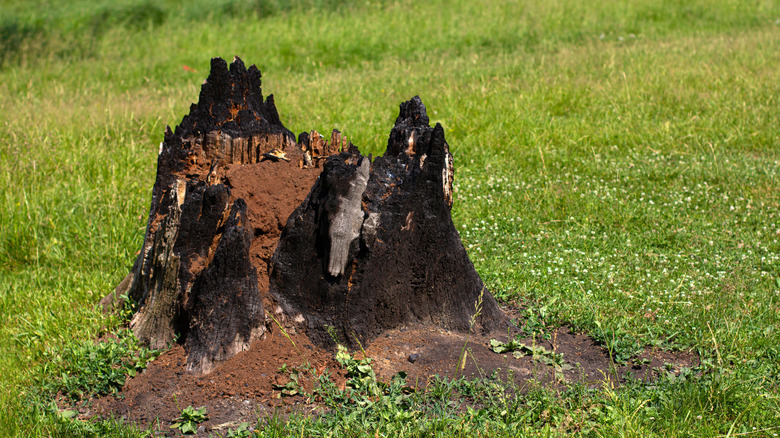
Laws vary widely when it comes to burning tree stumps; it's permitted in some states and illegal in others. Even in places where burning is allowed, there are legal requirements that must be met. Some states require a permit, while local municipalities may have their own regulations for burning, so it is important to check the laws and regulations in your area before making decisions about burning an old stump. You might have to contact your local police or fire department and acquire a permit.
States have enacted laws regarding burning for several reasons. Burning a tree stump can cause a root fire underground, which can spread and result in wildfires, especially in dry areas like California. Other bans and restrictions exist due to concerns over air quality and soil contamination, as burned material can release particles into the air, dispersing dangerous chemicals and destroying microorganisms in the soil.
Even if your state allows burning, the practice can be dangerous. Toxic fumes can be harmful to people, pets, and wildlife. The flames of a stump burn can get out of control due to wind, yard debris surrounding the stump, flames reigniting after not being entirely extinguished, or any other number of reasons. This could destroy your yard (or even your home) and upset your neighbors.
Removing an old tree stump
Before considering the best ways to get rid of pesky tree stumps, you need to decide whether you want to hire a professional or do the job yourself. Professional stump removal can be pricey, costing between $150 and $600 or more, depending on the type of tree, the size of the stump, and the removal method that is used. Manual removal is the most expensive option because it is labor-intensive.
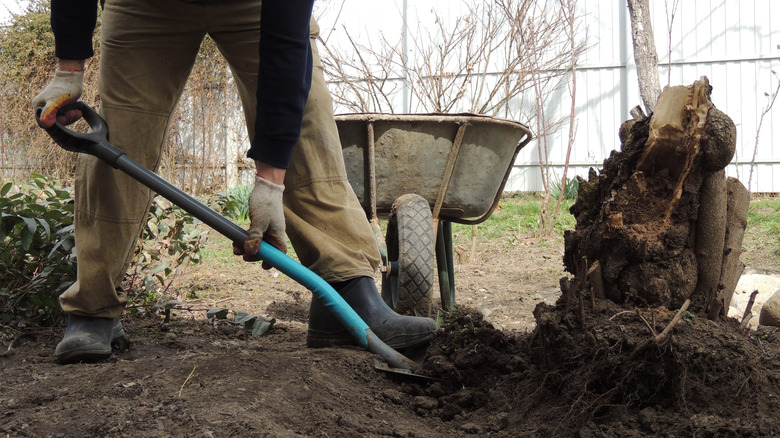
The best options for DIY stump removal include manual removal and chemical removal (or using chemicals to break down the stump, making it easier to get out of the ground). The manual approach is the most affordable way to remove a tree stump without chemicals or heavy equipment. This method requires digging a trench around the stump, cutting the roots, pulling out the stump, and filling the hole left behind.
If you don't have a problem using chemical products, they can be very helpful when used in conjunction with the manual process of removal. Chemicals can accelerate the decay process and may be the best option for large stumps that are difficult to dig out of the ground; Stump-Out Stump and Vine Killer from Amazon should do the trick. You will need a drill with a large drill bit to make holes in the top of the stump. The chemical is poured into the holes according to the manufacturer's directions. The stump will gradually get softer and decompose, which makes it easier to remove manually.