

The Ice Melt Storage Mistake That Can Damage Your Floors (& What To Do Instead)
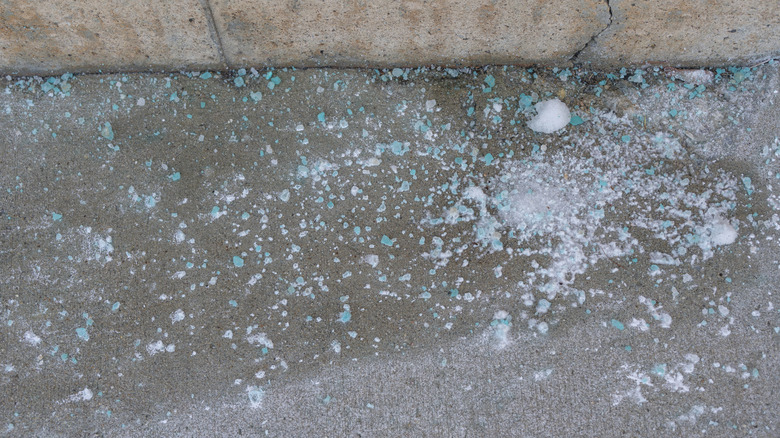
During the winters, your sidewalks and driveways can easily freeze over. De-icing is crucial for preventing hazards like falls. If you're clever, you avoid DIY ice melt recipes at all costs (such as coffee grounds and cat litter) and use proper de-icing products instead. These will fix your outdoor spaces, but if you're not diligent about storing ice melt the right way, unfortunately, you'll be looking at a much bigger mess indoors.
Because of ice melt's unique properties, storing it in an open container can cause it to ooze over and damage your floors. On the other hand, if you let ice melt particles scatter or get tracked onto the floor, they can scratch your tiles, soil your carpets, and dull polished surfaces. The key to good storage lies in keeping ice melt in airtight containers away from moisture or humidity, not letting it spill over your floors or get tracked indoors, and consistently cleaning it up if it finds its way onto your surfaces.
Ice melt works by dropping the freezing point of water below its normal levels. It contains one or a combination of salts, such as calcium chloride, magnesium chloride, and sodium chloride. The types of salts that can properly melt ice and snow are hygroscopic in nature — they absorb moisture. When the ice melt is distributed around areas that may be prone to slips and falls, these salts convert the slippery ice into a more slushy substance. Unfortunately, the characteristics of these salts, which come in so handy outdoors, can also wreak a lot of damage indoors.
Don't keep ice melts in open containers
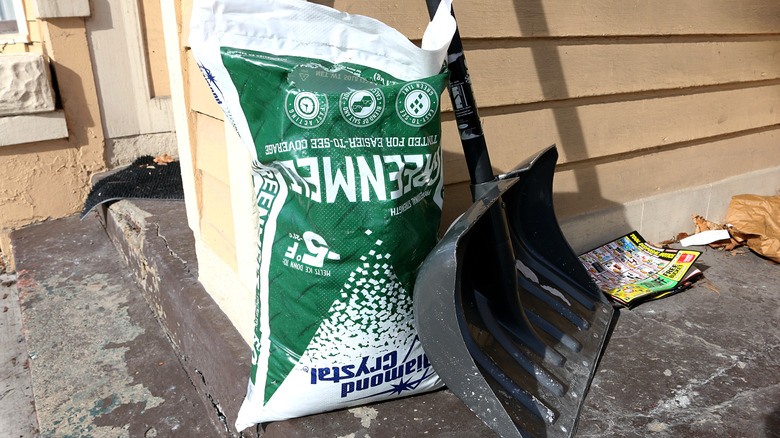
Being hygroscopic in nature, ice melt can quickly start oozing if you place it in an open container. If you're not storing your products in sealed, airtight bags, you risk damage to the flooring nearby. Beyond the immediate mess, the hygroscopic nature of the salts can result in your carpet getting dirty more quickly. Ice melt salts can also leave an oily residue on floors that can dull their finish, and many of these products are corrosive, which could spell damage for nearby metal thresholds. Urethane and acrylic finishes are especially susceptible to being corroded by the residue left behind by salts like magnesium chloride and calcium chloride.
This is why storing ice melt properly is crucial. If you can not find a sealed container, you can also use a tarp to cover the salt, and then use heavy items like sandbags to keep the tarp in place. Storing ice melt in airtight containers will also extend its life, preventing it from forming clumps and hardening. This will ensure it's effective when it comes time to use it outdoors.
Don't store ice melt near light floors or wood surfaces
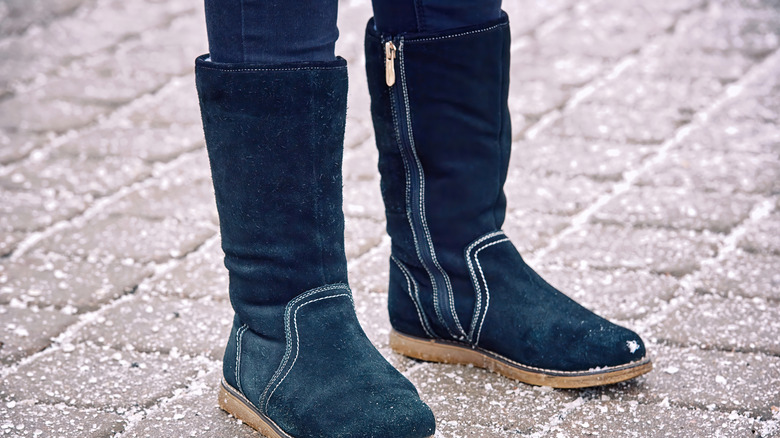
Ice melt can also stain your floors and discolor carpets. These stains are especially noticeable on light-colored surfaces, so store ice melt as far away from them as you can. Once a surface is stained, it can be quite difficult to clean. Furthermore, if you're storing ice melt around wooden floors or any other type of woodwork, it could start to warp thanks to the salt's moisture-absorbing qualities.
Most ice melt damage happens because it's so easy to track it indoors on your shoes, especially if you're using too much de-icing salt in the winter, but a similar thing can occur if your ice melt is improperly stored somewhere that sees a lot of foot traffic, like next to your front door or close to the car in the garage. If you're not careful, tiny salt particles can hitch a ride throughout your entire house, even if you haven't taken a walk outside. Combat this with regular cleaning and proper storage, and you should be able to go all winter without worrying about damage.