

Remove Snow & Ice From Your Driveway In A Pinch Using 9 Items In The Pantry
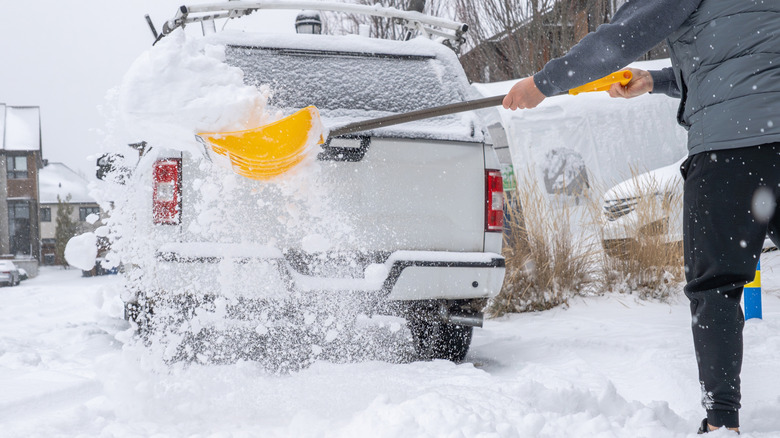
At the start of winter, you're dreaming of the classic colors you'll decorate your Christmas tree with. After the holiday wraps up, you're lamenting the frigid weather that seems to stick around forever. Falling temperatures bring snow, hail, and sleet — whatever the type of precipitation, it's frozen and slippery. While it can be pretty to look at, it is neither pleasant nor easy to eliminate from driveways. If not properly shoveled and salted, icy paths are a hazard to anyone walking on them. Snow-filled driveways also make driving a car neither easy nor safe. If you find yourself stranded inside your home during heavy snow or an ice storm at the end of winter and your rock salt supply is depleted, it's time to raid your pantry. You can use everything from sugar, baking soda and alcohol to coffee grounds, pickle juice, and bird seed to combat ice and snow.
How do you remove ice when you don't have rock salt on hand — or ice melt? Your pantry is home to a lot of alternatives that can be just as effective in a pinch. (Note the emphasis on an emergency situation.) These common household items are an environmentally-friendly and less corrosive substitute for chemical ice melts and deicers. Similar to their purpose-designed counterparts, pantry staples like sugar and white vinegar or less-common products like sugar beet juice work because they lower the freezing point of water. This, in turn, stops surfaces from turning into hazardous ice patches — at least until the temperature drops well below freezing.
White vinegar
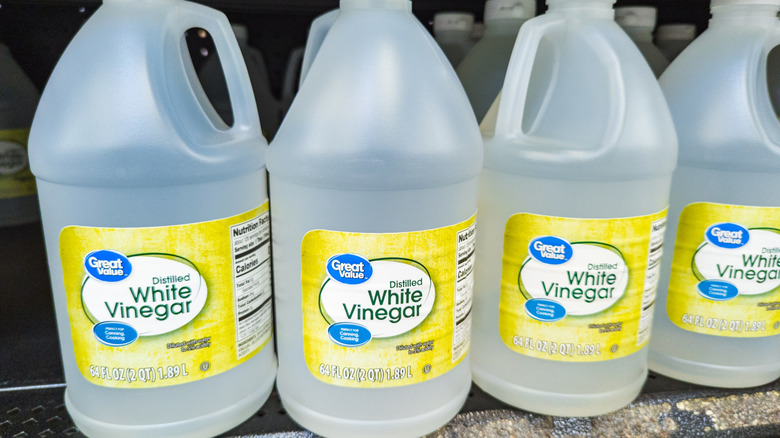
White vinegar contains acetic acid, which can lower the freezing point of water. Combined it with hot water and you have a concoction that is a great alternative to rock salt. Simply grab a heatproof container, add equal parts of white vinegar and boiling water, and head outside to your driveway. Pour the solution directly onto the snow or ice and watch it melt into puddles that will take longer to refreeze. It can also soften ice, making it easier to break up and shovel away. For thicker patches of ice and snow, you may need several pitchers.
Pickle juice
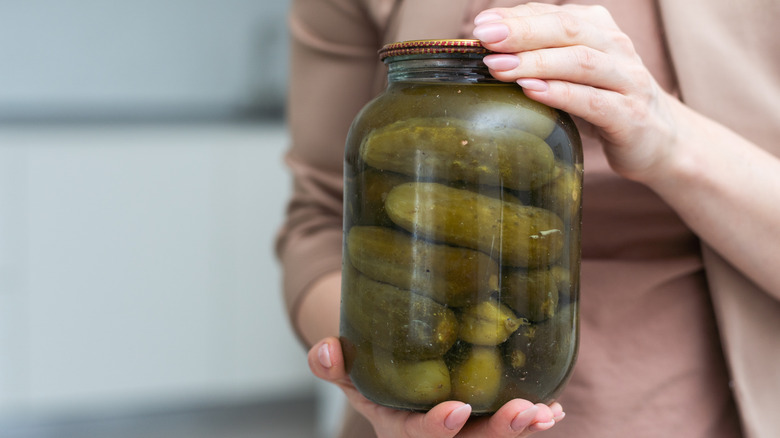
Pickle juice is an item that people usually dump out after consuming the actual pickles from the pantry. Instead of pouring this surprisingly beneficial liquid down the drain (healthwise, it's well-known for its electrolyte-replenishing and muscle cramp-relieving properties), save it for deicing your driveway. While primarily made of vinegar, pickle juice is also full of sodium — the product is essentially cucumbers soaked in vinegar, salt, and some spices. So, in the same way white vinegar can lower the freezing point of ice, so to can pickle juice, making it a great substitute for rock salt in a pinch.
Baking soda
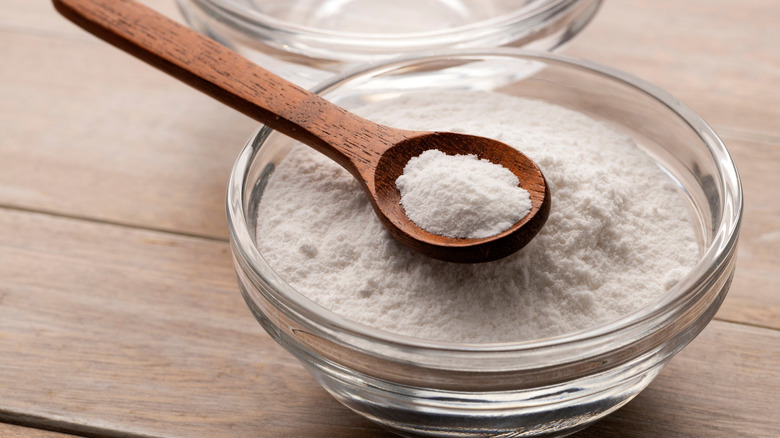
Nearly every pantry has a box of baking soda (sodium bicarbonate) in it. It's a staple in most kitchens, especially if someone bakes regularly. Baking soda is a decent substitute for rock salt for deicing purposes. Like pickle juice and white vinegar, baking soda lowers the freezing point of water. Application is as easy: Just sprinkle your baking soda on top of iced-over driveway areas and let it do its thing. It will take a little longer for this deicing solution to work its magic and melt snow and ice because it's so fine.
Alcohol

Have some vodka, gin, or other spirits in your pantry leftover from holiday festivities? If you aren't planning to make creative cocktails, you can use it to melt snow and ice on your driveway. The higher the proof, the more alcohol it contains. It's well-known that pure alcohol does not freeze — it has a much low freezing point than water. That's what makes spirits natural deicers. If you prefer not to pour your expensive drinks on concrete, use rubbing alcohol. Mix it with hot water, pour it into a bottle, and apply directly to patches of ice and snow.
Sugar beet juice
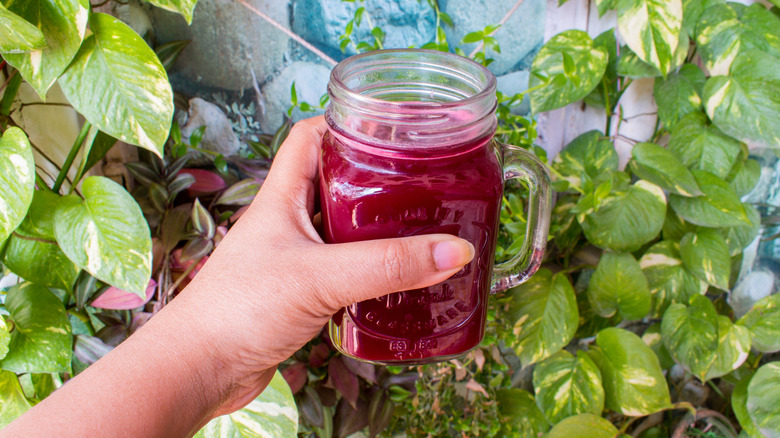
A surprising and somewhat eccentric snow-melting solution is sugar beet juice. If you love beets and have an abundance of them in your pantry, juicing and mixing them with salt brine makes an excellent deicer. The sugar beet juice combined with salt lowers the freezing point of water and the stickiness of the mixture keeps it on the icy surfaces. Snow and ice simply can't accumulate on the roads and driveways. This rock salt alternative is all-natural, so it won't damage nearby greenery. Red beets can, however, stain your driveway.
Table salt
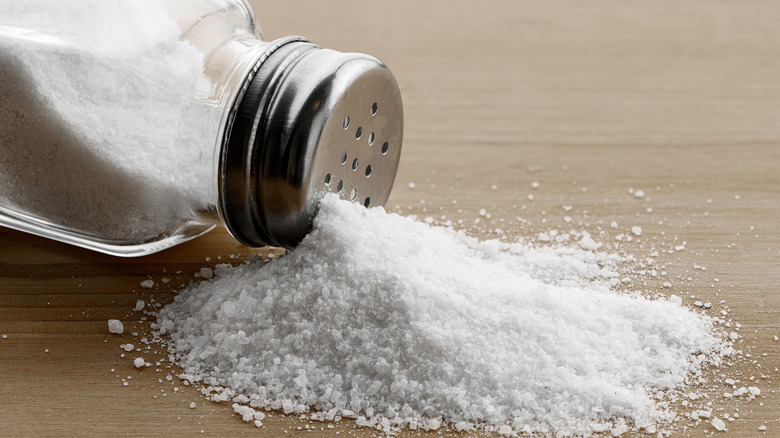
Rock salt, also known scientifically as sodium chloride, is effective at melting snow and ice because it naturally has a high melting point. Likewise, table salt is the same thing, but in a finer, more granular form meant for consumption. Table salt also does not have calcium chloride in it — a chemical compound that most bags of rock salt contain. It helps melt snow and ice in frigid temperatures. In a pinch, though, table salt is effective at remediating icy driveways since it lowers the freezing point of water, turning the frozen precipitation into piles of slush.
Coffee grounds
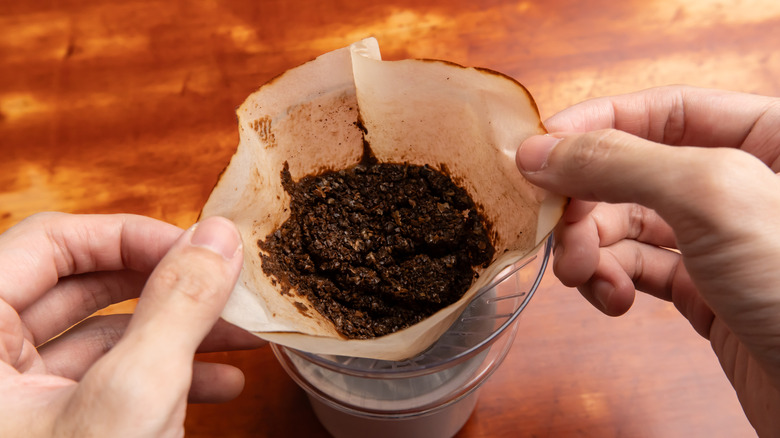
It's unfortunately untrue that coffee grounds double as an effective deicer during winter, as once believed. We all wanted this to be accurate since grounds are beneficial for the garden and are far less harmful to nature than rock salt. However, the remnants of your caffeine kick aren't completely useless in winter. While they won't melt ice, you can apply them on top of icy driveways for grip, preventing slips and falls. Scatter the coarse coffee grounds all over your driveway — and your sidewalks — to create much-needed traction. No more slipping and sliding while getting into your car!
Sugar
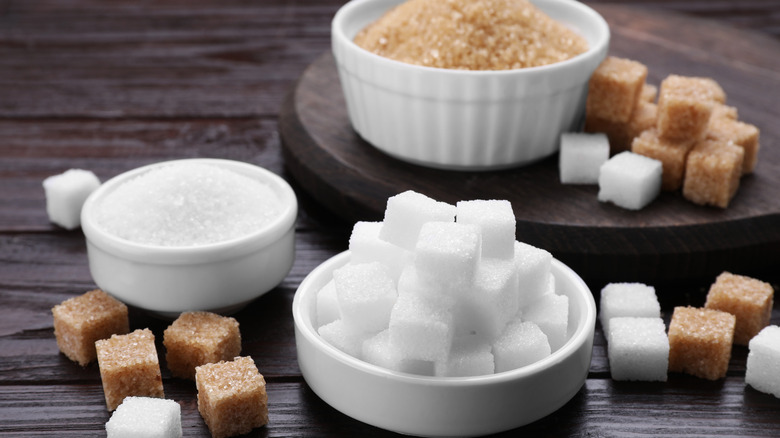
Sugar, like the majority of these pantry-dwelling snow and ice melters, works to deice your driveway by lowering the freezing point of water, though not by much. The sweet substance does not work as well as its salty counterpart. To maximize this effect, you need to apply a large amount of sugar to ice patches. Use it in a pinch, and only if temperatures are already on the warmer side. Using sugar in lieu of rock salt works best around 30 degrees Fahrenheit.
Birdseed
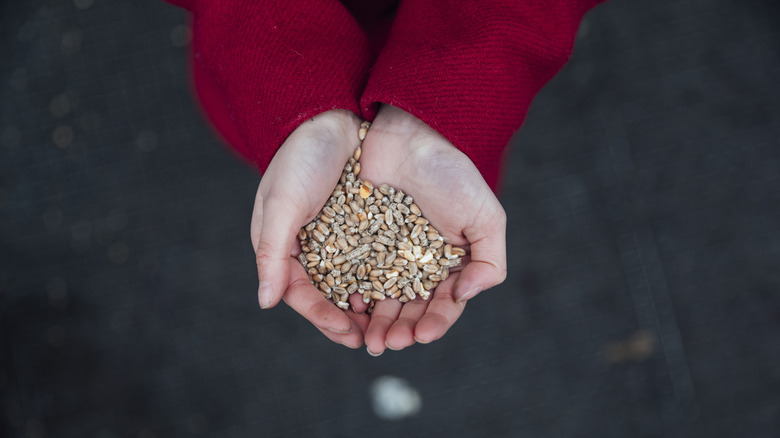
Here's a left-of-field — and also eco-friendly — suggestion: Use birdseed to remediate the snow and ice on your driveway. While it's great for the environment and critter-friendly, birdseed won't actually melt frozen water. However, like coffee grounds, a scattering of seed adds traction and adhesion to icy surfaces, making them safer. Birdseed requires no cleanup; neighborhood birds will eat it. Once warmer weather returns, the snow will melt and let loose the seed. Birdseed also causes no harm to water systems, since most of the time, it will be consumed before it can enter a stormwater drain.