

The Alternative Finish To Polished Brass That Homeowners Are Loving In 2026
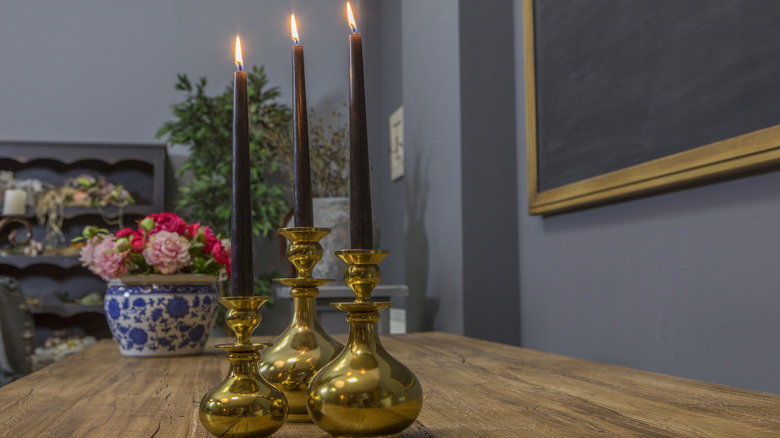
We've taken a collective step back from cool tones and we're sprinting toward warmth. Gone are the days of the sterile minimalist standard. In 2026, interior design will be defined by authenticity and a more lived-in feel. "If 2025 has been the year of rediscovering warmth and personality, then 2026 is shaping up to be the year we fully commit to it," Ashley Rose Walsh, interior designer at Mojo Stumer Associates, recently told Better Homes & Gardens. With this shift will come an acceptance and even invitation for less than pristine decor. You'll likely notice this trend presenting in the finishes popping up in modern designs. We're saying goodbye to high-shine finishes and hello to worn in, unlacquered brass.
"The quiet return of unlacquered brass marks a broader shift in the industry, one that embraces imperfection as a form of beauty," Walsh continued. Unlacquered brass comes straight to you without the protective coating polished brass has. Over time, the brass will develop a natural, ever-shifting patina also lovingly referred to as a living finish. Unlacquered brass will patina faster the more you touch it, growing darker and even green in some cases as it ages. It's an excellent way to infuse your home with a touch of Old World charm.
Incorporating unlacquered brass into your home
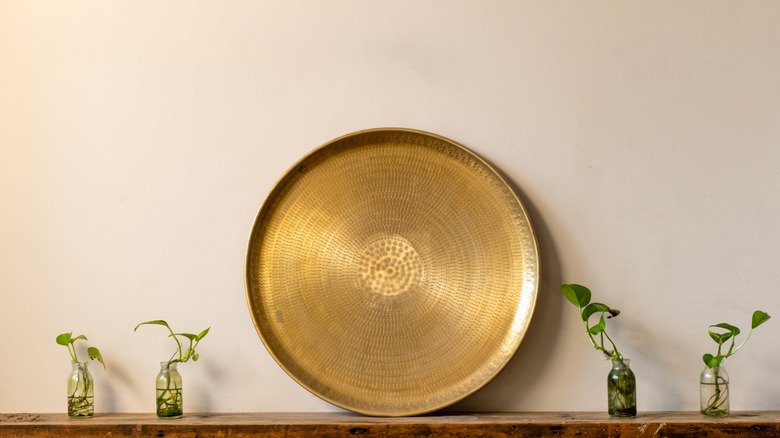
Unlacquered brass is a classic home decor staple that can suit a wide range of styles. You can use this material in all the same applications as polished brass — kitchen sink faucets, doorknobs, cabinet pulls, decorative pieces, and more. Unlacquered brass looks right at home within just about any design style, from minimalist to contemporary. If you're looking for a change but don't want to tackle a full scale renovation, this material can help transform your space.
"Unlacquered brass, aged bronze, hand-rubbed metals, and even unfinished woods all fall into this new wave of honest, expressive materiality," Ashley Rose Walsh shared with Better Homes & Gardens, "A simple switch to brass cabinet knobs or a faucet can add depth and warmth—its patina will naturally develop, adding character without any effort".
Not only is this a versatile choice for interior design, but it's also an eco-friendly option. Brass is easy to recycle, making it a sustainable material to work with. It's also extremely durable, evading rust and corrosion with ease. While the patina may suit you now, perhaps you'll find that you're craving more glimmer down the road. You can breathe new life into unlacquered brass by polishing it if you'd like to restore its shiny finish. Whether you're patina all the way or you want to revisit the polished look every once and a while, your unlacquered brass can look stunning for years to come with simple maintenance.
How to maintain unlacquered brass
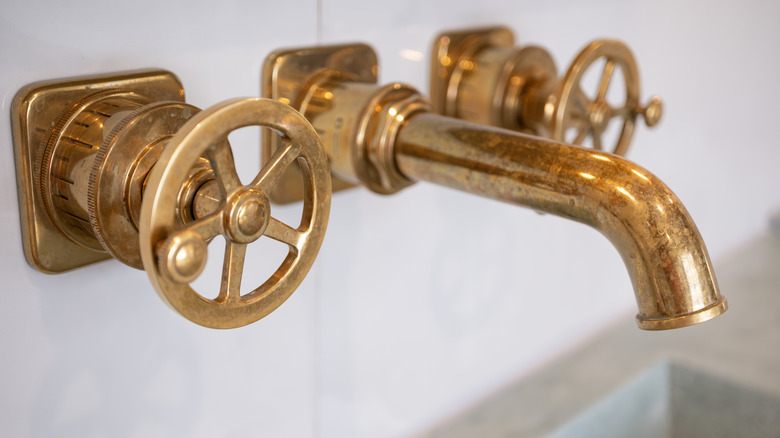
You can clean brass without disturbing the patina by using dish soap. First, dust the material thoroughly with a damp microfiber washcloth. Dip another washcloth in soapy water to gently scrub away any grimy spots. Opt to use a toothbrush or q-tip for tight places. Once it's clean, dry the material off completely and polish with a mineral oil if you have some available.
You can easily restore the shine of darkened unlacquered brass with just a few materials you might already have around your house. To polish your brass, all you'll need is a toothbrush, microfiber washcloth, and a metal polish like Brasso. You can also use a paste made from lemon juice and baking soda to keep some of that aged appearance while also restoring the shine. Either way, use your Brasso or DIY paste to buff out the brass until it shines. Clean off the product, dry the brass, and finish off with mineral oil if it's available to you.
If you have no interest in shiny finishes and you're actually eager for a deeper patina, there's a way to expedite the process too. You'll need white vinegar, salt, and plastic wrap. Mix equal parts white vinegar and salt in a spray bottle. Allow them to combine. Give your brass a good spray down, completely saturating the surface. Now wrap it in plastic and allow it to soak for an hour or two. If the brass doesn't have enough of a patina yet, repeat this process.