

The Winter Cleaning Task Too Many People Overlook

It may be the season of dormancy, but winter is no time for your cleaning supplies to go into hibernation. Alongside your daily and weekly vacuuming and dusting chores, monthly tasks like maintaining your windows should still be part of the routine during the colder months. While the snow and ice may make you reluctant to look out your windows, keeping them clean this time of year offers a few significant benefits: You can check for and address mold or allergens on your windows, you'll let some much-needed occasional sunshine in, and the home will look better inside and out.
The grime that accumulates on your window's interior during the winter may contain allergens such as mold and pet dander. Keeping it clean, especially during a time of year when you may be spending more time indoors, could help you and your family breathe more easily. If you use a wood stove to heat your home in the winter, particles from the ash may be settling on your windows, but your central heating might also add a layer of dust (you may even need to change your air filter more frequently in winter to help prevent it from circulating). Cleaner windows will also make it easier to let more light in during the time of year when we need it most. So, open those shades — even if the sun is only shining minimally, that little jolt of natural light can lift your mood and make your home feel a little more joyful in the cold months.
How to keep your windows clean in the winter
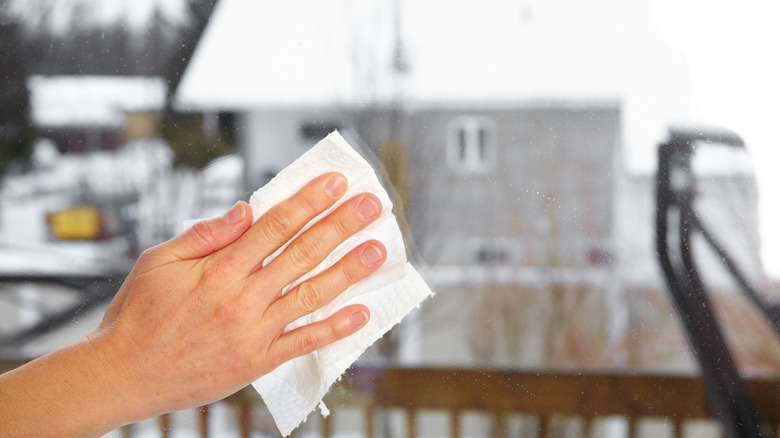
Since it's too cold to work outdoors, don't worry about cleaning the exterior of your windows until spring; doing it now may just leave you with streaks from freezing glass cleaners. Choose a day with temperatures above 32 degrees Fahrenheit as you clean the interior side of your windows. If you can't wait until a warmer and sunnier day, use warm water with your glass cleaner to help prevent freezing, or look for a glass cleaner that contains antifreeze — you will often find it in the automotive department. Take down your window coverings to clean separately before focusing on the windows. When cleaning the glass, you'll want to work quickly and thoroughly to prevent any chance of freezing. Spray, wipe, and move on. Use a microfiber cloth for quick absorption and to prevent lint and residue. You can also squeegee the window for a more efficient and professional-looking clean.
After the glass is clean, clean the window sills and the surrounding frame. Make sure you dry it thoroughly to reduce the risk of mold and mildew. Checking for any growth forming from condensation should be a frequent task in the winter so you can remove and prevent window sill mold as easily as possible. Mold is often visible along the base of the sill and is typically white, green, or black. It may also give off a musty odor. If you find mold during your inspection, spray it with a bleach-and-water solution (mixing in a 1:1 ratio). Let it sit for 10 minutes, and use a microfiber cloth to wipe down the entire window frame. If you notice excessive condensation becomes a consistent problem, consider preventing mold growth by choosing a quality window insulation kit to install during the winter.