

Shoes Can't Go In The Washing Machine? Here's How To Sanitize Them
We may receive a commission on purchases made from links.
Shoe maintenance can become a bit of a headache. Unless you're Carrie Bradshaw, chances are you don't even own that many pairs. And, among the few you do own, only a couple probably fit you perfectly, which are the ones you end up wearing every day. Ideally, shoes that get worn that often should be cleaned every two to three weeks, or even daily if you're extra careful. Still, with how complicated and specific shoe sanitization can get, it's understandable if you put it off or avoid it altogether for fear of ruining that holy grail pair that was so hard to find and break in just right.
Footwear that can't go in the washing machine can be particularly tricky. The label on your shoes will tell you how to care for them, but non-machine washable shoes generally include those made from leather, suede, nubuck, silk, and models with embellishments like sequins, jewels, or chains. Actually, for some enthusiasts, shoes, regardless of type, don't belong anywhere near a washing machine, unless specifically made for it. However you approach it, there are a few manual ways to clean and deodorize stinky shoes that shouldn't be a secret.
For the outside, you'll need a soft brush and a microfiber cloth. You can use shoe cleaning products specific to each material, but a homemade mix of liquid dish soap and warm water usually does the trick. In the case of suede shoes, dedicated brushes and erasers are recommended. For the inside, since the main goal is usually to neutralize odors, there are a few different methods. One mixes water with vinegar or rubbing alcohol, another uses baking soda, and a third mixes water and a phenolic disinfectant. Activated charcoal bags and other deodorizers left overnight also work.
Cleaning tips for the outside of your shoes
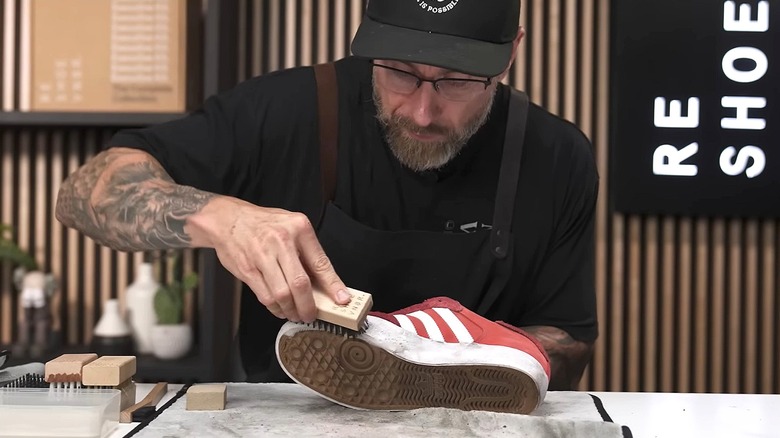
To clean the outside of your shoe, start by removing the laces if applicable. Then, loosen up dirt particles with a dry brush, starting with the uppers and moving your way downward. Cobbler's Choice Co.'s Premium Shoe Brush is a popular shoe brush, but any soft-bristled brush, or even a toothbrush, will work. Make sure all that dirt falls from the shoe by holding it vertically or using a microfiber cloth to wipe it away. For suede, follow by slowly rubbing off stains with the eraser.
Next, use a designated cleaning product for the type of shoe you're handling. If preparing one at home, mix a few drops of mild dish soap with warm water. Err on the side of caution, since highly-concentrated soap can wear out the material and discolor it. Clean your previous brush or find a new one, then dip it in the cleaning solution, and start by rubbing the outsole and midsole. Wipe clean with a dry cloth. Do the same for the uppers, but be gentle. Additionally, a baking soda and water paste, in a 4 tablespoons to 60 milliliter ratio, is one of the best ways to keep your white shoes clean by lifting up tougher stains, but use it only on canvas and mesh types. Wipe off the excess.
Leave it to thoroughly dry. Avoid direct sunlight, however, as this will damage the material. You can stuff the shoe with newspaper or similar to make sure it doesn't lose its shape. Shoelaces are likely safe to go in the washing machine, but you can also soak them for 15 minutes in the same dish soap and warm water mix mentioned above. Then, use a brush to tackle stubborn stains.
Cleaning tips for the inside of your shoes
Sure, the outside of your shoes gets dirtier faster and more evidently, but the inside deserves just as much care. That odor that emanates from your shoe closet is caused by bacteria that grows inside your footwear from the moisture and warmth of everyday wear. What's worse, these same bacteria can also lead to infections like athlete's foot and nail fungi. Similarly, for sports shoes or work shoes that get wet often, drying and cleaning the interior will preserve the materials and lengthen their lifespan.
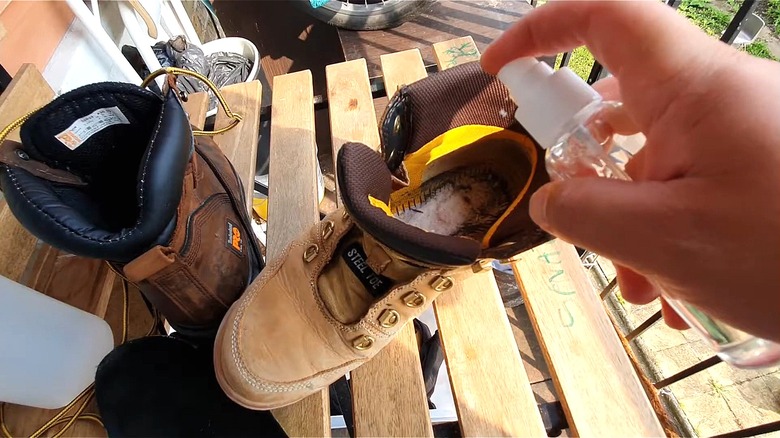
Once again, start by removing the shoelaces for better access, then remove the insoles, and shake off loose dirt. Wash insoles by hand with soap and water, and, if possible, leave to dry in the sun; the radiation will kill the odor-causing bacteria. Then, you can eliminate smelly shoe odors with ingredients you already have, like good old baking soda, a home cleaner's best friend. Its high pH value will neutralize the odor's acidic compounds. Leave it to act for a good 24 hours for maximum results. For shearling-lined shoes, you'll need to mix water and a phenolic disinfectant.
If you prefer something more specific, Boot Bananas Original Shoe Deodorizer is a popular option, as are other activated charcoal packets; the pores effectively absorb odor and moisture. To further sanitize the lining of the shoes and non-removable insoles, scrub them lightly with a dampened microfiber cloth in a mix of water and white vinegar or rubbing alcohol. Go in with a clean, damp cloth afterward, and leave to dry.