

How To Propagate A Lipstick Plant For New, Healthy Growth In Spring
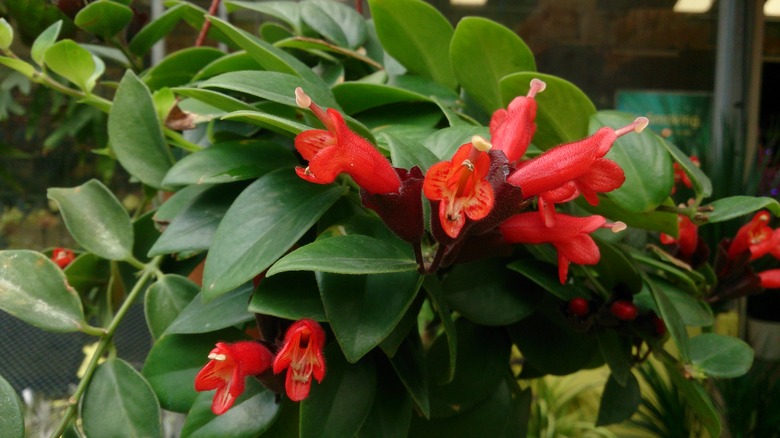
Suitable to grow outside in USDA Hardiness Zones 10 to 11, the lipstick plant (Aeschynanthus radicans) thrives in a warm climate, with its iconic, tubular red blooms bringing boldness into your yard throughout the seasons. Thankfully, for those of us who live in colder locations, these flowers grow beautifully indoors and can be kept as houseplants. However, whether your lipstick plant lives in your garden or in your home, you can propagate it easily to create brand-new plant babies.
When propagating your lipstick plant, opt to do so in spring by taking softwood cuttings from the plant. If you have it as a houseplant, you can propagate it throughout the year, but spring is usually when your lipstick plant is putting on new growth and will produce strong cuttings. To propagate the plant, carefully cut off a section of four sets of leaves. Then, remove all the leaves from the cutting except for the top two sets. After dipping the bottom of the cutting in a rooting hormone, place it in a potting mix.
Tips on successfully propagating lipstick plants
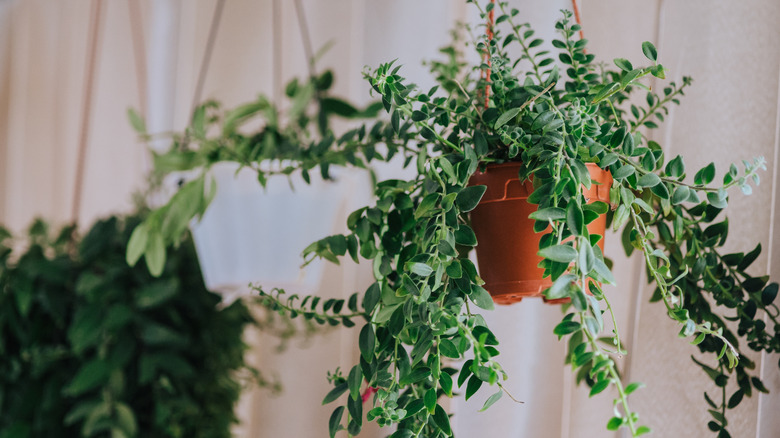
There is nothing as disappointing as taking cuttings and caring for them patiently, only for them to wither and die. And although lipstick plants are one of the easiest houseplants to propagate from cuttings, there are a few things you need to consider to ensure success. Firstly, the mix you plant your cuttings in is important. You need to either create a 50/50 mix of vermiculite and perlite or a 50/50 mix of coir and vermiculite or perlite. Using a mix of these potting mediums ensures that your lipstick cuttings have good drainage, airflow, and water retention. This provides your cuttings with the strongest possible start.
In terms of ongoing care, it is necessary to keep your cuttings moist. It may be useful to place the pots that contain your cuttings in a clear plastic bag, as this acts as a mini greenhouse for them. Check on the cuttings regularly and mist them when the soil feels dry. Too much condensation can promote rot, so you may want to add holes to the plastic bag. It can be a little bit of a balancing act when it comes to propagation and moisture levels, so make sure you are keeping an eye on the cuttings and making changes when needed. Your cuttings need to be placed somewhere warm and bright, but out of direct sunlight. After a few weeks, the roots of your lipstick plant cuttings will start to form. Check they have rooted by giving them a gentle tug, and if they have, you can pot them up. Once they settle in, make sure you are caring for your lipstick plants correctly, and your new babies will soon flourish.