

How To Choose The Best Spot On Your Countertop For An Indoor Garden
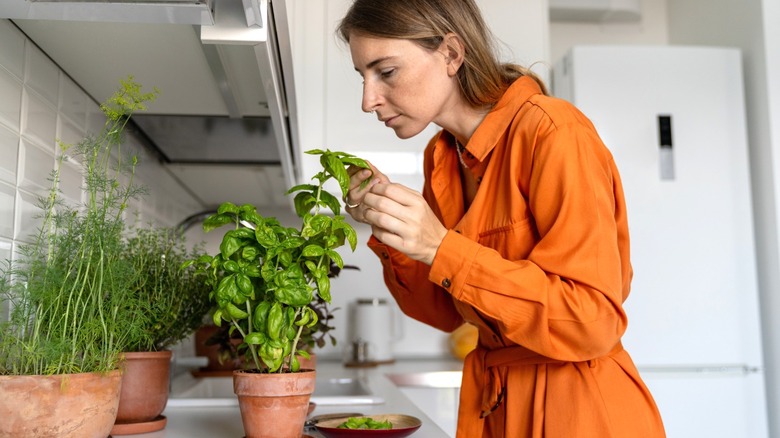
For those with a spacious kitchen countertop, an indoor garden may sound like a great idea. Many herbs are hardy and easy to grow, thriving when cultivated in a planter with other herbs, making them suitable for countertop gardens. Plus, they're an excellent culinary addition to the kitchen — you'll always have fresh herbs right at your fingertips. And herbs aren't the only plants perfect for growing indoors and in small spaces; there are plenty of fruits and vegetables you can grow on your kitchen counter as well. The struggle comes in finding an appropriate place where the garden will get enough sun, stay protected from damage, and not take up usable storage or work space. There is no single countertop spot that is ideal for growing an indoor garden, but if you want your kitchen plants to flourish, place them in a sunny area where there is good airflow and an appropriate temperature.
Not all kitchens are ideal for all plants — it depends on the orientation of your kitchen windows and whether you have counter space near them. For plants that thrive in direct sunlight and require warmth, placement near a south-facing window is the optimal choice, as it receives the most sunlight each day. If the plants can remain healthy in a cooler temperature, a north- or east-facing window may be appropriate. Temperature preferences also vary by plant type. If you're growing herbs, they generally prefer temperatures between 65 and 70 degrees Fahrenheit during the day and about 10 to 15 degrees cooler at night (according to Penn State), so find a place that gives them ample light without any excess heat that might come from kitchen equipment.
Considerations for picking a countertop garden space
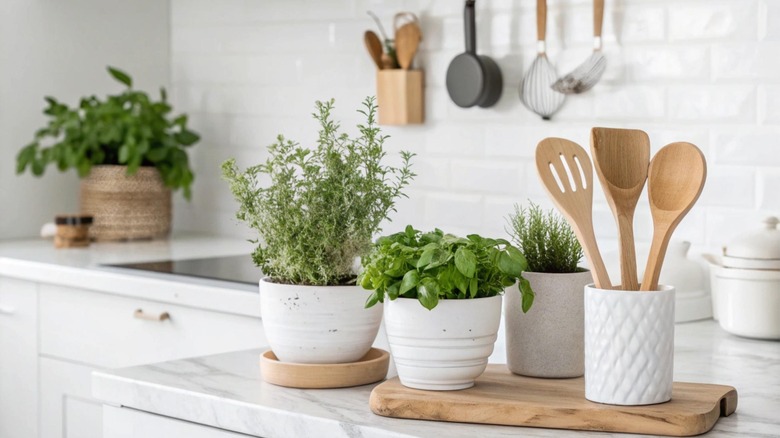
One of the more common indoor gardening mistakes is placing plants too close to heat sources. Even if you have a plant that loves tropical temperatures, the heat from your stove may be too much for it. Just as you shouldn't place plants near heating vents, your oven and stove top can dry out plants and cause issues like wilting leaves and loss of buds and flowers. Plus, plants too close to the stove top could become a fire hazard. You might also want to avoid keeping them near the coffee pot, toaster, or any other kitchen appliance that warms up. The exact distance you should keep plants from heat sources depends on how much heat each source emits, but you should place them far enough away that you cannot feel the warmth with your hand.
While there are benefits to keeping your plants in one spot, be sure you're not cramming them into a corner where they won't get any breeze. Airflow helps with growth and is essential in keeping your plants from getting diseases. Some great ways to improve airflow for your kitchen plants are to turn on the ceiling fan to move stagnant air and to open the windows to let in fresh air. If your kitchen doesn't have a ceiling fan, consider investing in a small fan just for your plants. If they're too crammed together, they may not get enough light either. If your countertop doesn't offer much light in the best spot for your garden, you could invest in grow lights for your kitchen plants. The ideal placement should be a spot where you can safely keep the grow lights a foot above the plants and leave them on for at least 12 hours a day.