

Winter Is The Best Time To Prune Your Forsythia Shrub - Here's The Best Way To Do It
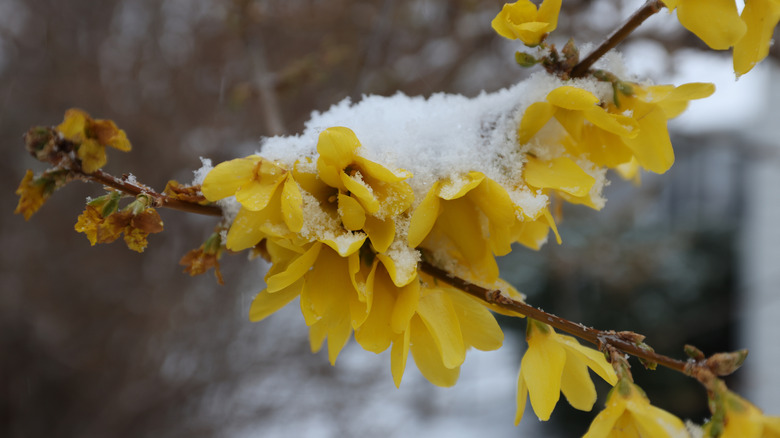
No plant announces spring quite like forsythia. Every spring, it bursts with brilliant yellow flowers that declare, without question, that the growing season has officially begun. It is truly one of the best shrubs to grow in your yard for a colorful spring. Plus, forsythia is very adaptable and easy to care for. However, there is a problem. Forsythia shrubs can turn into an overgrown, untidy, and shrubby mess if they are left to grow indefinitely on their own. That is where pruning can help. But you need to do it in a proper manner. For instance, if you want your forsythia shrub to grow bushier, cutting near the top is probably the best choice. However, if you want a vase-like form, cut the shrub near the ground. It will help keep the plant in its natural, cascading, graceful shape. The best way to prune is by cutting any branches that are dead, damaged, diseased, or deranged.
As for when you should do it, winter is probably the best time. In winter, forsythia shrubs are dormant, and their branches are bare. This means you can see the shrub's framework clearly, which will allow you to spot weak, crossing, or crowded branches to get rid of easily. Just keep in mind that winter pruning is for plant renovation and renewal. If, however, you want to boost flower production, prune your forsythia shrub immediately after it has finished blooming. In this case, you must do it before July, so plants have enough time to put on new growth and develop flower buds.
The right way to prune a forsythia shrub in winter
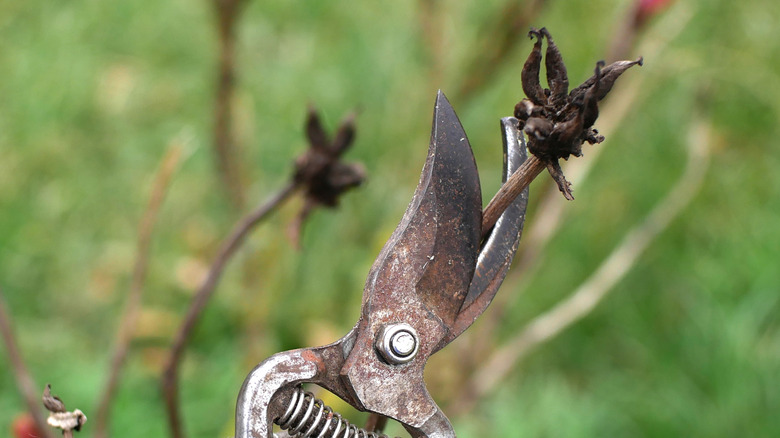
When pruning your forsythia in winter, identify the four Ds: dead, damaged, diseased, and deranged branches. Locating such branches should be pretty easy in winter, since they are bare and you have a clear view. Once you have identified them, cut them all the way back to where they start on a larger branch. Just make sure to choose the best pruning tool for your needs. For instance, use hand pruners to cut small stems (up to about ½ inch), loppers to cut thicker branches (up to about 1 inch), and if you have to deal with anything larger, use a pruning saw.
Make sure to remove branches that are rubbing against each other. These are usually the old, thick stems, and removing them is necessary to avoid plant wounds and injury. Not removing wounded branches is an open invitation to plant pests and diseases. Likewise, you also want to remove any such branches that might be growing toward the center of the plant, as well as those crossing with other branches in a way that is ruining the plant's appearance. Just make sure to cut right above the branch collar (the wrinkled ring where a branch originates). This will keep the cuts clean and also help the shrub look tidy as it regrows.
Note that if you haven't taken care of your forsythia plants in the past and the shrub needs a full rejuvenation, cutting just a few branches won't help much. In a situation like this, you will need to cut the entire shrub back to just above the ground. This will let the shrub grow again from scratch and develop its arching and cascading shape naturally.