

Worried That Rodent Repellent Spray Will Make Your Home Smell? Here's Why You Shouldn't Worry
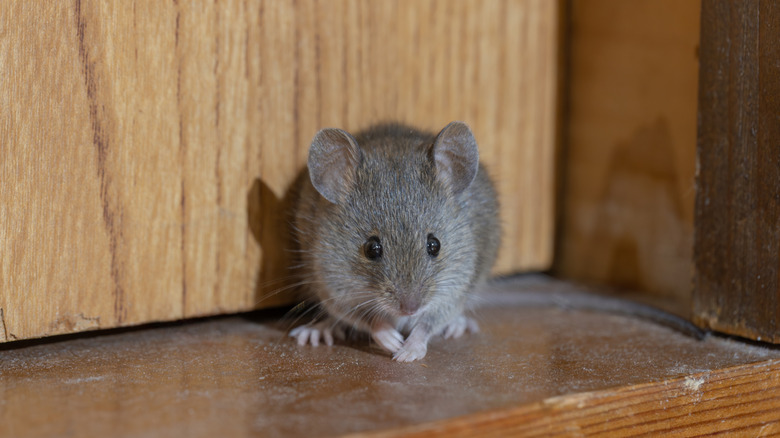
Not a lot of people like the idea of rodents scurrying about their house. These creatures can pay you a visit via doors, attics, roofs, and in extreme cases you might want to check your toilet during heavy rain as rodents can creep through them. Once they do get in, though, they can be difficult to get rid of, especially if they start nesting and multiplying as well. Although there are plenty of cruel methods to get rid of these nocturnal visitors, a lot of people prefer more natural ways that get rid of rodents humanely – such as using repellent sprays. Considering the risk of diseases and costly repairs to wires and other household items that rodents may damage, using a simple repellent mixture of essential oils seems both affordable and convenient.
But if the scent of these oils drives rodents away, it should be strong enough to disgust humans, too, right? Well, not really. Turns out, it doesn't take much to offend the mice. While you, or your guests, can only barely sense a tinge of its smell, repellent sprays may well be wreaking havoc with the rodent's nasal passages as well as their pheromone-detecting pathways.
A rodent repellent spray works by stimulating the rodent's keen sense of smell. It usually contains oils, such as peppermint oil, citronella oil, or other essential oils. When it is applied around rodent-infested areas in your house, they get repulsed by its smell and attack a different location instead. Although this method may not be 100% effective, its non-toxic and pet-friendly nature makes it popular among homeowners. If you're worrying about the spray turning your home into a restricted zone for humans as well, you're probably skipping the fact that rodents and humans have different degrees of olfactory sensitivity.
Rodents' sense of smell is far more sensitive
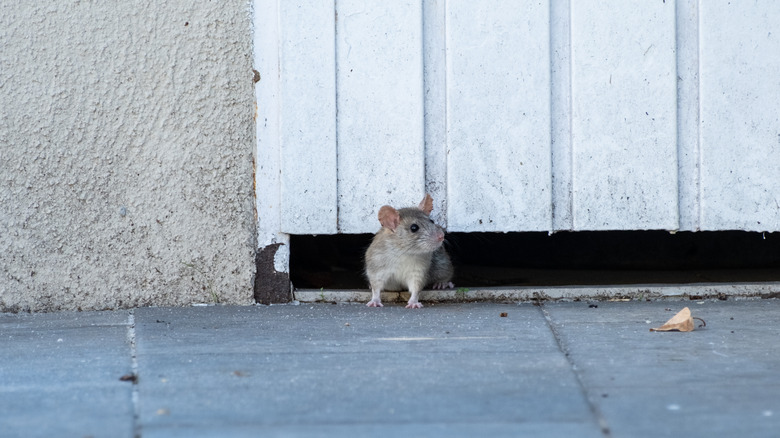
Although rodent repellent sprays can be intense when initially applied, their effect does not linger for long for human noses. This is because humans are far less sensitive to smell than rodents. Rodents, on the other hand, have very sensitive noses. In fact, smell is their primary sense for locating food and shelter, as well as detecting predators.
According to the PLOS Biology, mice have a whopping 1,100 functional olfactory receptor genes, compared to the 350 functional genes found in humans. What this means is that you may stop noticing the effect of the spray in a short time but your unwanted companions will still find them extremely repelling. The menthol present in peppermint oil (one of the main ingredients in the sprays) can easily disrupt their olfactory receptors.
Moreover, the ingredients present in natural repellent sprays — peppermint oil or citronella oil — by themselves are not repulsive to humans at all, especially after they are diluted. There are a number of ways people use peppermint oil in homes. In fact, a lot of people find the scent of peppermint oil quite refreshing. Furthermore, several repellent products on the market also claim that their smell is quite un-bothersome for humans, although it can be devastating for mice.
Repellent sprays can also disrupt rodents' non-olfactory receptors without giving an intense smell

Rodents have a far more complicated olfactory system than humans. But most rodents also have other accessory chemosensory organs, like the vomeronasal organ, which helps them in detecting pheromones and communicating with other rats. The oils present in repellent sprays do not just attack the rodent's main olfactory receptors but also the accessory ones. They can disrupt their ability to detect pheromones, and thereby mess up their danger-signaling mechanisms. Since humans do not have a faculty for this kind of perception, all this can happen without you knowing about it. Similar to ultrasonic repellents where you can't perceive sounds, you don't quite perceive the strong smell of a spray repellent in action. But it is still, technically, repelling the rodents.
Moreover, a moderate smell of peppermint can actually help you confirm that the repellent is active, especially in the case of plug-in sprays. If you stop smelling anything at all, it might be time to replace your spray, lest the rodents pay you a visit again. Nonetheless, you must also keep in mind that all repellent sprays are not the same either. Things can be different if you're using a different formulation of the spray itself. For instance, there are ammonia-based or vinegar-based rodent repellent sprays as well. They have sharp, repelling odors. Ammonia can also mimic the smell of a predator's urine. These formulations can be quite strong for humans as well, and need to be used with extreme caution.