

The Versatile Plant You Should Grow In Winter To Attract Pollinators In Spring

It's never too early to start planning to attract spring pollinators to your garden. The majority of flowering plants require these beneficial critters to pollinate them. Since you're planning ahead, why not choose a pollinator magnet that also offers additional benefits?
Such a plant is yarrow (Achillea millefolium), a hardy and undemanding perennial that is easy to cultivate, even in poor soil. Gardeners experience its versatility in numerous ways, from growing yarrow in containers to planting it alongside succulents in your garden, and many more. Its drought tolerance makes it ideal for low-maintenance landscapes. Deer and rabbits tend to avoid yarrow, but pollinators love it. Some gardeners worry that growing yarrow is a huge mistake because of its spreading habit, but spreading can be controlled. Adding to its appeal, yarrow comes in a range of bright, vibrant colors. It's cold-hardy in USDA zones 3 to 9, making bare-root winter planting possible in many locales. In colder climates, you can winter-sow yarrow from seeds.
Start versatile bare-root yarrow in winter

You can order bare roots for your spring garden in the winter. You should be able to plant bare-root yarrow in winter in warmer climates — as long as the ground isn't frozen and is workable. Bare-root plants make it possible to grow yarrow in winter because they are dormant, just as they would be if they were already growing in your cold yard. Inspect the bare roots when they arrive, and cut off any rotten, dried-out, or broken roots and soak them in water for up to an hour before planting.
Soil should be sandy and drain well in a spot that gets full sunlight. You'll want to dig holes twice as wide as the mass of roots, and include a little mound of soil in the center of the hole to support them. Arrange roots around this mound as you place the plant in the hole with the crown at the same level as the soil. Refill the hole with soil and add a layer of mulch around the plant to insulate it against the cold. Finally, give your yarrow a good watering.
If you can't plant right away, immediately store the bare-root yarrow in the refrigerator or any place that is around 40 degrees Fahrenheit, keeping the materials the roots were shipped in moist. Another option is to heel the bare roots into your garden to keep them from breaking dormancy. After inspecting and soaking as if you were planting, dig a V-shaped trench, place bundled roots into it at an angle, and fill it with soil and water. the heeled-in plants. Your bare-root yarrow can stay in the trench until about a month into spring. Uncover and rinse the roots off when you're ready to plant in the spring.
Winter-sow yarrow in colder climates
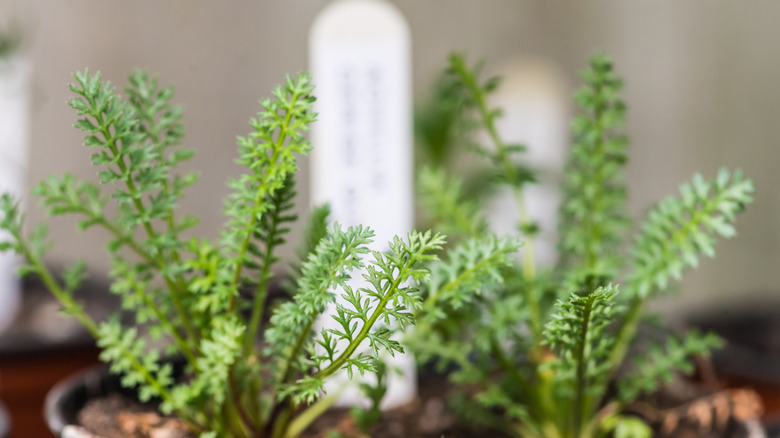
Those in colder climates can still grow yarrow in winter via winter sowing, a method in which seeds are sown in a sheltering container and allowed to germinate when ready. The first step is to identify a container. Many winter sowers use milk jugs, but any container will work if it provides shelter, accommodates at least 4 inches of soil, allows light to enter, and permits both water entry and drainage. You should also make sure the container is clean.
Once you have your container, you will want to make drainage holes in the bottom. If you're using a milk jug, cut the container nearly in half, leaving a hinge so you can tape the halves back together after sowing. Place 4 inches of potting soil (not seed-starting medium) in the container and moisten it thoroughly. Then sprinkle the tiny yarrow seeds onto the soil. Tape the top and bottom of the container back together with duct tape. If you're winter-sowing other plants, label the container with an oil-based marker so you know what's in there.
Place the container outside, ideally in a sheltered spot that's free of wind and animals. Check on it regularly to make sure it is getting moisture through the opening where the cap was and that excess water is draining from the container. Watch for germination, then remove the seedlings and transplant them once they have at least two true leaves. Check out more details in our guide to tips and tricks for winter seed sowing. Keep expectations low for flowering in the first year if you winter-sow, as you are unlikely to see blooms till the next year.