

The Common Cleaning Solution That's Actually Damaging Your Grout
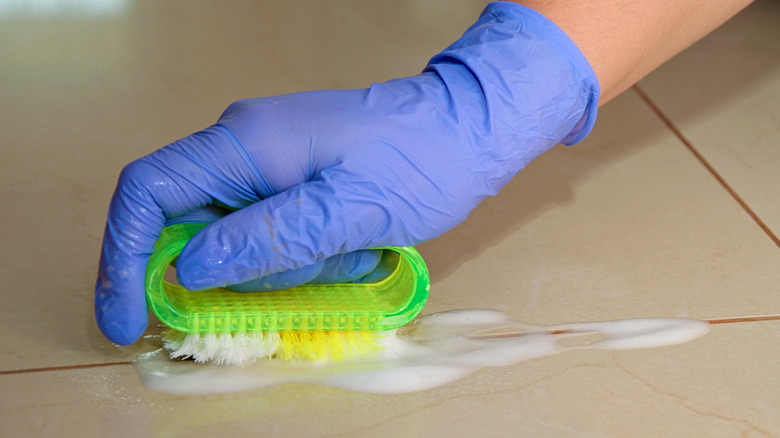
Trying to clean grout can be a real pain, so it's not surprising that people are willing to try all sorts of cleaning solutions. From store-bought scrubbing powders and sprays to DIY combinations of ingredients, there are endless grout-cleaning options. While it may be tempting to try them all in search of the one that works best with the least amount of effort, you need to know the worst tile and grout cleaners and methods to avoid so that you do not accidentally ruin your grout. Simple Green All-Purpose Cleaner is a common cleaning solution for grout, but did you know that its bright green color can actually stain your grout?
Although the bright color makes the product stand out on the shelf in the cleaning aisle and may make you think that the product will be highly effective, the colorants in Simple Green can seep into porous grout and cause stains that are extremely difficult to remove or, in some cases, permanent. Any grout cleaning solution with dyes, including The Pink Stuff and even DIY solutions involving ingredients with dyes, such as blue dish soap, can create the same stains. Staining is more likely on light-colored grouts, but even dark colors might show a slight change of color if you use a solution that is too saturated. Luckily, added colorants and dyes don't actually improve the effectiveness of a product at all, so choosing desaturated solutions should give you the same clean results. If you had the misfortune of learning from experience that these products can stain your grout, then you'll want to know how to attempt to undo the damaging stains.
Dealing with grout stains from colorful chemical cleaners
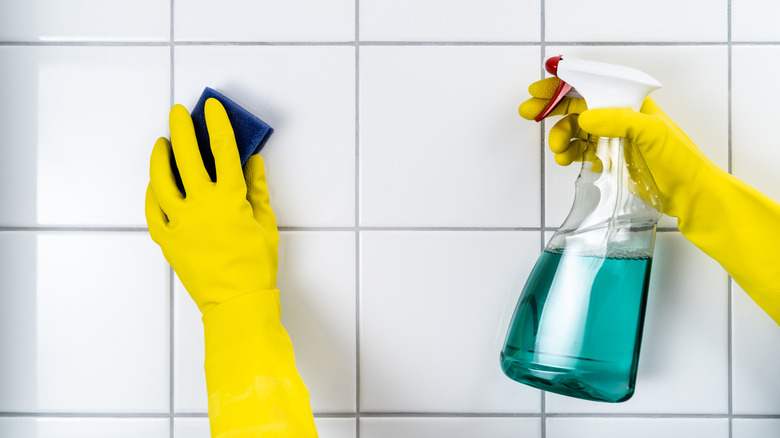
There are a few different methods that you can try to remove grout stains, including DIY solutions, store-bought products (that don't contain colorants or dyes, of course), and steam cleaning. If the stain is light and minimal, trying the classic combination of baking soda, vinegar, and elbow grease may get the job done, and hydrogen peroxide may work on darker stains. Apply either baking soda and vinegar or hydrogen peroxide directly to the grout and allow it to sit for about 10 minutes. Then, scrub and rinse the grout, and dry it using paper towels.
If DIY methods and commercial cleaners don't work, then steam cleaning should be your next attempt. The high pressure of a steam cleaner can push out debris, and it is suggested that it may push out dyes and things that have seeped deeper into the grout that can't be removed by surface scrubbing. Combining this with a shop vac to suck up anything that is removed might get the job done. If even this doesn't work, you could hire a professional to use an acid that removes stains, but it may be easier to learn how to remove and replace tile grout instead.
Once you get the stain removed or the grout replaced, you'll want to take steps to avoid future stains. Definitely avoid using cleaning products containing colorants and dyes on or near your grout. Also, be sure to seal your grout and know how often you should be resealing your grout to ensure that any accidental spills can't be absorbed.