

The Flower With Year-Round Color That Makes The Perfect Driveway Border
We may receive a commission on purchases made from links.
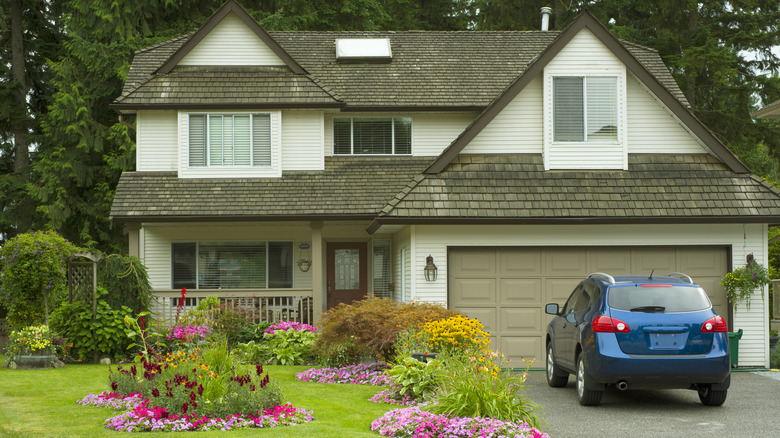
A parched, brown strip of lawn next to your driveway is a frustrating sight for any homeowner. Most people try to fix the issue by planting rows of colorful annuals, only to find that the radiating heat from the concrete or paving cooks the roots and kills the plants by mid-July. If you're tired of the constant cycle of planting and pulling out and planting again, take a look at Hubricht's bluestar (Amsonia hubrichtii) for your driveway borders. This perennial grows well in USDA Hardiness Zones 5 through 8, so it can handle cold winters and hot summers. In the spring, it grows clusters of small, pale blue, star-shaped flowers with a soft appearance. The leaves are what really make it stand out; they look like a feathery green mist in spring and summer and go golden when the weather cools.
What's great about Hubricht's bluestar is that it grows in a neat mound. Group plants to create a clean border along a driveway that won't spill over onto the pavement or obstruct passage. This plant provides year-round color, with blue spring blossoms, green summer foliage, bright yellow leaves in fall, and tan stems in winter. Hubricht's bluestar typically reaches a height and width of up to 3 feet, giving it the look of a small shrub. While it's perfect for borders, you can also use this underrated, easy-to-grow perennial to add color around your patio. The plant creates a soft, textured, low-lying screen for outdoor seating areas, too. Bonus: Unlike other flowering plants that attract unwanted garden guests, the milky sap inside the stems makes it highly resistant to deer and rabbits.
How to grow Hubricht's bluestar for the best curb appeal

Getting the most out of Hubricht's bluestar for your driveway borders requires very little effort — as long as you understand what it wants. This pretty perennial grows best when planted in open spaces that receive a lot of sunshine, though it will tolerate part shade. If you plant it in a shady spot, the stems will stretch and lean to the side, losing the upright shape that most gardeners want in a border plant. While this perennial appreciates a good soaking when it's first planted, it develops a deep root system as it matures, with taproots that can find moisture even during a drought. This makes Hubricht's bluestar an excellent choice for driveway (or patio, or pathway) edges, where the soil tends to dry out much faster than the rest of the yard.
You won't need to spend your weekends fussing over soil pH or expensive fertilizers to grow this hardy plant. It's notoriously tolerant of poor soil and rocky garden beds. You only need to buy a few Votaniki Amsonia Hubrichtii Bare Root plants to start, too. Once they're established, use seed harvesting to grow a bundle of bluestar. Instead of pruning the plant after flowering for a neater look, as many gardeners prefer to do, allow the flowers to develop seed pods. However, if seed saving isn't your thing, go ahead and give your plants a light haircut with some garden shears. It prevents the plant from looking shaggy after it blooms. Trimming the top third to half of the plant encourages it to fill out horizontally, creating a thick texture that looks great all summer long. Wear gloves to protect your hands from the plant's sap.
How Hubricht's bluestar provides fall and winter interest
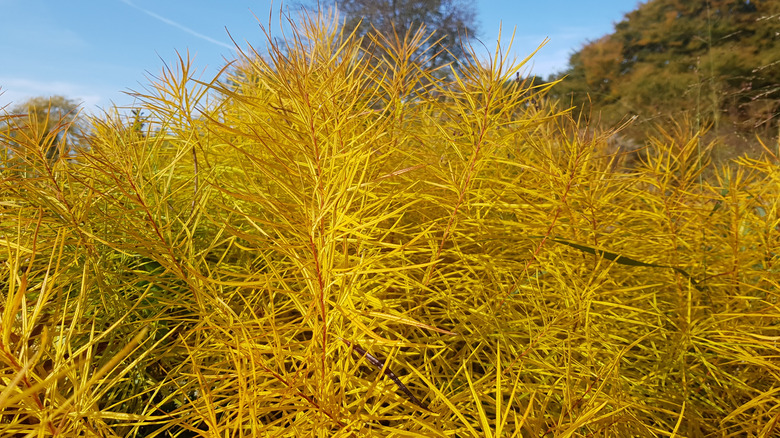
Some gardeners might think Hubricht's bluestar is past its prime when the flowers have faded and the first frost of the cold season hits. But that's actually when this plant reaches its aesthetic peak. The fine leaves undergo a dramatic color change, with the soft green giving way to rich gold. This transformation turns your driveway border into a glowing garden feature that is sure to brighten a gray fall afternoon. The foliage stays on the stems of Hubricht's bluestar much longer than the leaves on nearby trees and other deciduous plants, bringing interest to your front yard well into the holiday season.
As winter settles in, the golden leaves of this tough perennial fade to a warm tan. While the foliage isn't as upright as it once was, the stems become more visually prominent. This provides some dramatic vertical interest and undeniable character in a soft, snow-covered cold season garden. Are you trying to design a beautiful garden that looks equally stunning in winter? Put those pruners away and leave the dried stems on your Hubricht's bluestar until the end of February. Once early spring arrives, cut the plant down to the ground to encourage fresh foliage and flowers.