

15 Ways To Update A Tired Dining Room With A Modern Refresh

We may receive a commission on purchases made from links.
Dining rooms should be inviting spaces for hosting family celebrations and special dinners, but poor design can make it difficult for family members to truly relax. A tired dining room in need of a redesign can take its toll on the functionality and enjoyment of the space. Furniture that doesn't fit the area feels clunky and slows down the flow at mealtimes. Oppressive colors and heavy curtains block natural light, creating a cavernous effect that is anything but welcoming.
But fixing a drab dining room doesn't require an expensive renovation. Small changes to the room can make a major impact. By targeting what feels outdated, consumers can focus on the fixes that work best for their lifestyles and budgets. The result is a modern vibe that everyone in the home can't wait to enjoy. For those ready to make a change, here are 15 ways to update a tired dining room with a modern refresh.
Change out the dining chairs, and keep the table
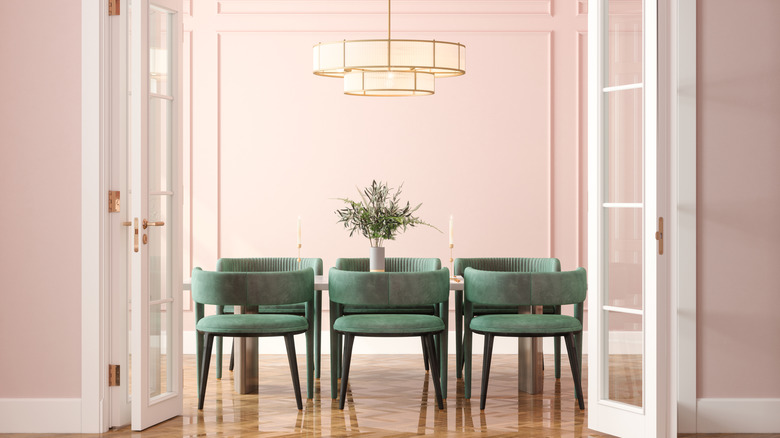
Many buyers opt for a matching dining table and chairs. Whether they bought them together to get a deal or inherited them from downsizing parents, those sets may look cohesive, but they can be boring and uninspired. Heavy wood chairs may be clunky and feel cumbersome to drag around before sitting down to a meal. Without cushions, dinners can feel endless and leave everyone feeling stiff when they stand up.
Getting rid of the whole set may feel wasteful, but there are other options. Replacing just the chairs with a more modern design, such as the Galliden Set from Signature Design by Ashley, keeps the functionality but makes the furnishings a little more interesting. Just upgrading the seats at the head of the table can even improve the room's wow factor. Some upholstered chairs, like the Ines Dining Chairs from Spruce & Spring, have wheels that make them easy to move without lifting, and the rounded backs and armrests make them more comfortable for longer meals. If new chairs aren't in the budget, reupholstering the current chairs in an attractive fabric can also work. Even adding cushions to otherwise bare chairs can add color and improve comfort.
Rethink the bulky china or curio cabinet
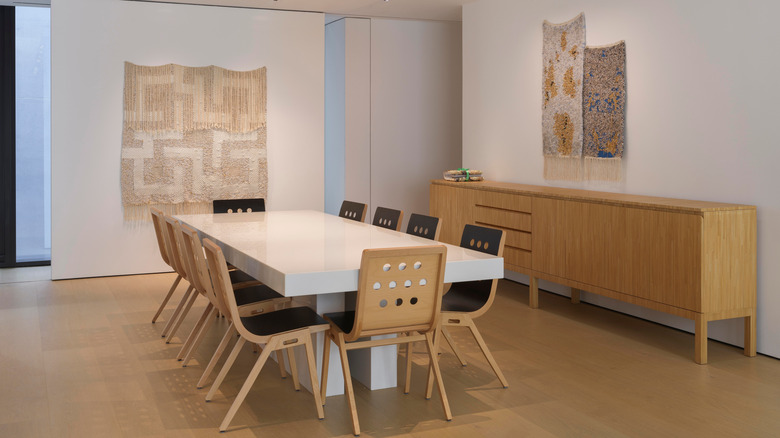
The dining sets that previous generations bought typically included a hutch or curio cabinet. These large, sturdy pieces towered over rooms and displayed the family's best china, serving tools, and other fun knick-knacks. But as the modern family's needs changed, these cabinets, whether bought in a set or passed down from a relative, lost their practicality.
For dining rooms that feel tired and crowded, removing these cabinets may be the first step in brightening them up. This can be easier said than done, as these cabinets are notoriously heavy, but getting creative can make a big impact. Many of these furnishings are actually two pieces. Taking the top half off alone can do wonders for the space, giving it a lower profile and less clunky look. For those who want to swap out these pieces, look for something slim and functional like this SuperJare Rattan Console Table. When more storage is needed, the Fluted Buffet Cabinet from BELLEZE can hold plates and glasses while also providing serving space.
Change the ceiling light fixture to something more modern
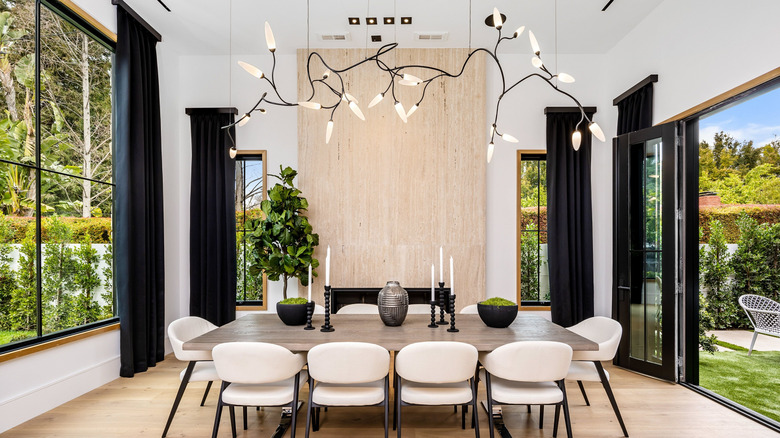
A heavy brass chandelier is a definite sign that your dining room is stuck in the 80s. Once elegant, these ceiling lights carry the vibes of a particular era. They usually have a lot of brass accents, while others may have crystal detailing that's lost its sparkle and is showing its age. Those vibes may feel too formal nowadays, and their impact can be tough to shake, even when you change out other furniture in the room.
Swapping the dated fixture for something more modern will breathe new life into a tired design. Airy, more open options, like the Erzo Minimalist Fixture from Kichler, will lighten up smaller dining rooms that need a lot of light without taking up too much space. Bigger rooms may want something more bold, such as Merra's Sputnik Chandelier. However, not all lighting in the dining room has to be a chandelier. Rooms that are more rectangular might demand a more linear silhouette. Eglo's Three-Light Pendant, for example, can provide targeted lighting right above the table.
Add character with a bold paint color
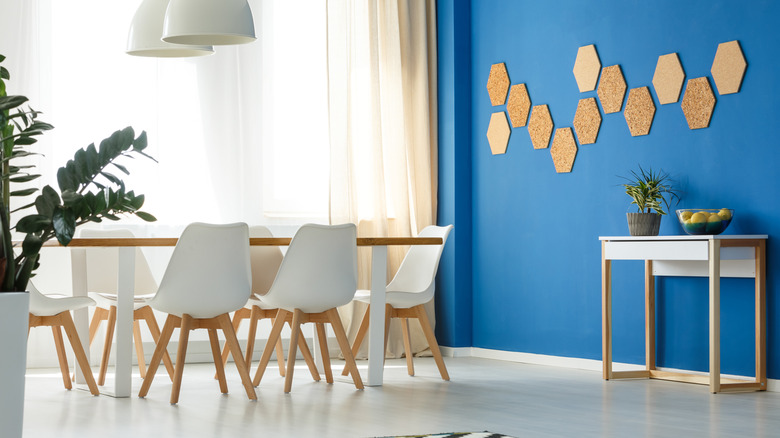
Paint colors in a dining room can make or break the space. Some colors immediately evoke feelings of a certain era. Pastels, for example, will likely harken back to the '80s. Other colors, especially ones chosen by a previous owner, can feel impersonal. Neutrals tend to be a safe option, but they don't always fit the space. A heavy brown or beige may be versatile, but in small spaces, these tones darken the room. Even with new chairs or less clunky furniture, oppressive colors on the walls keep the space feeling cramped.
Those handy with a paintbrush do have options when it comes to choosing a new color for their walls. A bold hue, like a navy or a brick red, will instantly give the dining room a new feel. This can backfire, however, if the room is small or does not get much natural light. For those who prefer to play it a little safer, neutral tones such as white or beige won't leave the room feeling too dark. Cozy neutrals can also let other elements, such as the furniture or ceiling fixture, in the room shine. Just avoid painting your dining room a cool white that will create a sterile, unwelcoming feel. And whatever you do, don't let neutral shades render the space boring. It's important to have other decor in the room to make it more interesting and inviting.
Or try wallpaper to liven up the space
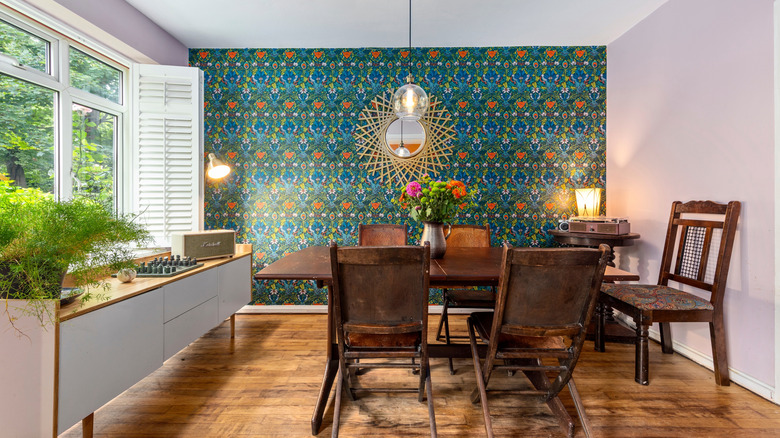
Painting may be the most obvious way to remove the tiredness from the dining room walls, but it's not the only way. Some may have neutral colors on their walls already, but those tones can look dull with nothing else in the room adding a pop of color. Or maybe they like the color already, but still feel that the room could use a refresh. That's where wallpaper comes in. Peel-and-stick options are easy to install and open up so many ideas from simple borders to huge patterns.
For rooms with an empty wall, covering it with a wallpaper like Wenmar's Geometric Hexagon Print or the Black Caden Abstract Pattern from Roommates Studio can set the tone. Even spaces with a wooden chair rail around the perimeter shouldn't feel limited. One half of the wall below the molding can stay painted, while the top half is covered in a striped wallpaper or a more traditional motif, such as a Vintage Floral Patterned Paper from ReWallpaper.
Or opt for a colorful area rug if paint is too much
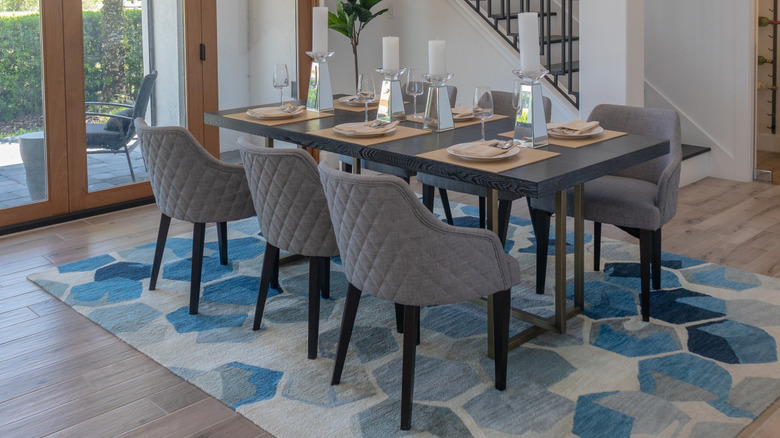
We get it: Sometimes painting and wallpapering present too much of a workload for busy homes. When these two options just can't cut it, a vivid area rug can do the heavy lifting of bringing in more color while also softening the space. This option requires very little work, just a little temporary rearranging to get the rug down, and it can be an instant game-changer.
Traditional patterns in neutral tones may be standard in many dining rooms, but to update that tired feel, try a color block or abstract design. Color block styles like the Jordan Rug from Balta usually incorporate several contrasting colors together for a look that stands out when the furniture and other decor are more muted. An abstract design like this Modern Rug from RoyHome can blend several different colors together without looking too busy. Homes with kids (and the occasionally clumsy parents) should also consider a washable option for a dining room area rug. A floral pattern, such as PLHXFR's vintage print, makes a statement, introduces bright colors, and is washable.
Hang artwork that makes the room feel unique
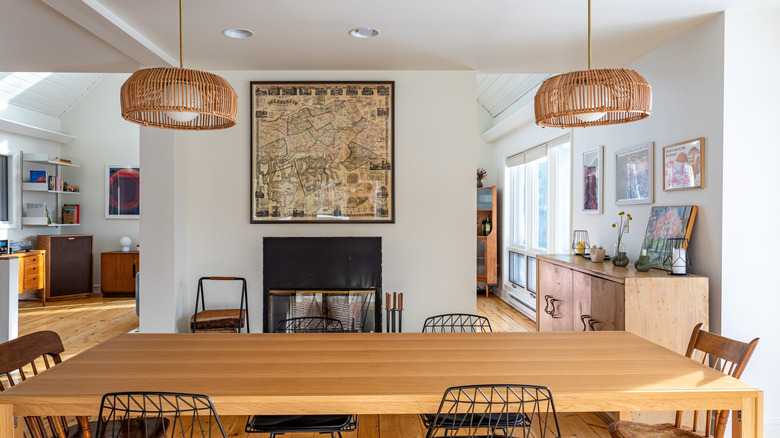
The dining room often serves as the cast-off space for artwork. Family photos are displayed on fireplace mantels and in big galleries that go up the staircase. However, a lot of the artwork hung in dining rooms, such as generic landscapes and sketches of unnamed places, are cast-off pieces that didn't fit in other rooms. This can make the room's style feel tired and less cohesive. And this space certainly deserves better.
Don't rush to fill the room with another boring landscape. Instead, take the time to think about art that would add to the space, not just blend in. One larger piece can make a striking statement, but two complementary paintings or photographs will showcase your interests. Now comes the fun part: filling your home with art you love that speaks to your style. Local art shows can be great places to find original works that will punch up the room's style. You can also browse locally on Etsy by narrowing down the shipping location to your area. If you're not finding anything, consider searching by places you've visited and loved. Having art from a favorite vacation destination can give off happy vibes every time you see it.
Paint a high-gloss color on the ceiling
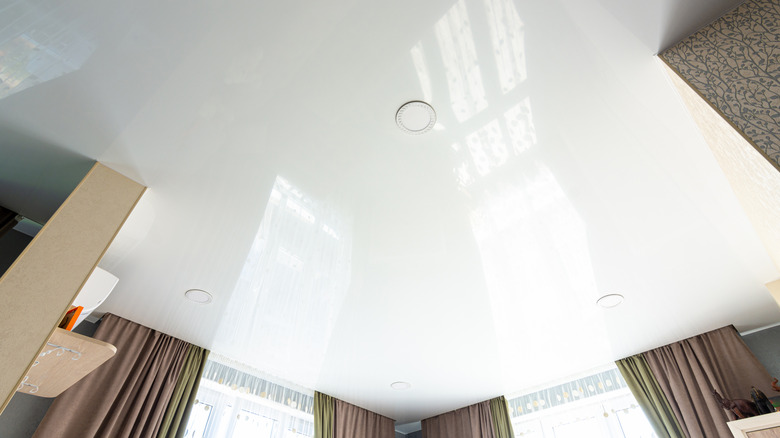
The ceiling really is the fifth wall of any room. When handling four walls feels like too much, focusing on just the ceiling can alleviate some stress. This is a great option for dining rooms with neutral walls that could use some texture or color, and it's an alternative if the rug is going to stay neutral as well. The key to making the ceiling paint pop is a high-gloss finish. This will reflect any light from the windows or fixtures and add a chic look.
A high-gloss paint can draw the eyes up from the floor and make the space feel bigger. If you have a bright hue on the other walls, picking the best shade of white to paint the ceiling in a high gloss sheen will give the room a little extra brightness. But if the walls and area rug are neutral, then bringing a more vivid hue to the ceiling will invigorate some of that tired feel.
Install a tin ceiling for additional drama
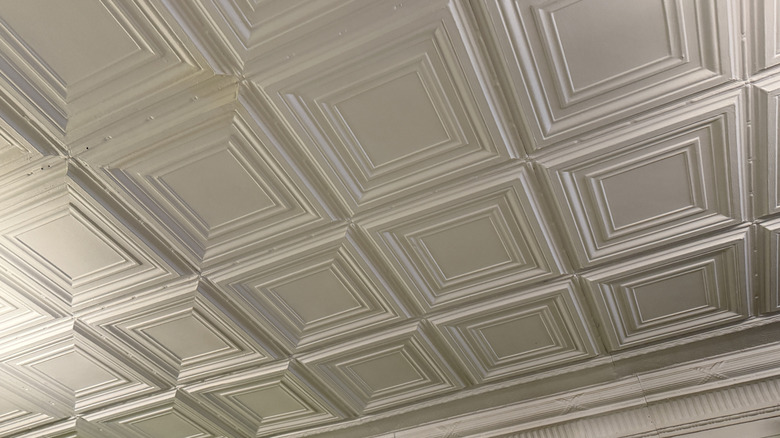
Painting isn't the only option on the ceiling, and it's not the single, best way to really make a statement in the dining room. For a bigger home project, tin tiles can highlight architectural features already on display, and they can enhance the style running throughout the home. With so many patterns, textures, and colors, consumers have an array of options when it comes to installing tin ceiling tiles that fit the space.
When simplicity and minimalism are key, start with a white tin, such as the Jamestown Pattern from Great Lakes Tin. The color won't take away from other elements, and it can be used to add a little detail or highlight other features, such as crown moulding or drop ceilings. Homes leaning heavily on eclectic or Art Deco styles could push their designs a little farther with an option like the Tiptoe Tin Pattern by From Plain to Beautiful in Hours on the ceiling that reflects natural lighting nicely. Whatever pattern is chosen, just make sure it fits the overall style of the home to avoid a disjointed look.
Bring smart technology into the space
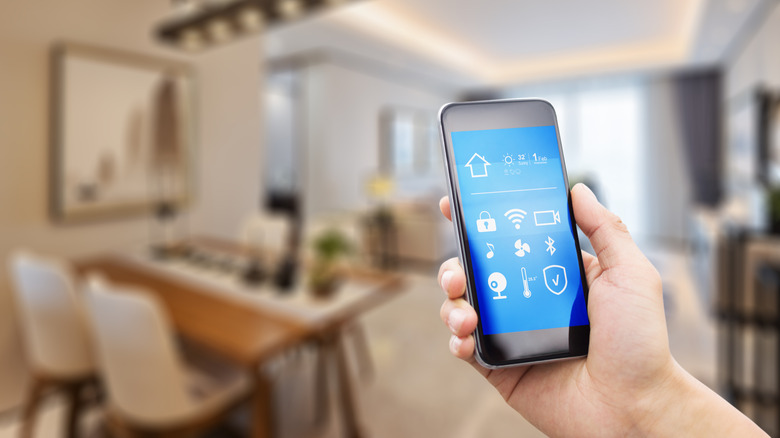
The last thing a dining room needs is a television, but that doesn't mean a little technology couldn't jumpstart a tired design. Smart technology, meaning devices that use integrated systems and remote or voice control to automate tasks, can instantly make a room feel more modern. Plus, setting it up doesn't need to be a hassle. Depending on your tech savviness, there are many ways to bring smart technology into the space without needing to call a professional.
An easy option is to start with smart light bulbs. The Philips Hue Essential LED Bulb can be controlled remotely through an app, and they connect to Amazon, Google, and other digital assistants for voice control options. These bulbs are also dimmable and available in white or multicolor varieties. A smart-home hub, like the Philips Hue Bridge, can add better functionality and remote features to the bulbs. To finish out the space, a Smart Speaker from Sonos can bring some light jazz or holiday music to meal times and set the tone.
Take the heavy curtains down
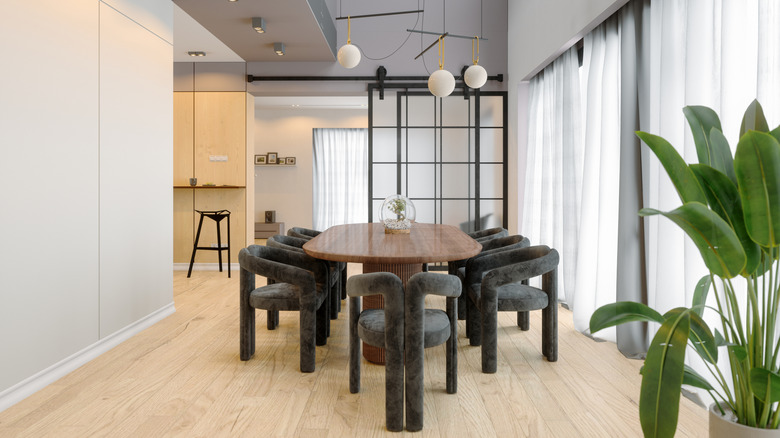
Heavy curtains were once the height of fashion in dining rooms. They looked formal and added a touch of class to the area, but now the trend is bringing the whole space down. The thick fabrics block natural lighting, leaving the room feeling dark and gloomy. This is especially a problem in rooms with little direct light coming through the windows. When paired with large furnishings, curtains just create more heaviness in a room that needs to breathe.
Removing the curtains will fix this oppressive problem, but there are other factors to consider. Curtains do provide privacy, and they prevent too much direct light from driving up the temperature in the home. For privacy concerns, a sheer curtain set will prevent most people from casually glancing into your home while still allowing plenty of light in. Curtains that touch the floor in light colors and fabrics offer a little more privacy without cutting out too much sunlight. Window shades that adjust from both the top and the bottom are another great option for keeping noisy neighbors at bay and minimizing temperature shifts. These Top-down, Bottom-up Cellular Shades from LazBlinds are simple to install and come in a variety of shades.
Rip out the carpet and replace it with hard flooring
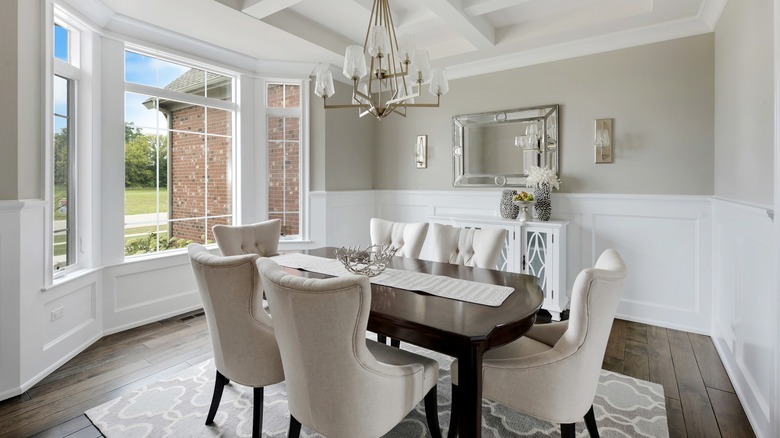
Perhaps the part of the dining room that's dating it the most is right underfoot. Carpet may have been all the rage in the '80s and '90s, but in the dining room, the limits of the flooring style really show. Neutral shades, which were especially popular in dining rooms, cannot hide stains, and they will inevitably look dirty over time. Even with regular steam cleanings, carpet just isn't functional and has faded from fashion.
Once the carpet is out, though, buyers have many options when it comes to replacing it. Hardwood floors always look elegant, and they hold up well with proper care. They can get expensive, so a budget evaluation should be had before calling an installation expert. If hardwood doesn't fit the style or proves to be too expensive, tile offers tons of design opportunities. Smaller spaces could benefit from a bold, retro-style tile, while bigger dining rooms might want larger tiles with smaller grout lines. If neither option fits, vinyl works well for homes with messy families. Whatever option shoppers choose, remember to add an area rug. That will keep the space feeling warm in both style and temperature.
Layer in texture with decor and task lighting
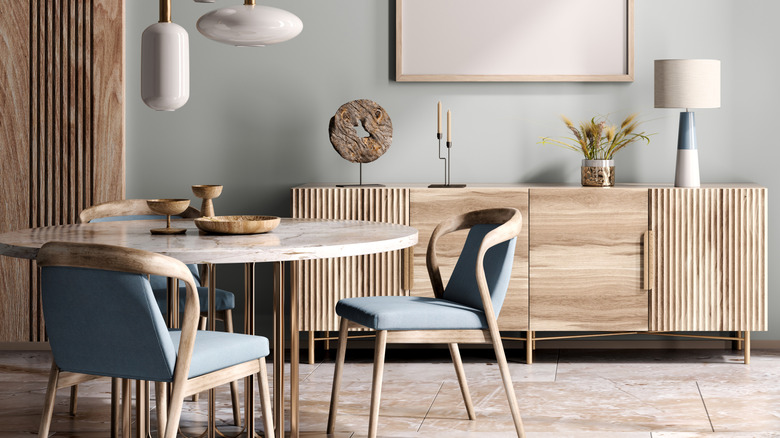
Sometimes, the devil really is in the details. When a dining room has just one texture, such as a wooden table, chairs, and a buffet, it leaves the room feeling flat and lifeless. The space needs variety to make it feel more lived-in and vibrant. But covering all available surfaces with knick-knacks makes the area look too busy. The key is to layer the decor and soft goods so they can break up the monotony and introduce new textures into the space without overwhelming it.
The most economical way to bring in decor without going overboard is to focus on functionality first. For example, Home ReDefined's Shagreen Serving Trays and the Natural Marble Vases from Moreast pull double duty. These both look stylish on the buffet and provide practical uses when hosting. Cushions and pillows on chairs can soften the overall look and give guests some extra support during long family meals. Add a runner on the buffet and placemats to the table to further break up rooms dominated by wooden textures. Finally, adding a lamp on the buffet provides task lighting while also bringing in maybe a new finish or linen fabric.
Install wall sconces to brighten up the room
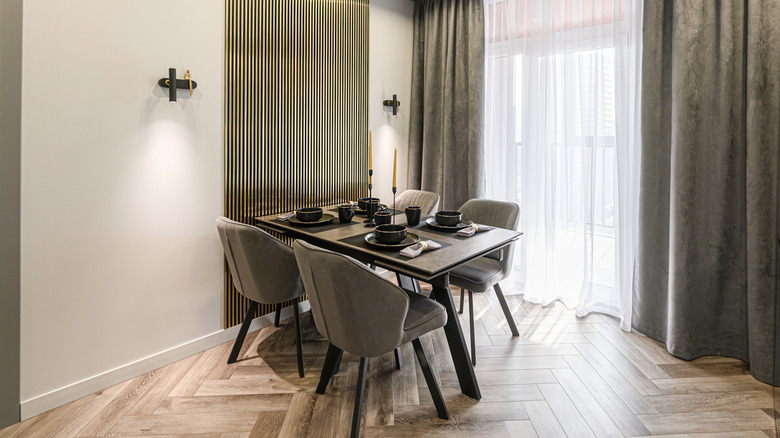
The amount of light in a room can play a major role in how outdated it feels. Regardless of the natural daylight or a modern ceiling fixture, the space won't be functional if guests can't see what's still left on their plates. While table lamps can add task lighting, they're usually too far away or not bright enough to provide any real help, and they take up space. However, wall sconces can be installed for the perfect room refresh just about anywhere in the space, and they can nicely frame artwork while amping up the lighting output.
How the fixtures will be incorporated should be considered when choosing wall sconces. Most shoppers will want to steer clear of sconces that must be plugged into an outlet. The wires will look messy in a curated space. Hardwiring them can be a difficult project, especially if you want them far away from light switches. However, you can find remote-controlled options, such as Byteany's Dimmable LED Sconce. There are also ones that are wireless and battery-operated, like C. Cattleya's Rechargeable Sconces with Shades, to make installation seamless.