

Say Goodbye To Pests Around Your Fruit Tree With The Help Of This Oil

We may receive a commission on purchases made from links.
We know it's tough to imagine if you're watching the snow fall with a fire blazing, but spring really is just around the corner. That means that in between daydreaming about warmer days and figuring out the best way to remove snow from the driveway, it's time to start thinking about your trees — more specifically, how you're going to keep nasty pests away from your fruit trees this year.
Dormant oil is a solid solution. Like its name suggests, it's designed to be applied in winter or early spring, when the plants are still dormant. The petroleum-based oil products have been distilled and refined to the point where there is little potential for damage to plants, pollinators, or people. But they are potent enough to go to work on harmful pests like aphids, scale, mealybugs, mites, and wasps.
Those overwintering pests like to hide where you can't see them in the chilly months, preparing to emerge and potentially wreak havoc on fruit trees once temperatures warm. But when they're met with dormant oil, they and their eggs or larvae are smothered and suffocated. This can stop or slow the reproduction and growth of the pests, leading to healthier trees when they begin to bloom.
Use dormant oil for pest-free fruit trees
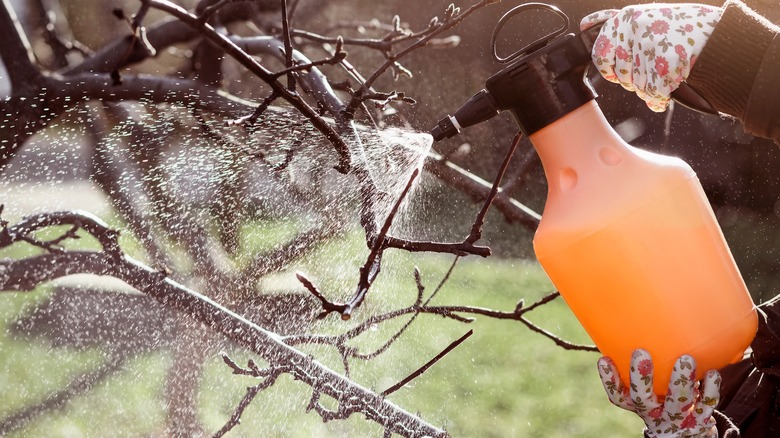
Dormant oil is an especially great solution for gardeners who want fruit trees that will turn their yard into a bird and butterfly wonderland. Because the product is applied so early and doesn't contain harsh chemicals, it's a pollinator-friendly solution for getting rid of harmful pests. You can pick it up at your local home and garden center, or nab a bottle of Bonide All Seasons Horticultural & Dormant Spray Oil at retailers like Amazon.
The trick to making it work is timing the application. You always want to follow manufacturer instructions, as dormant oil formulas can vary. But in general, you must apply it while the fruit trees are still dormant, meaning as early as January or February. Ideally, you'll apply when temperatures are between 40 and 70 degrees Fahrenheit. It's also best if temperatures will stay above 50 with no rain and little wind in the 24 hours following application, as well as above freezing in the next two or three days after that. Make sure your fruit trees are well-hydrated before the application, as drought-stressed trees are more susceptible to damage from the oil.
Sometimes, dormant oils come in a spray bottle. If so, you can just use the spray to cover the tree (including the branches and trunk) in a layer of the product. Otherwise, you can transfer the product to a hose end sprayer. Don't drench the tree more than once — you don't want to hinder the bark's ability to breathe. But do take your time to make sure that you get in all the branch corners, nooks and crannies, and thicker bark areas of the trunk, as that's where overwintering pests like to get cozy and lay eggs.