

Flooring Trends: What We're Seeing The Most Of In 2026

We may receive a commission on purchases made from links.
Flooring might seem like one of those design features that floats above trend cycles. While it's simple enough to swap your wall paint, it's no easy feat to pry away floor boards or smash up tile — and so, floor trends tend to stick around for longer. But that doesn't mean they're completely immune to fads. Just look at white oak. About five years ago, it was all the rage with modern farmhouse and transitional styles. Now, it's slowly starting to feel dated to the 2010s and early 2020s, much like sage green paint and Taj Mahal marble countertops. So as the tides are beginning to slowly turn, what are the new flooring trends beginning to emerge for 2026? To find out, we consulted our in-house expert, Design Historian Sarah Stafford Turner, in a House Digest exclusive interview. Her insights indicate that as maximalism and old-world styles are on the rise in interior design, flooring is reflecting this new need for personality and heritage designs.
These styles are bold, but also feel familiar, whether because you saw them in old archive photos or in your grandparents' homes. For example, rustic stone floors are having a moment everywhere from kitchens to foyers, mimicking the look of centuries-old English cottages. If you want something cozier underfoot, wall-to-wall carpeting or area rugs with tassels are experiencing a swell in popularity, throwing you back to your grandmother's parlor. Want to try something bold and new in your home's redesign? Here are some of the biggest flooring trends to look out for in 2026.
Pattern on pattern
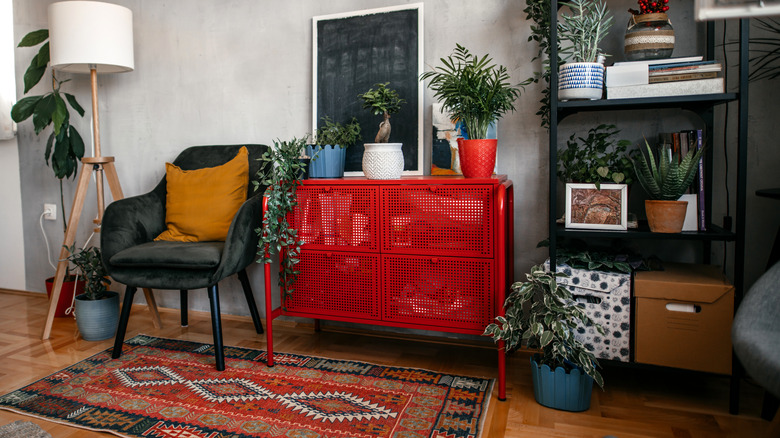
Just a few years ago, if you had a complex floor design, the rule of thumb was to use a neutral rug to avoid clashing with the flooring. Something without a pattern was key if your goal was to keep the room streamlined and airy. But since maximalism is on the rise, people are less afraid to mix patterns. "This year I have started to see more designers layering patterns. Diamond check rugs on parquet floors, for example, is a daring take on timeless motifs," Stafford Turner exclusively tells House Digest. "As a design historian, it's great to see how antique pieces can work into this trend and make a room look cohesive: An old Turkish or Persian-style rug looks so chic over a tile pattern with some Middle Eastern flair, like arabesque or ogee motifs."
If you want an authentic antique rug, you can sometimes find affordable options on secondhand platforms, like Facebook Marketplace or Craigslist. But if you would rather not wait for one to become available in your area, there is a surprising online source where you can find authentic, hand-knotted rugs, and that's Etsy. Sellers may also run sales, meaning you could get a large, natural-fiber rug for a few hundred dollars. For example, KnotRugsHome has rugs as low as $100. For a true antique feel, avoid buying a machine-made rug made from synthetic materials like polyester because it will look inauthentic. The images are printed on, and the imitation fading simply never looks convincing. If you prefer to buy a new rug, opt for something in a natural fiber, such as wool or cotton, and which sports a design that will layer well over your patterned flooring.
Rustic textures
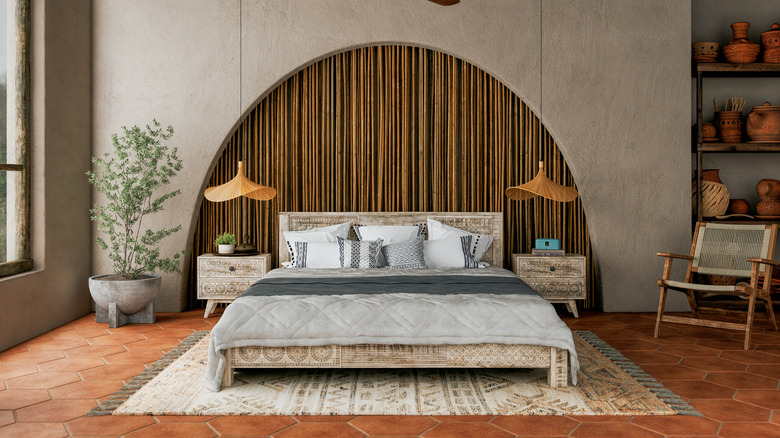
After a decade of white or gray rooms that felt like streamlined empty boxes, people are craving warmer designs with a little more life. This translates to a pull towards texture. And when it comes to flooring, that is being tapped into with tactile options. "Scroll or flip through the pages of any high-end design magazine, and you'll see one constant: rustic flooring textures. The eco movement in design continues to swell, and with it comes the use of tactile natural materials — from Berber rugs to rustic stone floors," Stafford Turner explains. "Oddly, bringing the outside in (like with a natural stone floor) seems to give a home a cozier feel, like an English country cottage."
If you don't have the funds to tear out flooring and install natural stone, then a simpler way to lean into this trend is to focus on rugs. You can find some attractive, authentic Berber shag rugs on Etsy, imported from Morocco, where they originate. For example, BerberBlanket is based in Morocco and offers custom sizes, allowing you to get a rug perfectly scaled for your room. If you're looking for a smaller dose of texture, try investing in a sheepskin accent rug instead. It's one of the materials that can give your home the perfect cozy look and feel, and it's possible to find options for well under $100, such as the Iriwool Premium Genuine Fur Sheepskin Rug. You can drape this in front of an accent chair or place it on the side of your bed, adding a rustic touch without going overboard.
Dramatic marble
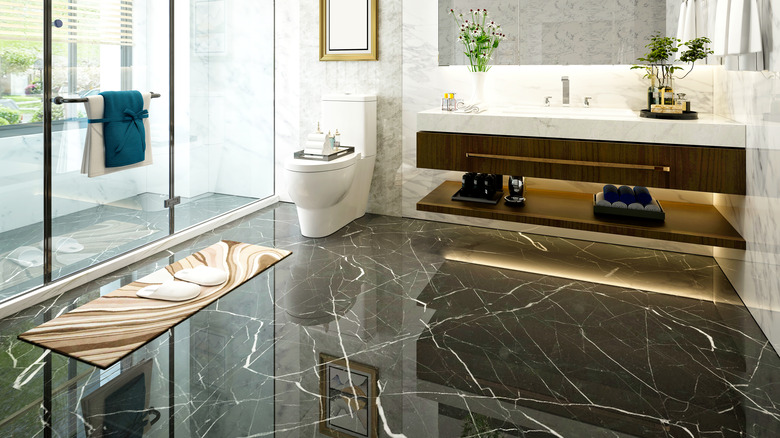
For a while, marble flooring was synonymous with new-money McMansions or old Italian palazzos. But in 2026, it feels right on trend with the rise of maximalism. However, does this mean we will see marble floors in common areas like living rooms or dining rooms? Maybe not yet. But they are appearing in a place most people like to get creative: bathrooms. "Marble comes and goes in terms of popularity, but among high-end designers, I'm beginning to see a lot of marble flooring coming back into the picture," Stafford Turner confirms. "Especially in bathrooms, marble and marble-look materials (like quartz) make for rich, luxurious surfaces which can be used to drench a room for a maximalist feel, especially if you find slabs with rich, colorful veining. Designers like Darren Jett are looking back at all-marble bathrooms from 100 years ago, the pinnacle of the Art Deco age, in creating dramatic spaces for 2026."
For dramatic effect, consider Calacatta Viola, which has deep red or purple veining; Cipollino Fantastico, which has swirly black, gray, and white veining; or Nero Marquina, which is a black slab with white veining that will fit right in with Art Deco-inspired bathrooms. If you don't want full slabs, consider marble tiles. For instance, you can do a marble checkerboard pattern, using something like TileBar's Calacatta Viola and Red Bordeaux Checkerboard Mosaic Tile.
Real wood
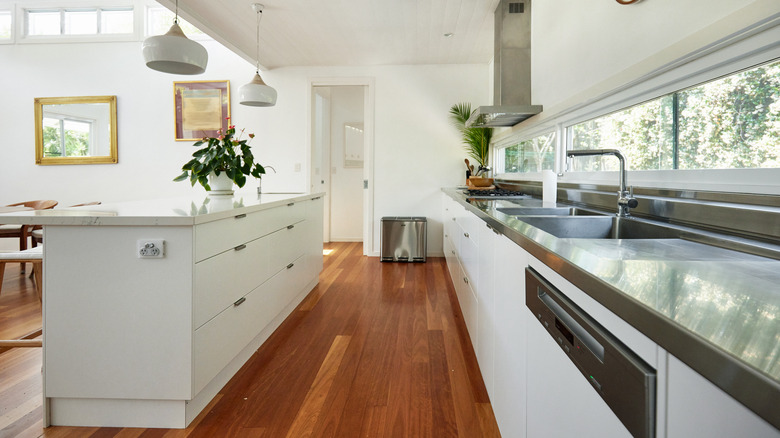
LVP has been the MVP in remodels, giving homeowners the look of wood with greater scratch- and water-resistance than the real thing. But as the Amazonification of home design is leaving people craving craftsmanship, and biophilic decor trends continue to draw us toward natural materials, real wooden floors are making a comeback. "LVP has its place, for sure, but natural materials are reigning supreme in 2026. While it's practical to opt for more traffic-resistant flooring in areas like the kitchen and bathroom, designers and homeowners alike are returning to real wood for homey, lived-in spaces," Stafford Turner shares. "Yes, they will acquire patina over the years, but this lived-in look is becoming more acceptable for homey spaces like living rooms and bedrooms."
When white and minimalist styles reigned supreme, people wanted materials that wouldn't scratch or wear, or else they would look shabby in that design. But this level of perfectionism is beginning to feel artificial, and people are choosing more lived-in aesthetics that allow for scratches, dings, and watermarks. This type of patina and wear can't be bought on Amazon, but needs to be acquired over time, making it feel valuable in a world filled with dropshipping and two-day deliveries.
Rugs that mimic tile
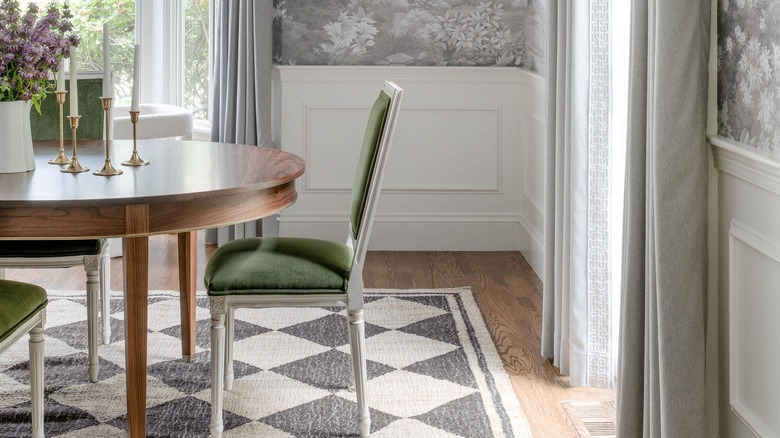
Do you love the look of checkerboard tiles but don't want to take a sledgehammer to your existing flooring? In 2026, you won't have to. Rugs that mimic checkerboard or diamond tile are on the rise, copying the look of everything from Victorian floors to Art Deco schemes for a fraction of the price of a remodel. "This is a trick that has been used by designers throughout design history, but finally, some more accessible interior brands are offering reasonably priced tile alternatives in the form of patterned carpets. If you're looking for a checkerboard tile look or a mimicked zellige floor, companies like Wayfair and Amazon are replete with examples of tile-patterned rugs that look as dramatic as the real thing, but feel soft and cozy underfoot and are easy to move to any room," Stafford Turner explains.
One example is the Erin Gates by Momeni Diamond Wool Rug. The cream and charcoal diamond pattern mimics marble flooring in the same design. It even has a line border on the edges, much as you would see tile finished in a foyer or hallway. Its low-pile design is perfect for under a dining table or breakfast nook since it shouldn't snag the chairs, or in a foyer or office, where you don't necessarily want your feet to "sink" into the flooring.
Rugs with tassels
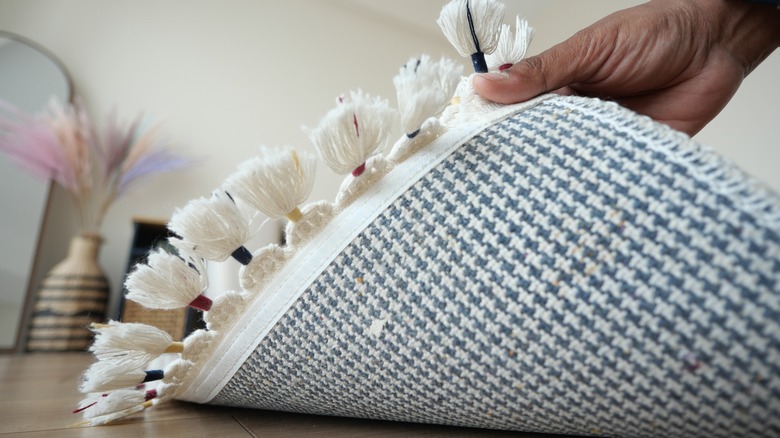
There is a reason why things like grandmacore and dark academia have been trending the last few years: People are craving old-school designs that show craftsmanship, curation, and warmth. And when things like rosewood waterfall dressers and worn black leather accent chairs are trending, it only makes sense that vintage-inspired rugs also experience a revival. Enter tasselled rugs. "Tassels have taken over HomeTok. Young designers and DIYers are obsessed with tasseled carpets, even showing off ways to keep your tassels from getting messy and tangled. From small entryway rugs to long runners, tasseled carpets are trending in 2026," Stafford Turner notes.
They add an extra layer of detail, enhancing both the antique feel and maximalist approach to layering. Do you have an existing rug that would benefit from the additional detail? Luckily, adding tassels isn't all that complicated. All you need is fabric glue or a hot glue gun. Simply buy a spool of fringe trim, like the Heliltd Cotton Tassel Fringe, and then hot-glue it to the underside of the rug. This easy trick can instantly make a big box rug seem more intricate and charming.
Large-scale tile patterns
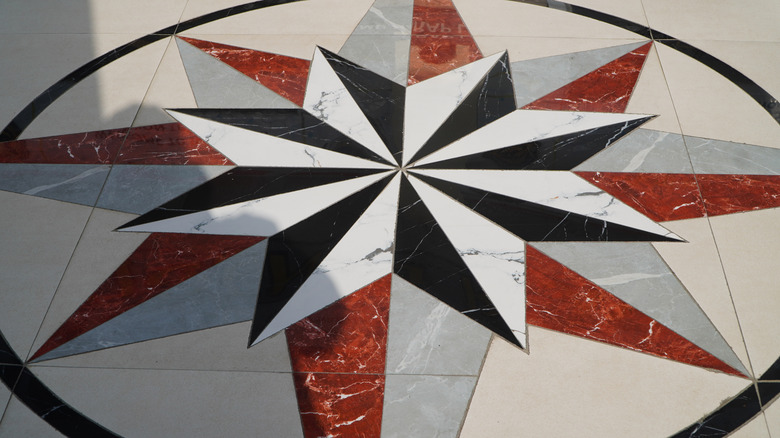
"More is more" isn't just for rugs. That mentality is spreading to tiles, too. Specifically, large-scale tile patterns are on the rise, mimicking old mansions or palazzos. "In 2026, customization will be king — and large-scale tile patterns are a great way to achieve something unique and custom on a budget," Stafford Turner explains. "Flooring installation companies and home improvement stores like Home Depot can help you design an enormous compass pattern or rosette that will cover your entire kitchen floor, using tiles in the colors of your choice. They'll either install it for you, or can help you do a self-install. When you're done, you have a feature around which you can plan your entire layout. It's a win-win."
A move like this is bold — and likely won't be for everyone — but it feels particularly worth doing due to the level of attention it requires. As people tire of copy-paste interiors shaped by social media, where feeds and For You Pages are flooded with the same trend-driven looks, the appeal of something truly original is growing. When those FYP trends are easily replicated with a few clicks on Amazon or Target, sameness is inevitable. But if you create a unique, custom install, people will be hard-pressed to copy you — or at least, not without a lot of work or craftsmanship. If compass or rosette motifs aren't quite down your alley, there are lots of other interesting tile moments to consider, such as Victorian, Edwardian, and other heritage mosaics.
Wall-to-wall carpet
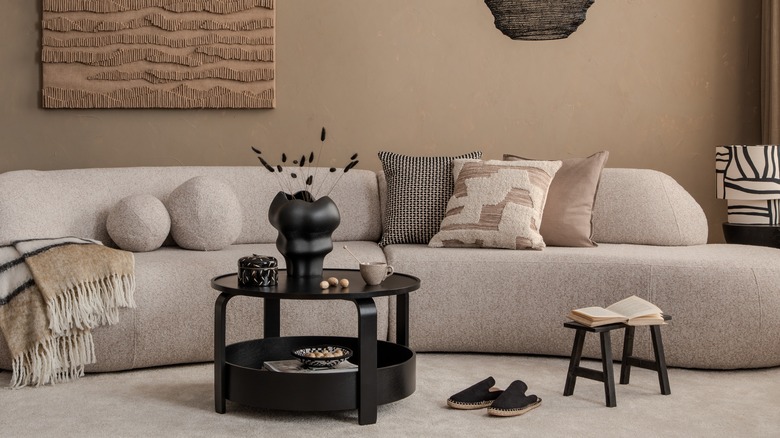
For decades, wall-to-wall carpets were met with a box knife and a dumpster. House flippers and new homeowners alike couldn't wait to get rid of old carpeting and install cozy hardwood or LVP. But things are beginning to change. "Stop, I know what you're thinking. It's tacky, it's hard to clean, and it's so 1985. But, with apartment living on the rise, and soundproofing a practical necessity, carpet is actually getting more popular," Stafford Turner shares. And, it's not being installed the same way it was 50 years ago. "It's not so much used throughout an entire home, but selectively in high-traffic rooms, or spaces meant for quiet retreat (like bedrooms). Plus, there are now options that are much easier to clean and maintain than what was popular in your parents' day — low-pile options made of natural materials are definitely on trend."
If beige carpeting holds too strong a connotation with your parents' old house, consider low-pile choices in unexpected tones. These are thinner carpets that almost mimic the look of rugs, making them appear more modern. Rumblings of wall-to-wall carpeting making a comeback started as far back as 2018, especially when musician Lykke Li's house made the cover of Apartamento Magazine. Her living room and bedrooms were covered in powder blue, low-pile carpeting, and another living area had a similarly dense pile in muted grass green. It was one of the first examples of how carpeting could be chic, and in 2026, some people are ready to embrace it.
Using rugs to delineate space
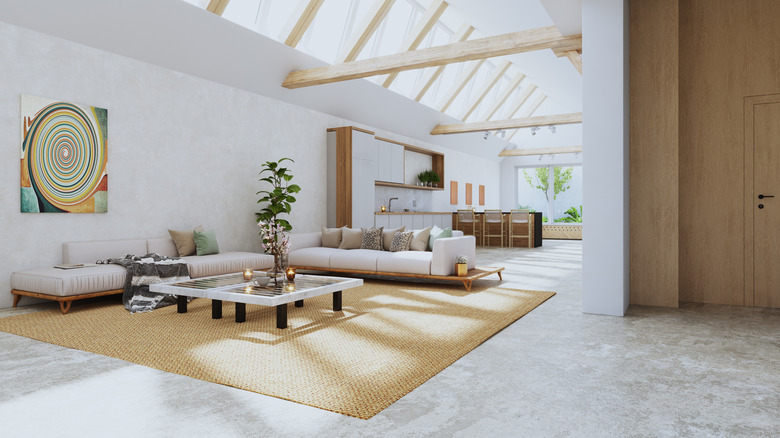
While some homeowners are returning to closed-concept layouts, open-concept homes remain popular. But after more than a decade of living in these free-flowing spaces, their drawbacks are becoming clearer, and homeowners are looking for ways to address them. One of the biggest challenges is defining distinct zones. As a result, rugs are being used more than ever to help delineate space. "This division of space is partially a reaction to the work-from-home boom: We want to feel like our home is composed of separate spaces, which we can use to divide our work lives from our personal lives," Stafford Turner explains.
Large rugs can create distinct borders around furniture groupings, leading our minds to read them as separate spaces. "A carpet under the sofa, and another carpet under the kitchen table make the living and eating areas feel separate, even when it's all designed to be one expansive room," our design historian notes. But not any sized rug will do. There are mathematical equations for choosing a rug appropriately sized for your space. For example, a rug should extend 6 to 8 inches beyond each side of the sofa. However, if you don't want to buy an expansive rug, you can also opt to have just the front legs of the sofa and chairs resting on the rug — with, ideally, at least ⅓ of each furniture piece's depth being over the rug. If you go any smaller, the zone won't be properly delineated, and you won't achieve the same effect.
Continuous indoor-outdoor flooring
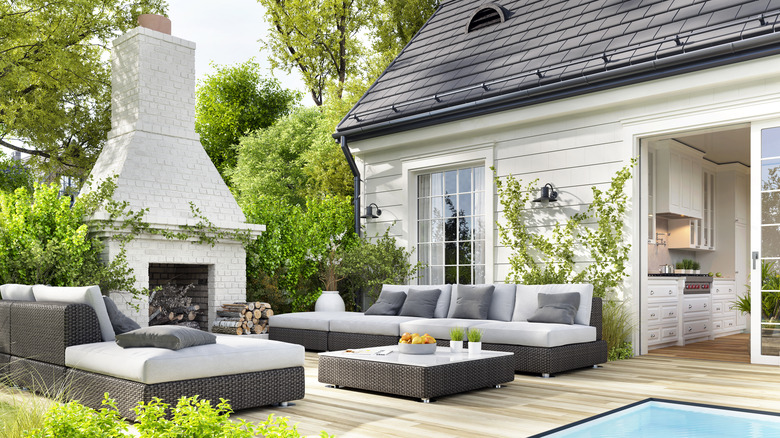
When sheltering in place became necessary in 2020, people took a second look at their outdoor spaces and realized they could use them so much more. Exterior living area upgrades soared, and this trend has continued over the following years. One of the newest iterations of this focus is connecting the exterior and interior living areas with the same flooring. "Speaking of decorating to 'escape' (from work or chores, or anything else) — homeowners and designers working with a patio or deck are choosing to extend that outdoor flooring to the inside, to make indoor living areas feel like an extension of nature," Stafford Turner explains. But don't worry, this doesn't mean you'll need to install vinyl decking in your living room. "There are lots of flooring options which can withstand both outdoor and indoor conditions, like ceramic tile and natural stone."
Do you like the idea of turning your patio into a second living room, but don't necessarily want stone flooring in your common areas? One potential alternative is to achieve the look of hardwood by choosing wood-effect tiles. These have the durability and weatherproofing of tiles but provide the homey aesthetic of hardwood planks. An example is Tile Club's Japandi Wood-Look Tile Flooring, which comes in a variety of imitation wood tones, and is designated for both indoor or outdoor use.
Natural flooring in outbuildings
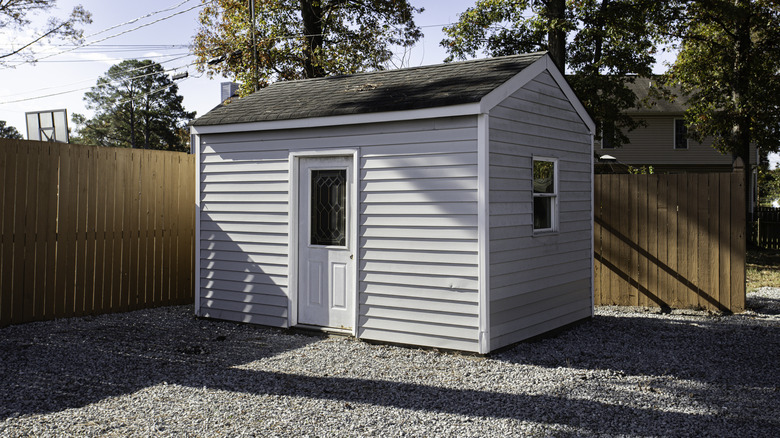
Another outdoor feature more and more people began investing in during the pandemic is outbuildings. Being confined to home made some people realize they needed more space, whether that was to have a separate building for work or more room for hobbies — leading many to create sheds and outdoor pods. While some opted for wood or LVP flooring to mimic the rooms in their houses, 2026 is seeing a biophilic-leaning trend in flooring towards more natural, outdoorsy materials. "If you're lucky enough to have a barn, she-shed, or other outbuilding, and you're wondering how to decorate it, the answer may be that less is more. Designers are taking to leaving floors bare: Concrete, dirt, and gravel are all fair game for a rural, primitive look," Stafford Turner explains. "Especially among the generation of fixer-uppers who are restoring historic properties, maintaining the minimalistic floor of a period barn or cottage is seen as a nod to authenticity, rather than an inconvenience."
Dirt flooring can work for a garden or woodworking shed, whereas pea gravel could give an earthy touch to an art studio. But loose flooring won't be as great for an office, as it can make moving desk chairs difficult or cause loose particles to dirty electronics like laptops or large screens. In cases like those, it's best to go the concrete route. While it's much easier to dump bags of dirt or pea gravel on the floor and call it a day, concrete isn't all that expensive. On average, it costs $2 to $6 per square foot.