

The Hidden Damage Winter Salt Can Do To Your Floors — And How To Remove It Fast
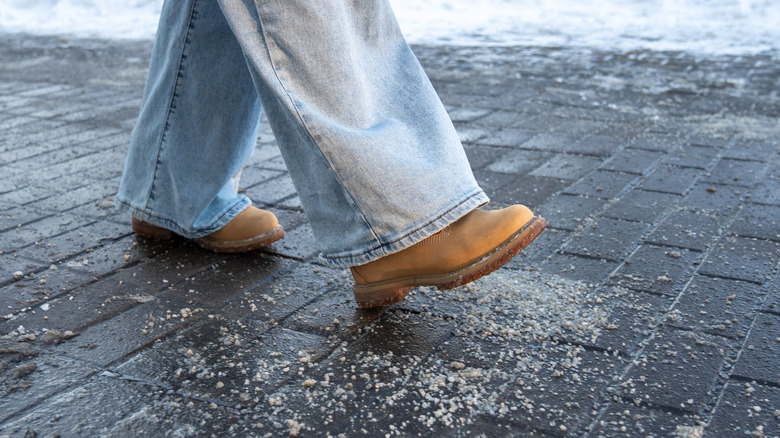
Clearing away ice when temperatures are below freezing outside is a unique challenge. As water pools on surfaces and starts to harden, it can create hazards, whether a slippery surface that makes it easier to take a fall or a nearly undetectable layer of ice that reduces traction for cars. We can't exactly take a hair dryer to all of these areas or turn on the heat to allow it to thaw, so oftentimes, it's beneficial to bring in some chemical help. There are plenty of different methods for melting ice, but one of the most common is to use de-icing salt.
These salts decrease the freezing point of water, turning ice to slush and helping to break up that slippery layer over surfaces. They're not all good, though — beyond the fact that they can cause deadly winter salt damage in your garden and often produce runoff that's dangerous to both the environment and surrounding infrastructure, deicing salts can wreak havoc on your flooring. Luckily, with proper cleaning and precautions, you can minimize this damage, even to the more delicate flooring in your space.
Whether you want to avoid warping on your wood floors, lift unsightly salt stains from your carpets, or prevent damage to the finish on your polished surfaces, focused cleaning and care can go a long way. However, the first step should always be prevention. To minimize the work you'll have to do later, consider laying down some textured door mats in your entryway, adding a boot tray for you and your guests to store shoes off the floor, and taking your shoes off either outside or as soon as you enter the house.
Use vinegar to gently lift stains from carpet
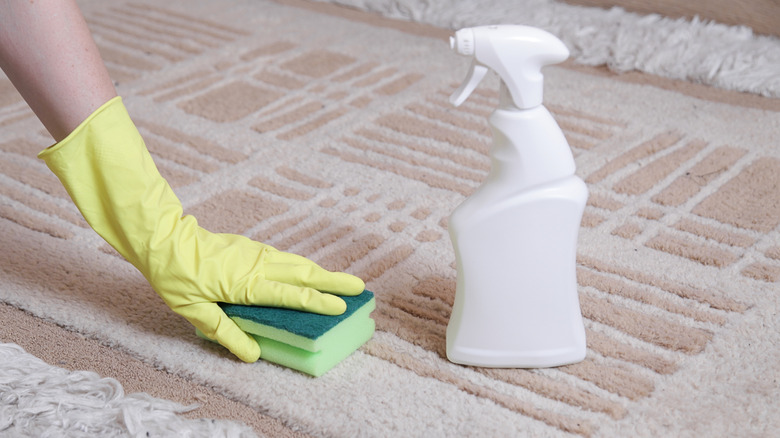
Carpet is one of the most difficult flooring types to get truly clean. Debris, dirt, and liquid can get trapped in the fibers, and more corrosive cleaning agents, like bleach or ammonia, can discolor the surface. Because of this, it's important to rely on gentle but effective cleaners, like vinegar, to lift stains, especially those left behind by ice melt. You'll be able to say goodbye to rock salt stains on your carpet with this handy kitchen essential.
To avoid leaving ice melt stains on your carpet and rugs, the simplest approach is to avoid walking on these areas while still wearing the shoes you wore outside. Things happen, however, and if you're often rushing through the house or you have carpet by the front door, you could notice damage anyway. De-icing salt buildup can cause your carpet fibers to feel gritty or stiff. You also might see discoloration or an unsightly white crust in high-traffic areas. Cleaning this up right away is important for more than just aesthetic reasons — you could cause your carpet to wear out more quickly if you don't address the problem.
To begin, vacuum the surface to pick up any loose granules of de-icing salt. Spray the stained area with a mix of distilled white vinegar and water, then grab a wet vac to suction away the liquid. If you're attempting to clean a washable rug, you can also just toss it in the machine per the instructions on the label.
Prevent damage to wood with regular vacuuming

Wood flooring can last well over a century if properly maintained, but keeping it in good shape can be a major task, especially if you live somewhere with frequent snowy and icy conditions. If you have wood flooring in your entryway or another high-traffic area where you frequently wear shoes, it's very important to stay on top of your cleaning routine. Dry salt particles should be swept up or vacuumed as soon as you notice them, and if you track in wet, salty slush, clean it up with a rag right away.
This rapid cleaning routine might seem like overkill, but ice melt can wreak havoc on wood flooring. This material is susceptible to moisture, especially if it's been a while since it's been properly sealed, and leftover liquid can seep into the floorboards and cause warping and rotting. Dry salt particles can also damage and dull the surface of the flooring, and you could notice unattractive white stains just like you see on carpets and rugs. Regular cleaning will keep this damage from getting more serious.
If you find that your wood floors are starting to look dull, stained, or dingy, even after sweeping or vacuuming, it's time for a deeper clean. Luckily, this shouldn't be all that different from your regular routine. Use a damp, soft rag to wipe the affected area and remove any built-up residue. If you notice that there's still some left behind, follow up with a wipe down with a water and vinegar solution. Whichever method you choose, make sure to fully dry any liquid left behind to prevent moisture damage.
Avoid using harsh chemicals on tile surfaces
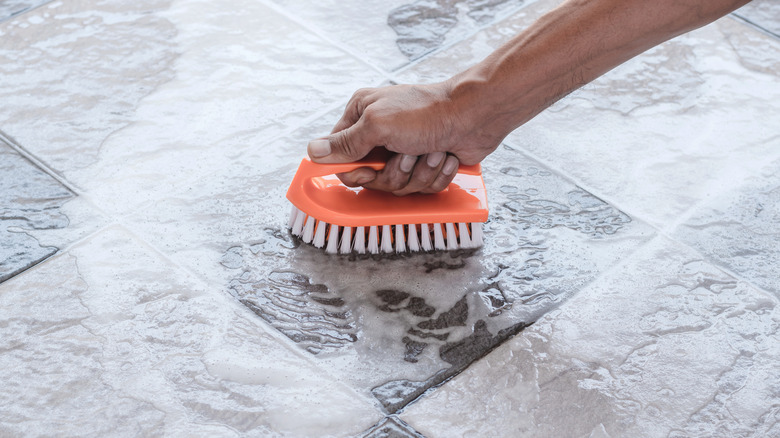
Tile flooring is a common choice for entryways thanks to its durability and how easy it is to clean, but it can also fall victim to damage and staining from de-icing salt. It might be tempting to bring out the big guns when you're dealing with annoying residue, but using abrasive cleaners is one of the most common mistakes people make when mopping and maintaining tile floors. Instead, stick to a cleaning routine with gentle products that won't damage your grout.
If you frequently track in de-icing salt onto your tile floors, you could notice an annoying, light-colored haze on the surface, similar to its impacts on other flooring types. Because this helpful melting agent can be corrosive and abrasive, however, you could also be looking at more severe damage. Ice melt can erode the surface of your tiles and take away their sheen. In some cases, it can also do major harm to your grout, eventually seeping down to the subfloor and eroding the adhesive that keeps your tiles in place. To prevent this, reseal your grout regularly and stay on top of cleaning.
The process for cleaning your tile flooring is similar to cleaning wood. Vacuum or sweep up any dry salt to prevent scratches, then wipe everything down with some water as a first line of defense. If you're still noticing a dull haze from the salt, use your diluted mix of vinegar and water in a spray bottle as a cleaning agent. It's especially important in this case to make sure the mix is diluted — highly acidic cleaners can damage grout. If you have natural stone tiles, skip the vinegar altogether and go for a soapy water mix.
Try a simple soapy water solution to revive stained concrete
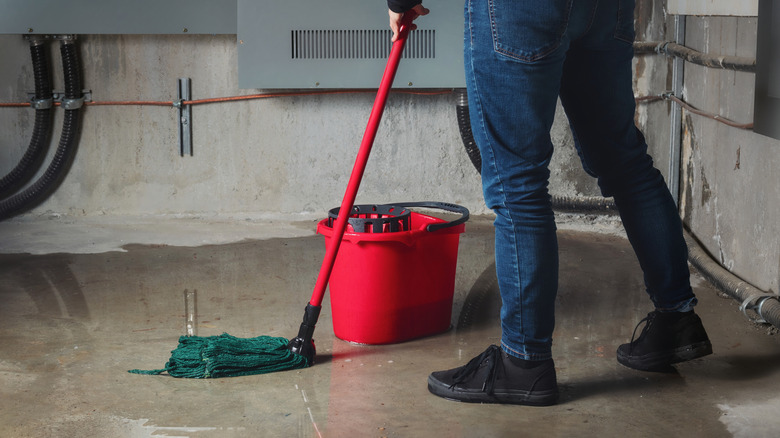
Concrete floors are one of the most common locations for de-icing salt stains, thanks to the fact that they're often found in outdoor spaces and garages. Just because they frequently have a more utilitarian use, however, it doesn't mean that you can't put in a bit of work to make them look good.
While concrete is a very durable material, it can actually be damaged by de-icing salt, especially if it's a particularly powerful chemical formula. Certain ingredients sometimes found in ice melt, including ammonium sulphate, ammonium nitrate, calcium chloride, magnesium chloride, magnesium acetate, and magnesium nitrate, are capable of causing serious damage to concrete. If you have an option, stick to plain salt (sodium chloride) or sand as a de-icer to protect this type of flooring. If it's out of your control, make sure you commit to a regular cleaning routine to ensure your concrete is durable and smooth for years to come.
To clean concrete surfaces, all you need is dish soap and warm water. Mix it up in a bucket and mop as you normally would. This should clear away the bulk of the stains, but if it doesn't, go for a second round. While it might be tempting, avoid using harsh cleaners on concrete that has been sealed or stained. Unsealed concrete can handle pretty much whatever you throw at it, so feel free to pull out the big guns to clear away the salt, but harsh cleaners can damage your concrete's sealant or discolor its stained surface.
Use a gentle acidic cleaner to revive dingy laminate
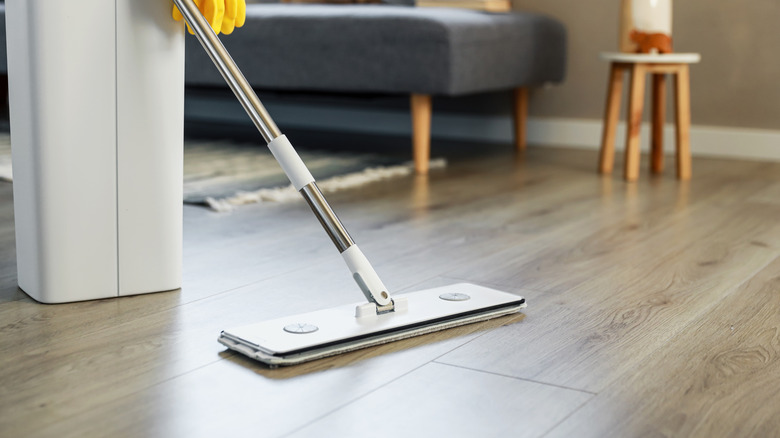
Laminate can give you the same look as wood for much, much less, but it's important to properly maintain it if you want it to last. As with other hard flooring types, you'll likely notice light-colored stains on your laminate flooring if there's a buildup of de-icing salt on the surface. Also, as with other hard flooring types, leaving this salt on the floor and not sticking to a regular cleaning routine could cause more severe damage over time. The chemicals found in ice melt can wear away at the surface of your laminate, first dulling its shiny look, then seeping further into the layers to cause even more harm.
Dealing with salt stains on laminate floors, thankfully, is no herculean task. Laminate can handle being cleaned with a diluted vinegar solution, so sweep or vacuum up any debris as normal and spritz on your cleaning spray. After a few minutes, you can wipe or mop it away to reveal fresh, shiny floors once again. Finish up with a pass with clean water to make sure there's no vinegar or residue left over, and you're good to go.