

The Water-Resistant Tile Type That's Perfect For Your Bathroom
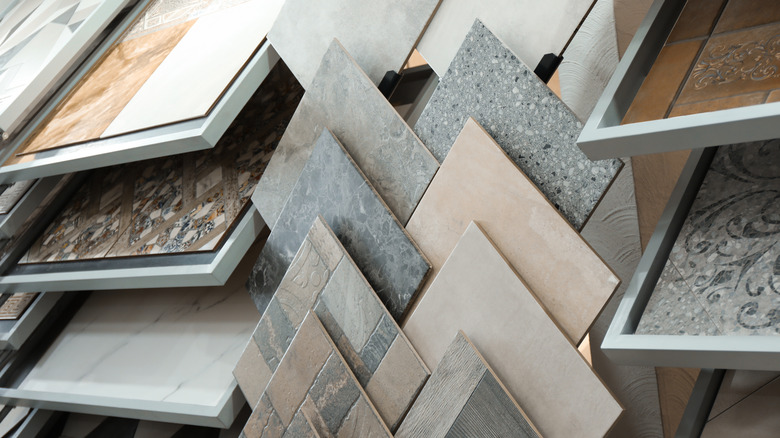
Picking the right type of tile for your bathroom can be tricky. After all, you need to consider different requirements that may seem to contradict one another. Aesthetically, you may want to choose a tile that will make your bathroom feel like a spa, like a faux-stone option. On the other hand, you don't want to focus too much on aesthetics and ignore durability, especially in such a damp environment. The ideal tile shouldn't be slippery or prone to moisture damage or mold, but it should provide visuals you can appreciate. For many homeowners, quarry tiles are tailor-made to fit these requirements.
Although most ceramic tiles are quite affordable and seemingly water-resistant, they sometimes can't handle the extent of moisture that bathroom floors encounter. Quarry tiles solve this problem. They're non-glossy, non-slippery, and don't absorb moisture. They also offer their own distinct, timeless, earthy touch, making them a key ingredient in creative bathroom remodel ideas.
The term "quarry" may give you the impression that these tiles are extracted straight from the earth, just like limestone or granite. On the contrary, the manufacturing process is much more reminiscent of brick-making. Quarry tiles are made of clay, shale, and other mineral aggregates that take on the characteristic tile shape through a process known as extrusion. The tile is then subjected to high temperatures to create the final, formidable product. This high-heat baking procedure is what gives quarry tiles their durable, water-resistant features.
Quarry tile is highly durable in moisture-heavy environments
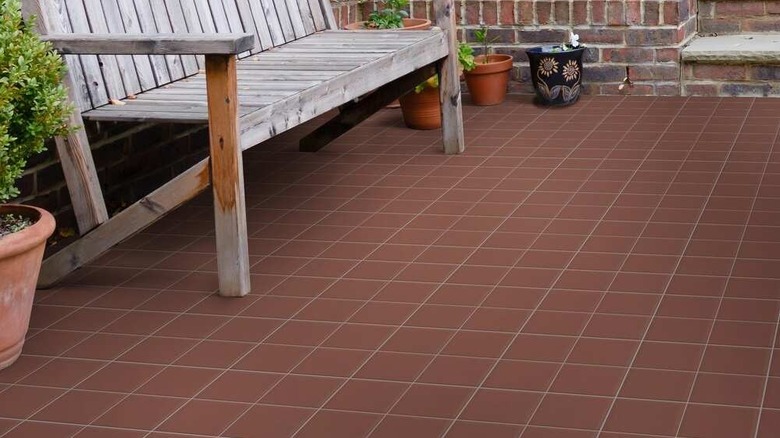
Quarry tile is part of the larger ceramic tile family. However, its distinguishing features are its unglazed appearance and water-resistant properties, which make it suitable for wet, high-traffic areas in your home. There are several types of tiles you can use in your bathroom, but since quarry tiles are subjected to temperatures over 2,000 degrees Fahrenheit during manufacturing, they have extremely low water-absorption rates, a non-porous surface, and high compressive strength. This toughness sets them apart from other options.
Although other ceramic tile types can also be highly durable, their glazed surface can make them slippery. Quarry tile, on the other hand, has a rough, textured surface, which gives it more traction and makes it perfect for your bathroom floor. In fact, their textured surface is a big reason why you find them so often around pools, wet rooms, and other commercial areas prone to moisture.
Quarry tiles are comparatively dense as well, and they're a lot thicker than other ceramic tiles, measuring around ½ to ¾ of an inch in thickness (compared to the ⅜- to ⅝-inch thickness of ceramic tiles). Quarry tiles don't demand heavy maintenance, either. They naturally resist dirt accumulation. All you need to maintain them is some light mopping and sweeping at regular intervals, and they'll look good year-round.
Quarry tile is a better alternative than other aesthetic options, like terracotta
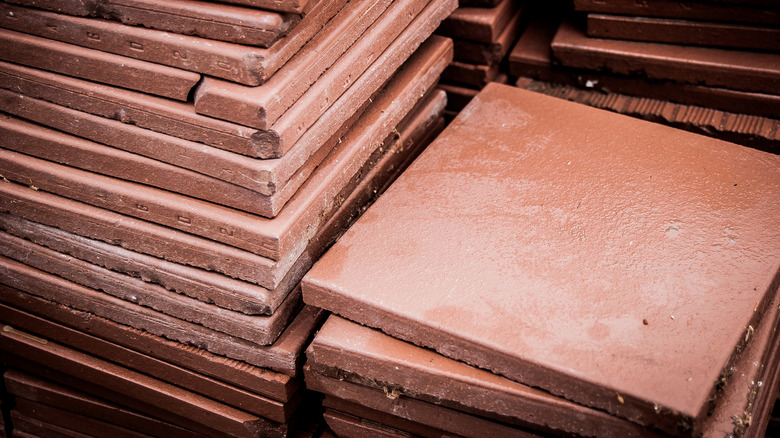
Another reason why you may want to install quarry tiles in your bathroom is for their aesthetics, especially if you prefer an earthy, warm look similar to terracotta. Quarry tiles resemble terracotta but offer superior features in terms of water resistance and durability. Terracotta, for example, is usually porous and needs to be sealed for bathroom use, while quarry tiles are practically impervious and require no seal. Keep in mind that moisture-prone tiles can easily get discolored as well, especially in a high-moisture environment like a bathroom. This can be a downside of using a tile like travertine in this room. But thanks to quarry tile's low moisture absorption, they don't face this issue, either.
As an apt substitute for terracotta, quarry tiles also offer you a range of color choices. They come in tones like red, tan, brown, grey, and blue. Just keep in mind that the lighter the tile color, the more maintenance it may need to remove signs of dirt and grime. In terms of installation, quarry tiles are quite affordable. If you're ordering them in bulk, you're likely to find a good deal. We also recommend grouting with good-quality material during installation and sealing the grout joints, even when you're dealing with unglazed tiles.