

Trends Sent This Kitchen Feature Packing. Here's Why Some Homeowners Might Miss It
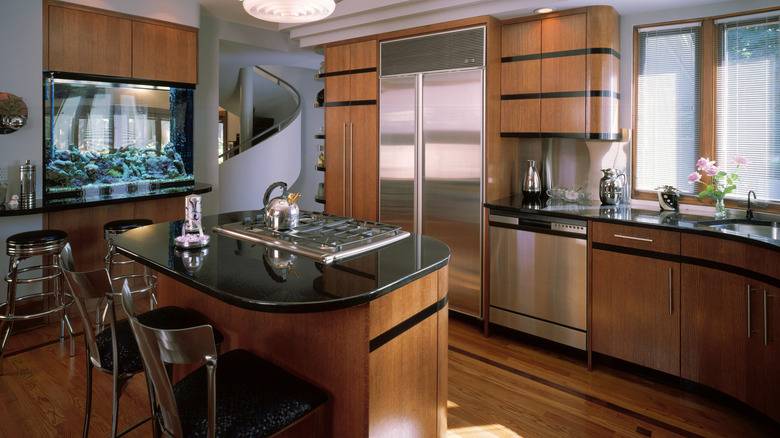
As architects embraced open concept living areas with the kitchen becoming a highly visible part of the design, homeowners recognized that clean lines and uncluttered counters suited the trend. Kitchen islands became more common as the area became a place to gather, rather than simply a place to cook. A decade ago, downdraft vents were the new kitchen trend at the LivingKitchen show in Cologne, Germany, even though they'd been in use in American kitchens since the '70s. New technologies promised to overcome the issues many had with using downdrafts rather than traditional hood vents, and homeowners eagerly adopted the technology. But not all of those issues were successfully addressed. While the open concept kitchen remains on trend, some homeowners may be suffering from buyer's remorse and missing the features of a workhorse overhead vent hood.
Homeowners fell in love with downdraft vents because they can be integrated into the cooktop itself, as they were when JennAir introduced its first vent of this type in 1965. Alternatively, they can be a separate piece of equipment to the side or rear of the stove that lowers into the counter when it's not in use. Downdrafts can be vented to the outdoors the same way a traditional updraft vent hood over the stove is, or they can simply recirculate air through a filter that removes smoke and grease. Because downdrafts are exceptionally low profile, they leave the view into the kitchen unobstructed in an open concept design. But there are other considerations when you're choosing the right range hood for your own kitchen.
Why downdrafts might not be as functional as standard range hoods
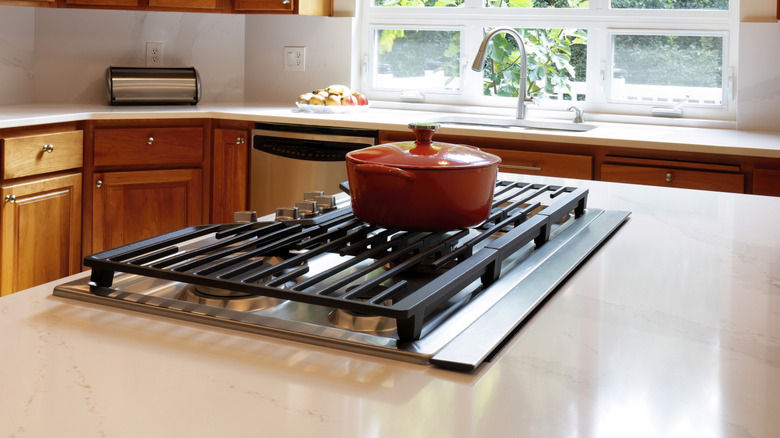
Aesthetics aside, there are some serious practical drawbacks to downdraft stove vents. They can be installed in an existing kitchen, but the motor takes up a lot of room in the cabinet beneath the cooktop. The flames on a gas stove can blow out with a downdraft, and the steam and odors from large or tall pots might not get sucked into a vent that is beneath or to the side of the stove top, rather than overhead. Maintaining a consistent cooking temperature can be difficult because of the air flowing across the surface of the stove, and price is also a consideration. A traditional updraft hood vent is much more budget-friendly than a downdraft system.
Now that custom updraft range hoods have replaced the previously pedestrian appearance of old-school metal boxes with a fan inside, one of the obstacles to installing a traditional hood has been overcome. Updrafts are better at removing steam, smoke, and odors from the air than downdrafts, especially when cooking at high heat. This is particularly desirable in an open concept kitchen, where odors might escape into other parts of the home. An updraft won't blow out the burners on a gas stove. New updraft models are much quieter than older ones, and some of the newer designs allow you to hide the stove range hood altogether, giving you more options for kitchen design. As a practical matter, a traditional hood vent most likely has task lighting incorporated into its design, but, at best, a downdraft vent only has a narrow strip of lighting.