

Fresh Paint Job In Your Kitchen Bubbling? Here's Why And What You Can Do

Hiring professional painters for your home renovation projects can cost thousands of dollars, so it makes sense to give things a shot on your own. If you want to try a new color in your kitchen, for example, there are plenty of DIY paint hacks worth trying at home. However, there is also plenty that can go wrong when you're applying a coat of paint that might result in the walls bubbling up around you.
Paint bubbles, or blisters, appear when paint starts to lift off the surface before ultimately peeling away. This could happen if you don't properly prepare the painted surface by cleaning and drying the underlying wall or if you use an oil-based paint atop latex-based primer, but it is most likely a result of heat and moisture — conditions you're more apt to find in your kitchen.
Temperature blisters can appear hours or days after you paint if wet paint thinner turns to vapor beneath a dry coat and gas expands in the heat. Meanwhile, moisture blisters are the result of water seeping beneath a layer of paint. Water may get into your walls via a leaky roof or, more commonly in a kitchen, busted plumbing pipes, which can also lead to mold or bubbling damage to underlying drywall. Issues may occur more frequently with thick coats or darker paints, which are more likely to absorb heat and create blisters, leaving your kitchen looking unfinished all over again.
How to prevent your kitchen's painted surfaces from bubbling
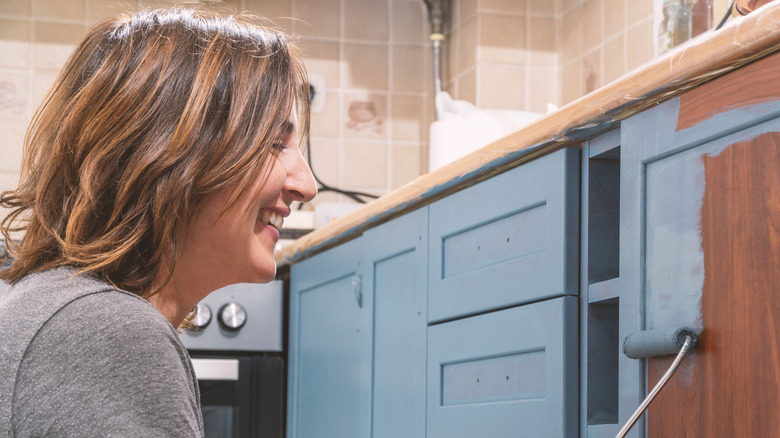
It's impossible to completely eliminate the root causes of paint bubbles when you're in a space like the kitchen, but you can work to fix blemishes in a fresh coat of primer or color if they appear. After the paint dries, you'll be able to cut off the bubble wholesale with a paint scraper, a putty knife (which is useful for other neat painting hacks), or whatever tools you have on hand. A small gap will be left behind, which you can smooth over with sandpaper before flattening out the wall with waterproof primers and fillers like spackle. If you want the wall to dry out faster, you can use thermal devices like a heat gun. Otherwise, just wait until the surface is prepped enough to repaint in the originally intended colors.
To protect your kitchen walls going forward, repairing your roof and keeping it maintained can mitigate outside forces like rain leaks. For moisture blisters, you can also use dehumidifiers in your kitchen to help fresh paint jobs dry faster and eliminate excess moisture in one fell swoop. Meanwhile, temperature blisters can be addressed by painting in shifts with the motion of the sun coming through any nearby windows.
It's probably best to just avoid using heated appliances in the kitchen during the painting process, as, for example, open flames from a gas stove can not only peel fresh coats of paint but also potentially vaporize any lead left over in older paint jobs, leading to a toxic haze. For rooms with fluctuating temperature and moisture levels, it's especially important to consider extra steps that prolong the lifespan of painted surfaces — for example, finishing off your project with a layer of sealant or moisture-resistant paint.