

The Best Way To Clean Luxe Velvet Bedding

Velvet duvets and pillowcases give your bedroom a high-end look. They are soft, luscious, and fit right in with the cozy bedroom trend. However, velvet needs the right care to keep its soft pile fibers intact. With the proper wash routine, your velvet bedding can last for years. It requires a deep clean two to four times annually, weekly vacuuming, and spot treatments whenever messes occur. Mild detergents are best to protect the fabric's fibers and colors. Avoid bleach, products with chemical fragrances, and fabric softeners.
Velvet was traditionally made from cotton and silk, but can be produced using a variety of materials, including synthetic textiles. Given such, it's important to check your bedding's care label for specific needs before applying any cleaning methods. If using a product for the first time, patch test it in an inconspicuous spot to ensure it's compatible with the velvet.
How to delint and spot clean velvet
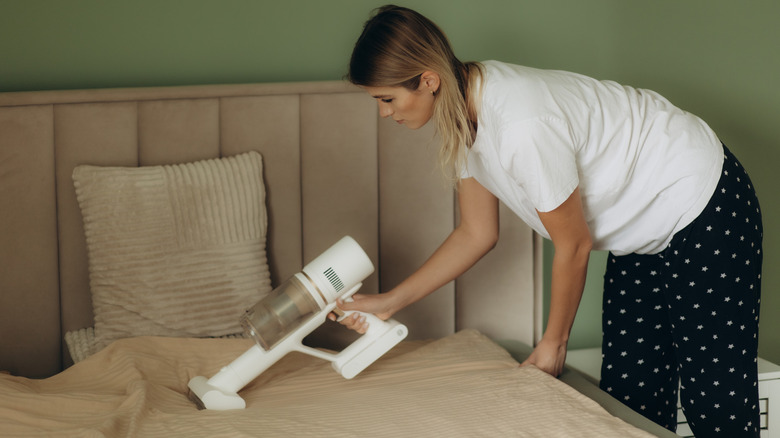
Whether breadcrumbs from eating in bed or dust particles in the air nesting in your duvet, your velvet bedding benefits from weekly vacuuming. If your furry pets enjoy the soft fabric, too, expect more frequent cleans to tackle their hair and dander. A lint roller or fabric brush gently takes care of surface dust. A hand vacuum or the brush attachment on a standard standing vacuum works best to suck up particles deep within the fabric's fibers. Just set it to the lowest suction and gently sweep it across the fabric.
For liquid spills, clean them right away. Dried-on messes are harder to remove and might cause permanent bruising on the fabric. A stain repellent is usually added to velvets during production, so the messes should come out easily with a microfiber cloth, soap, and water if you act fast. Paper towels also work, but beware that they can leave behind lint. Hydrogen peroxide is another cleaning product that'll lift stains in velvet fabrics. However, patch test it to ensure it's color-safe.
First, soak up the liquid with a dry cloth. For thick messes like ketchup, scoop the goop. Then, use a clean cloth to gently apply a mix of dish soap and water. Avoid any rubbing, which can spread the soils and be too rough on the fibers. To rinse, dab the area with a clean, water-damp cloth. Finally, use a dry cloth to soak up any remaining liquid before letting it air-dry completely. Delinting and spot cleaning the velvet will help to maintain your bedding and keep it fresh between deep cleans.
Hand or machine wash velvet bedding for a deep clean
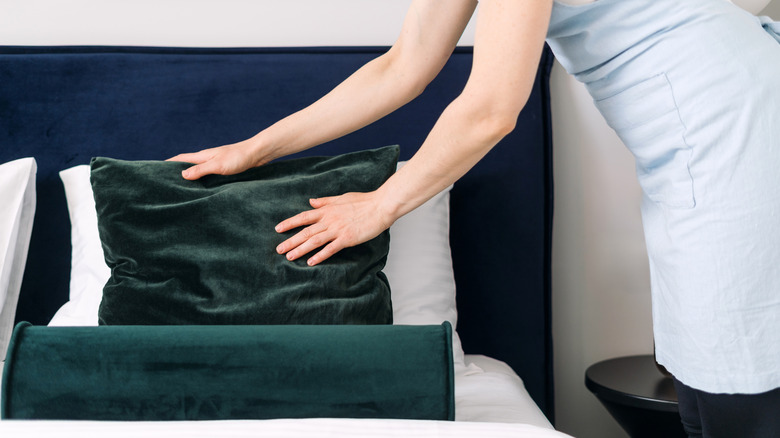
Duvets, blankets, and pillows do need occasional deep cleans, and velvet pieces are no different. If your bedding is machine-washable, you can launder it on a gentle cycle with cold water and mild detergent. Remove lint and spot treat any stains with the blotting method before throwing it in the washer. Avoid the spin cycle and squeeze out the excess water; be careful not to wring the fabric. Then, lay it on a flat surface to air-dry indoors or outdoors in indirect sun. While direct sunlight eliminates bacteria and odors, it also fades the velvet's color.
If your bedding is not machine-washable, has intricate embellishments, or its care tag is long gone, it's recommended to dry clean the linens. However, they can also be hand-washed. After removing any lint and spot treating stains, add the velvet fabrics to a large container with cold water and a splash of mild detergent. Gently swirl the bedding in the solution and leave it to soak for 15 minutes. Then rinse with cold water to remove the soap. Finally, squeeze out the excess water and let it air dry.
Your velvet might look crushed after a wash, but that's normal. To bring it back to life, use a steamer to gently even out wrinkles, followed by a soft brush to lift the fibers. It might be a little tedious, but carefully following these steps will leave you with fresh, soft, and lush velvet. You can also try a few cleaning tips that leave your bed smelling amazing to add to the luxury.