

Why You Should Reconsider Trying To DIY Concrete Countertops
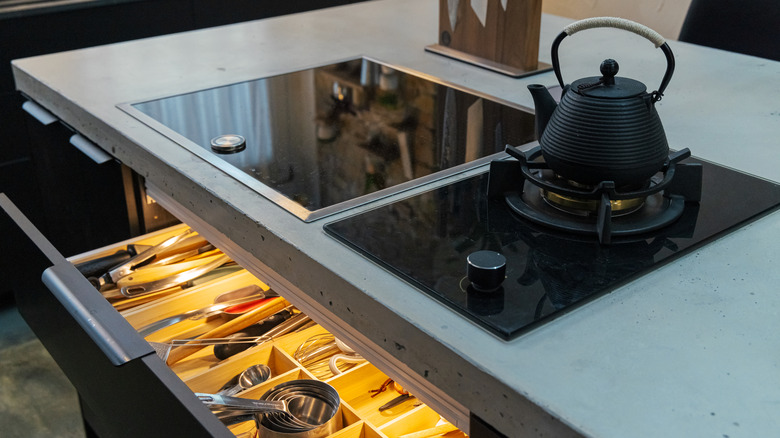
Concrete countertops go well with a modern or rugged aesthetic and offer limitless customization options. However, having them professionally installed can cost you anywhere between $50 and $150 per square foot. This means you'd have to shell out hundreds of dollars for a teeny-tiny kitchen island or bathroom vanity, and thousands for an adult-sized island or double vanity. Considering the high cost, you might want to DIY the countertops, especially if you're handy or have previous experience with smaller-scale projects. But that can be a bad idea since concrete countertops require a high degree of skill and expertise, feels our home improvement expert.
Divulging why you should reconsider your plan, Ron Baker opens up in his House Digest exclusive, "You have this very basic material that's associated with things like garage floors, and the tools are deceptively simple." And therein lies the problem. "The simple material and simple tools can make a DIYer believe that working with concrete must be a simple thing all around. But without experience, some of the finer points of making DIY concrete countertops can trip you up. It's a surprisingly precise process in a lot of ways," he says.
So, even if you have all you really need to DIY concrete countertops, take your experience into account before you undertake this project, recommends our expert. Providing examples, he elaborates, "I wouldn't attempt concrete countertops without having poured at least a few successful slabs — patios and the like. And you should do a couple of trial runs with all the right tools and materials before attempting the real thing. Coming in hot without any experience is not going to go well."
Reasons why homeowners should avoid DIYing concrete countertops
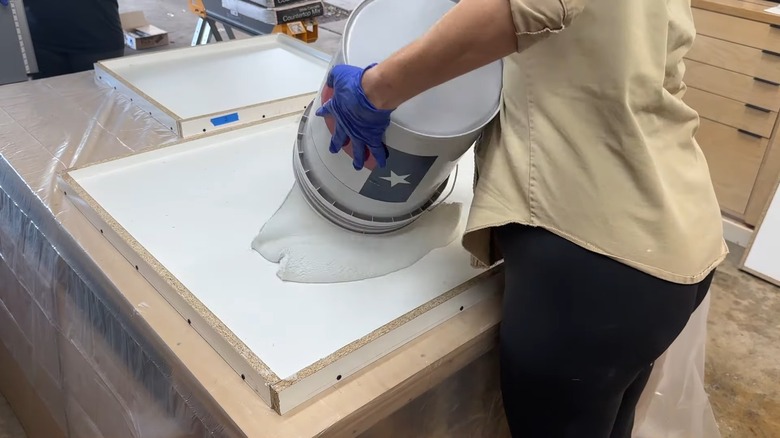
Concrete isn't a forgiving medium, states our home improvement expert. This makes it a challenging material to work with because "once you start pouring a concrete countertop, the clock is ticking," shares Baker in his exclusive chat with House Digest. In other words, you don't get a do-over in case you make mistakes while pouring concrete. Listing the essential things to consider before building DIY concrete countertops, he mentions, "You have to get it done in a certain amount of time, and small errors like using too much or too little water can make the timing problem worse. You also need more or less ideal temperature and humidity where you're working, which isn't always easy to manage on an active jobsite, even for a homeowner doing a DIY project."
Since small errors can lead to an uneven countertop or look unsightly, it's best to contract a professional. Further illustrating his point, Baker tells us, "If the temperature is too high or there's too much airflow, for example, you're going to end up with cracked, completely unacceptable concrete." Plus, you can't hide your poor decisions with trim no matter how hard you try. So, everything needs to be perfect if you want a gorgeous finish and a functional surface. "For example, perfect levelness is an absolute. Every flat surface must be level from any angle, and every board in a form must be plumb," adds our expert. Listing the final reason why DIYing such surfaces is a bad idea, he continues, "The same is true of sealing your form. There's no margin for error here; it's a binary state, sealed or not."
Tips to keep in mind if you're determined to DIY concrete countertops
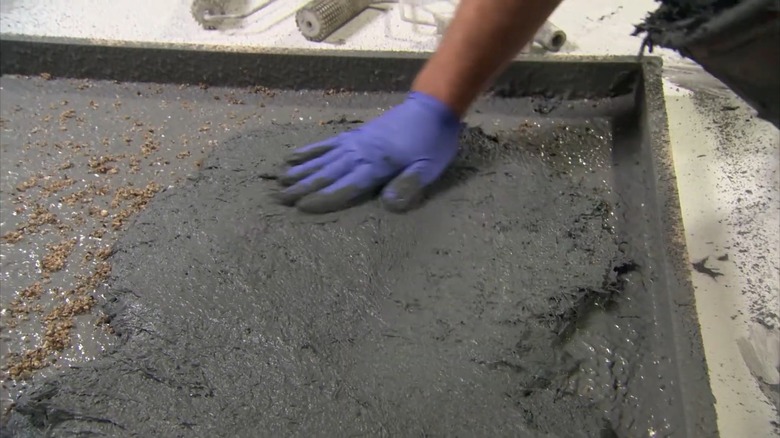
If you're still not convinced and want to DIY concrete countertops in your home, our expert recommends you practice the art until it's perfect. Highlighting its importance, Baker relates in his exclusive interview with House Digest, "Practice and experience are where you get the confidence and competence to pull off successful concrete countertops." Besides, he adds, "Knowing where a long form will need additional support or how much vibration is necessary to eliminate bubbles from your concrete isn't something you can derive from intuition."
Since the chances of you being an old masonry expert aren't too high, Baker has some advice. "Build yourself a concrete countertop for your garage cabinets. Pour a patio or an outdoor kitchen work surface. Challenge yourself to perfect all the skills that look easy but, in fact, aren't easy at all," he suggests. And even if you don't get it right, don't quit immediately. "Troweling or floating a perfect finish is not something you get right the first time," encourages Baker. Think of them as purely experimental projects and if you don't mind the work required and see the finished form improving over time, try building a countertop in your kitchen or bathroom. But, Baker cautions, only attempt this if you're sure the "template was precise, that you poured at the right speed, and that your half-inch plywood DIY cabinets and your rebar or mesh can handle the weight you're throwing at it." However, if you have doubts at any stage of the project, either just pour cement over your granite countertops for a simple DIY update or contact a professional.