

The Planting Error That's Attracting Unwanted Birds Too Close To Your Home
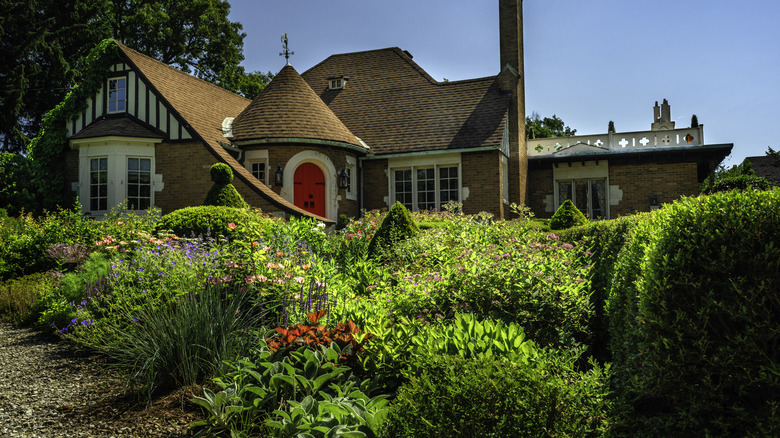
At a certain time of the year, you may suddenly notice an increase in unsightly splotches outside your home — it's not hard to figure out what they are and what sort of critter is leaving them. Birds stick close to places that provide a reliable source of good quality food, and you might well delight in seeing them outside the window, but their unwanted droppings? Not so much. Planting fruit-bearing trees and bushes too close to your home invites your prolifically pooping avian friends to enjoy the buffet you've unwittingly provided.
The varieties of fruiting trees and bushes you have around your home varies from USDA growing zone to growing zone, but many trees and bushes produce fruit only once a year. In the spring, birds might feast on Highbush blueberries and serviceberries. American elderberries and bunchberries are summer favorites, while autumn brings a wide feeding selection like mountain ash, staghorn sumac, and Eastern red cedar. Holly berries sometimes stick around into the winter. Any or all of these species planted close to your home is an invitation for birds to hang around, but there are things you can do about bird droppings.
Bird-proofing the outside of your house
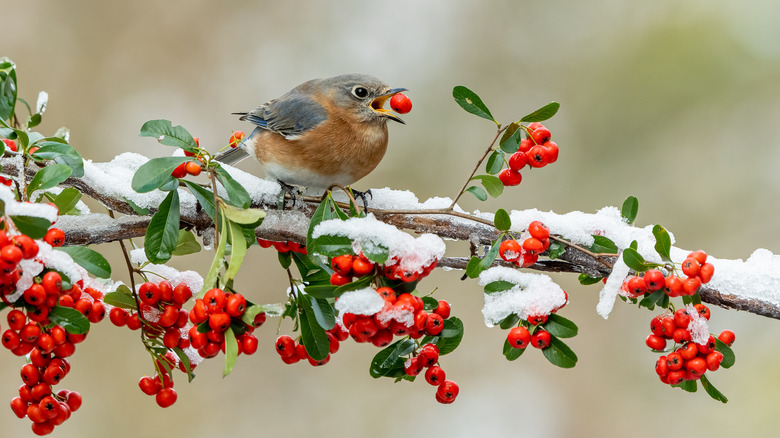
Augmenting the seeds and suet in your birdfeeder with natural, healthier sources of food for the birds is an admirable practice. By providing habitat for birds, you're not only feeding them, you're fighting the bird population decline that's been evident since the 1970s. Rather than trying to deter backyard birds to keep their messiness under control, alter your planting design to accommodate them without creating clean-up problems for yourself. Not planting fruit-bearing trees and bushes close to your home is an obvious first step, but what about the existing bushes? There's no need to just dig them up and discard them. Transplant them, if you can, to another location in the yard. If that's not possible, prune them back. Do a little research on how to prune your particular variety of tree or bush before tackling the task because the best practice varies from type to type. For instance, some fruits like blueberries should be pruned in winter; red raspberry canes in June and July.
If you notice that bird droppings are concentrated in an area near your house, you may be providing them with perching spots. Patio furniture, the walkways, and the driveway could all be gathering spots where birds congregate. Prune branches that overhang the driveway (even if they're not fruit-bearing) to keep your car clean, and move the birdbath, birdhouses, and birdfeeders off the patio. Transplant bushes that are too close to pathways. If bird droppings remain a problem in these areas despite your best efforts, use nonlethal methods like wind spinners and decoys to scare them off.