

Nursery Vs Garden Center: Which One Better Suits Your Gardening Needs?
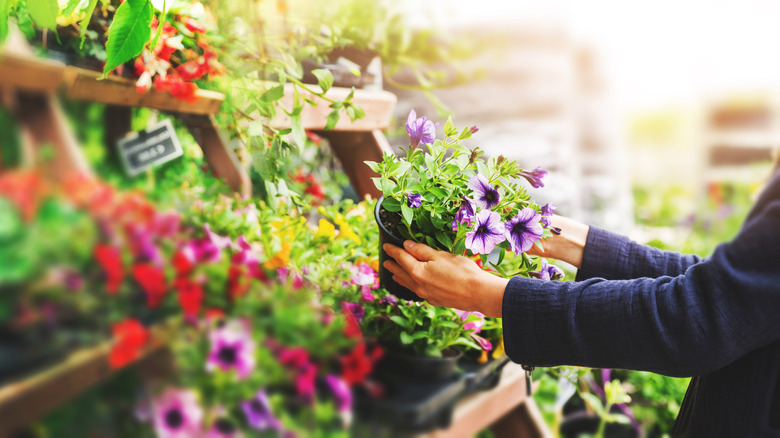
I will buy plants from almost anywhere. A stand on the side of the road? Yep. A greenhouse set up in the parking lot of the grocery store? I've done that. The farmer's market? You betcha. But most of my plants come from a nursery or garden center. Each option has pros and cons, so naturally after decades of gardening, I've bought more than my share from both. My volunteer experience as a Master Gardener has taught me the value of stretching a buck when we are filling flower beds for non-profit organizations. Of course, my personal budget is also limited. When I shop for my own gardens, I favor garden centers for more common, filler plants, and nurseries for unique specialty or native plants.
Before we get into the nitty gritty of what to buy where, let's talk about the difference between nurseries and garden centers. Nurseries start many of their plants in-house from plugs, seeds, rhizomes, and so on. There are permitting and licensing requirements that vary by state. In contrast, garden centers are generally attached to an existing big-box store. They do not start plants on-site.
The benefits of buying plants at the local nursery
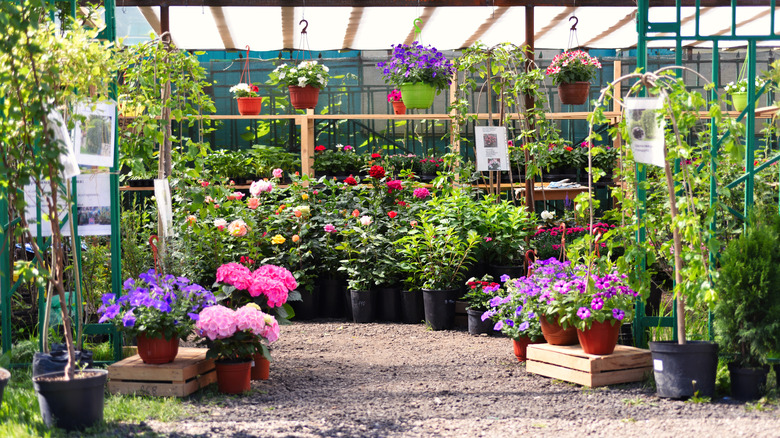
Because nurseries grow many of their plants themselves, they almost always have the best selection and most unique species. They're also considerably more expensive. That's why I save some money in my gardening budget to invest in the specific plants I really want. These are often specimen plants, but I also go to the nursery for native species. These small-business owners and employees are much more likely to know about the best native plants for my area. Some nurseries even focus primarily on growing and selling plants native to their region, so they're a valuable source of greenery and knowledge.
I really enjoy browsing local nurseries because they often have plants I've never seen or heard of, or they have different species of those I am familiar with. For example, you might be able to find a standard variegated hosta species at a garden center, but if you're looking for something specific, like the 'Mouse Ears' cultivar, the local shop should be your first stop. The same is true for the many species of columbine, which I love. Perhaps there are one or two colors at the garden center, but the local nursery has all the colors — and, yes, I do need them all.
Reasons to fill your flower beds with garden center plants
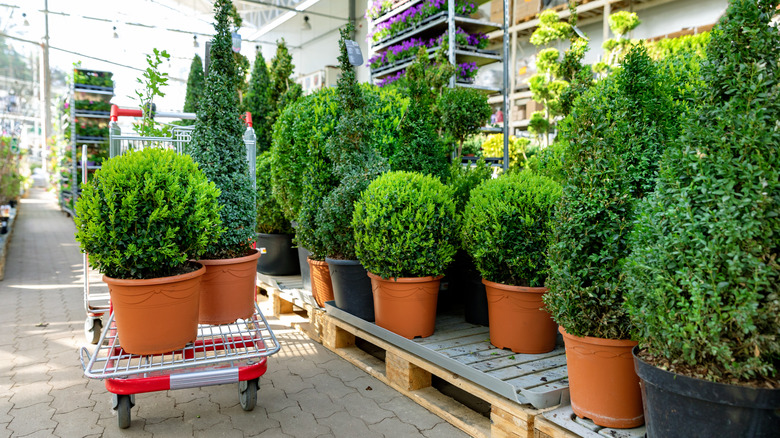
I definitely skip the tasteless tomatoes from garden centers, but they do have other benefits. While I'm sure there are exceptions to this statement, most nurseries I have shopped at do not have a clearance section. Sometimes they will have sales, but I love the large clearance racks at garden centers. I consider these "rescue plants" — clearly, I need to buy them to save them from an unthinkable fate. By knowing how to tell if a plant is salvageable, a little garden knowledge, and some luck, I can turn a scraggly $2 clearance bougainvillea into a stunning display of blooms by the end of the season. This is also one of the easiest ways to save money on landscaping.
The clearance rack isn't the only way to save money at the garden center. They often have sales, especially around spring and summer holidays. If you're looking for larger items like shade trees or bushes for hedges, these are the times to shop — just check the tag to make sure you're getting something appropriate for your region, hardiness zone, and growing conditions. Packs of plants are also usually cheaper, making them perfect for when you have a lot of space to fill. Common flowers like impatiens or marigolds can be as little as a few bucks for a six-pack or larger. Ultimately, to fill your garden and landscape, your best bet is to check out nurseries and garden centers to get the best of both worlds. Plus, it's an excuse to do more plant shopping.